
An AGV may travel precisely along its mapped route yet miss a pallet opening by enough to stop an automated cycle. That difference is why AGV positioning accuracy and material-handling accuracy should never be treated as identical figures. Navigation sensors locate the vehicle, docking controls bring it to a station, and the load interface determines whether pickup or placement actually succeeds. For a buyer planning forklift AGVs, carton-transfer robots, or line-side delivery, defining the final transfer tolerance is more useful than comparing one headline millimeter value.
What Does AGV Positioning Accuracy Actually Mean?
A navigation datasheet often specifies positioning accuracy as a distance and an angular error. These values describe how accurately the vehicle locates or stops its body under the stated test conditions. They do not, by themselves, establish that a pallet will enter a rack slot or that a part will be placed within a tight machine tolerance.
How is navigation accuracy different from handling accuracy?
Navigation accuracy concerns the robot’s estimated pose and travel to a target. Docking repeatability concerns its arrival position relative to a station. Handling accuracy adds the fork, lift, load carrier, payload shift, and transfer interface. A forklift could stop correctly but still approach an unsuitable pallet entry, while a CTU could reach a shelf yet need a second alignment step to retrieve a tote.
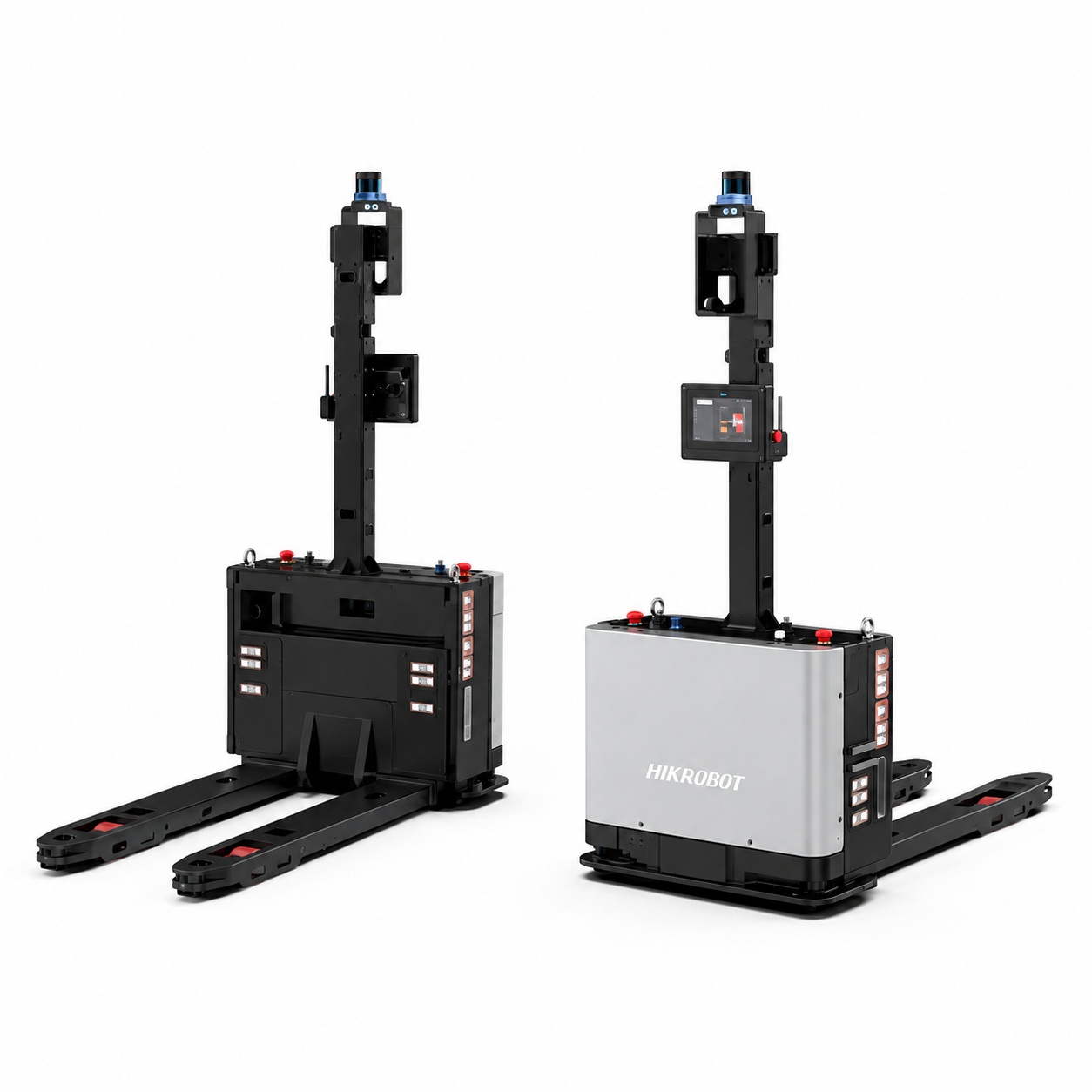
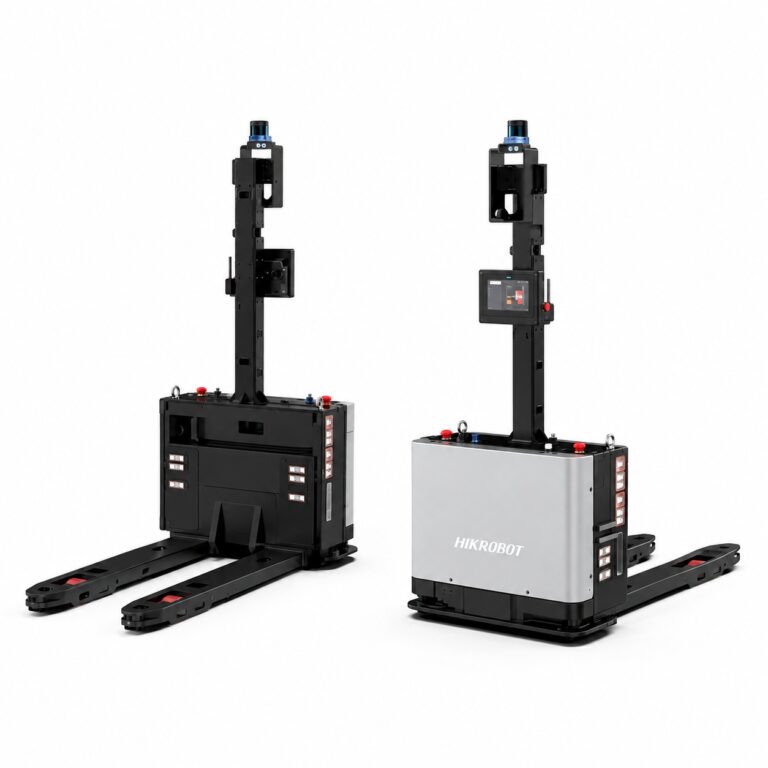
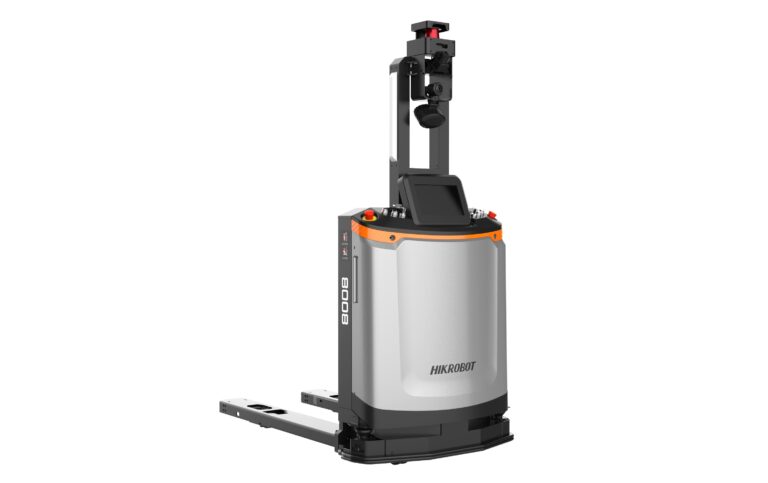
The official F3-1500 forklift mobile robot specification lists positioning accuracy of ±10 mm and angular accuracy of ±1°. These are published vehicle figures, not a blanket promise that every pallet transfer will finish within ±10 mm.
How Do Navigation and Localization Affect Positioning?
A vehicle needs a reliable estimate of its position and heading. Different systems use laser SLAM, vision, 2D codes, or combinations of sensors. The appropriate navigation method depends on site geometry and how stable the reference features remain during a shift.
What can disrupt a robot’s map?
Repeated-looking aisles, moving stock, reflective surfaces, blocked sensors, poorly placed landmarks, and changes to rack layout can all complicate localization. A site may need stable reference features, verified maps, clear sensor fields, and a process for updating routes after layout changes. A good commissioning test samples both quiet periods and typical operating traffic rather than verifying the robot only in an empty warehouse.
When is fine docking alignment needed?
Some production stations require more accuracy than general travel. Where feasible, local markers, vision-guided alignment, mechanical guides, or a calibrated docking feature can reduce the effect of map-level uncertainty at the final transfer point. Such measures must be designed around the actual station and validated rather than assumed to be standard on every model.
Why Can Fork, Pallet and Load Geometry Change Accuracy?
The load-transfer interface is often the main source of real-world variation. Bent pallet openings, inconsistent pallet dimensions, unstable packaging, off-center loads, or a raised load center can defeat an otherwise repeatable arrival. Fork thickness, spacing, approach angle, lowered height, and lift motion determine whether the actual pickup succeeds.
How do height and payload change the tolerance budget?
For high-level stacking, small base-position or mast-angle errors can create larger placement deviations at an elevated fork tip. Floor unevenness, payload deflection, mast movement, and rack geometry also contribute. A buyer evaluating a tall stacking AGV should request loaded trials at the target shelf, with the actual carrier, rather than relying only on a floor-level positioning figure.
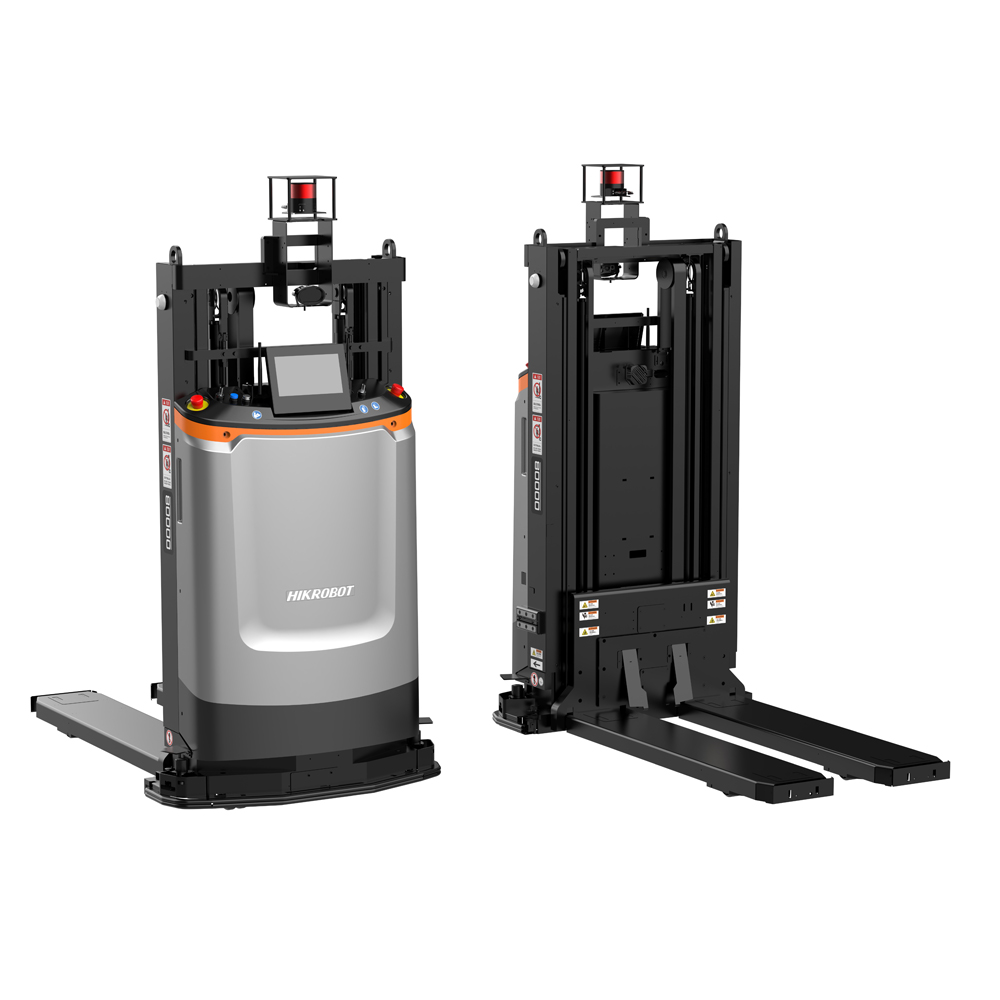
Wesar’s F4-1000C stacking forklift is published with a 2,031 mm fork lifting height and a ±10 mm / ±1° positioning specification. Those figures describe different aspects of its capability; neither substitutes for a loaded pallet placement test at the destination rack.
What Role Do Sensors and Software Play in Accurate Transfers?
Pallet detection, obstacle sensing, load-position confirmation, station-ready signals, and task feedback help the robot decide whether a pickup or drop-off has completed correctly. They also provide safer recovery when the carrier is absent, the station is occupied, or a route becomes blocked.
Can fleet software fix an inaccurate docking station?
A robot control system can assign missions, coordinate traffic, and manage exceptions across several vehicles. It cannot repair a damaged pallet or compensate for a mechanically misaligned transfer point without suitable local sensing and engineered recovery logic. Navigation, mechanical interface, and software need separate acceptance criteria even when the system is supplied as one project.
For tote-handling applications, the same rule applies to a carton transfer unit: reaching a shelf coordinate is not the entire task. Tote identity, shelf position, retrieval engagement, and receiving-station alignment must each be verified. A single headline accuracy number hides those separate operations.
How Should Buyers Test AGV Positioning and Handling Accuracy?
Define the required result first: the maximum acceptable offset at the pickup, drop-off, or machine handoff. Then test a representative sample of routes, vehicle directions, payloads, pallet conditions, and shift periods. Record failures, not just the average stop position, because one failed pallet engagement can interrupt the next production cycle.
Which acceptance criteria are useful?
A practical protocol can log stop-position error, docking repeatability, first-attempt pickup success, transfer completion rate, recovery time, and performance at the highest required lift level. Record environmental and load conditions with each result. Agree on permissible errors and re-test after changes to racks, carriers, sensors, or software.
How Does Wesar Approach Accuracy in a Full System?
Wesar Intelligence supplies mobile robots together with system planning, equipment integration, software, commissioning, and after-sales services. A project can therefore specify vehicle navigation, docking features, load-carrier compatibility, and station interface requirements together. The purchase specification should still name the exact model and acceptance conditions, rather than extend one model’s published accuracy to all installations.
Conclusion
AGV positioning accuracy is one layer in a larger material-handling tolerance chain. Localization, floor and route conditions, docking controls, forks, pallet geometry, lift height, sensors, and software feedback all influence whether a load reaches the right place. Ask for the vehicle’s stated accuracy, then validate the complete pickup and delivery task with actual loads and stations. That distinction keeps a promising datasheet from being mistaken for proven handling performance.
FAQs
Does ±10 mm positioning accuracy guarantee ±10 mm pallet placement?
No. Pallet placement also depends on the fork, carrier, load stability, lift height, docking interface, and site conditions. The complete transfer needs a separate acceptance test.
Can a robot improve its final docking accuracy?
Depending on the vehicle and station design, local sensing, vision, markers, or mechanical alignment may improve final approach repeatability. Confirm which features are actually supplied.
How often should an AGV positioning test be repeated?
Re-test after substantial layout, carrier, rack, sensor, or software changes and at intervals appropriate to the site’s safety and quality procedures.






 English
  Russian
  Chinese
  Japanese
  Italian
  Korean
  Spanish
  Arabic
  French
  German