
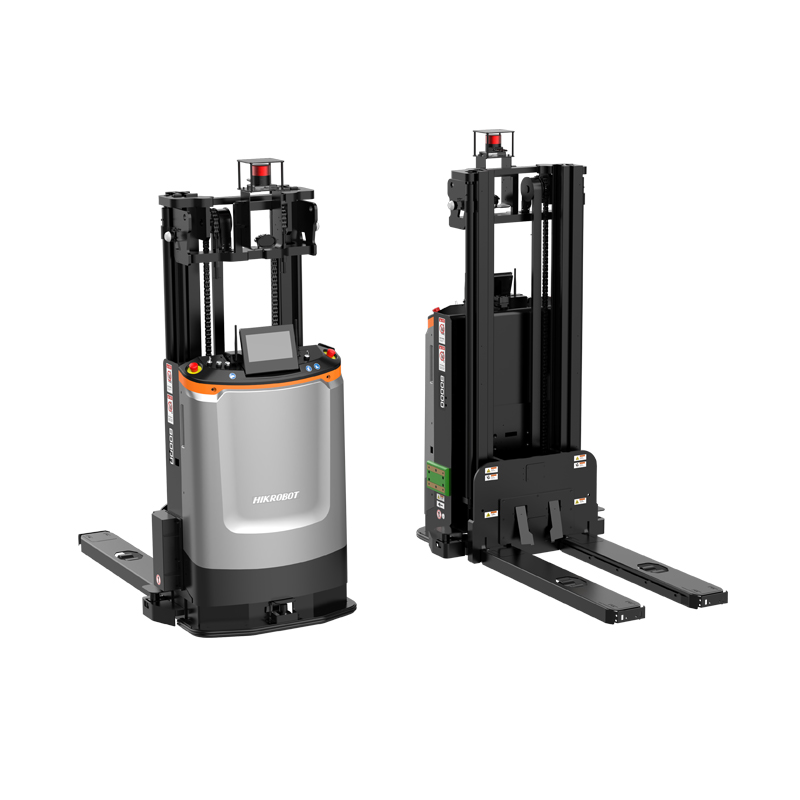
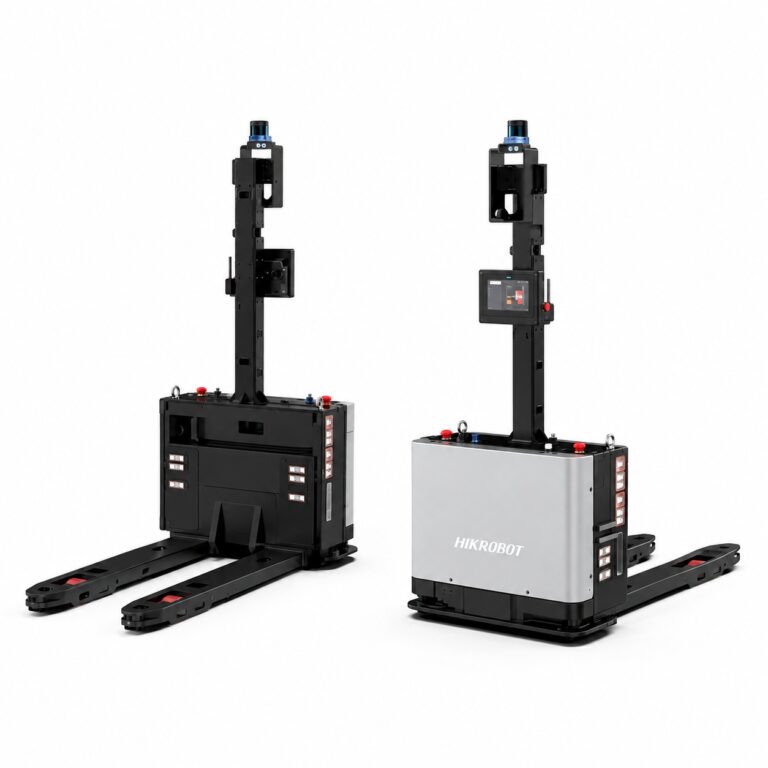
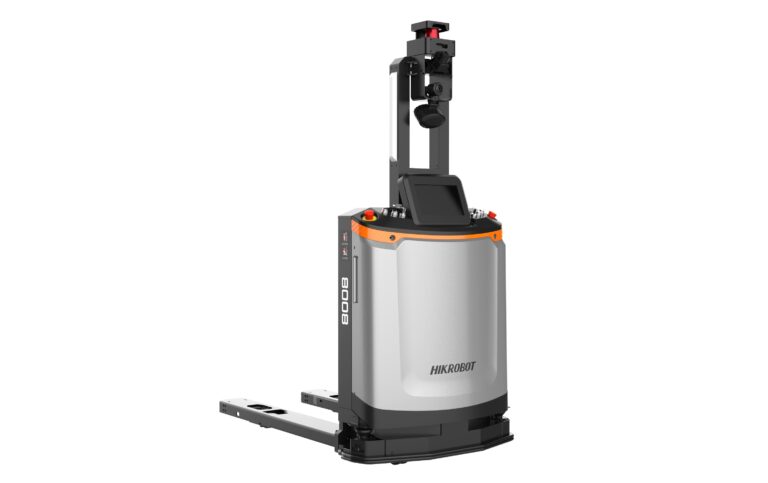
A forklift AGV that lifts a pallet 200 mm serves a different task from a stacking robot that places the same pallet onto elevated warehouse racks. Wesar’s FMR series includes F3 carrying vehicles for floor-level transport and F4 stacking configurations for vertical placement. Buyers comparing F3-1500, F3-2000, F4-1000C, and F4-2000 should look beyond the model number: rated capacity and the published fork lifting height must both match the job. The distinction is especially important because the publicly listed F4-2000 (4.5m) configuration lifts higher than 2 m.
What Is the Core Difference Between F3 and F4 Forklift AGVs?
The primary distinction is the required lift task. The F3 carrying series uses a short fork lift for floor-level pallet pickup, movement, and set-down; the F4 stacking series raises a compatible pallet to an elevated rack or transfer position. Within each family, capacity and configuration determine which load can be handled safely. Start with the destination height, then evaluate rated load, carrier geometry, aisle conditions, and throughput.
Why is a 200 mm lift not a stacking function?
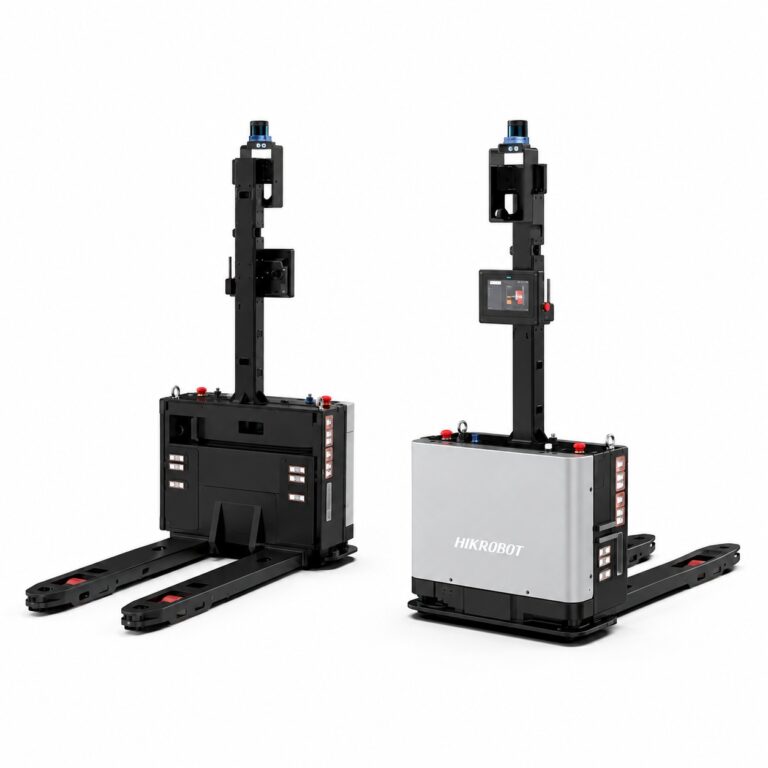
A 200 mm fork lifting height clears the floor or a compatible carrier during horizontal transport. It does not offer the mast travel required to place a pallet onto elevated rack beams. A F3 vehicle can support production-line feeding, floor-level buffers, and warehouse-to-workstation routes, provided the pickup and drop-off points match its forks. An F4 vehicle adds vertical placement but requires checks for load center and high-level clearances.
How Do F3-1500 and F3-2000 Compare for Horizontal Handling?
Both belong to the forklift mobile robot (FMR) range for standard pallet transport. The published F3-1500 has a 1,500 kg rated load and 200 mm lifting height, making it a reference choice for repetitive pallet movements where elevated stacking is not required.
What changes with the F3-2000?
The F3-2000 is the higher-rated 2,000 kg floor-level carrier described in Wesar’s product portfolio, with the same 200 mm lifting role. A procurement team should not assume it shares all of the F3-1500’s dimensions, fork geometry, turning radius, or charging profile simply because the family name is similar. Request the current model-specific specification and check whether heavier pallets affect the actual travel cycle, floor rating, and transfer interface.
For either F3 configuration, evaluate pallet underside entry, load center, receiving-station height, required trips per hour, and pedestrian separation. A vehicle can meet its nominal capacity yet still be unsuitable if the existing carrier cannot be picked up consistently or the production aisle lacks turning clearance.
How Do F4-1000C and F4-2000 Differ in Stacking Work?
The F4-1000C stacking forklift has a published 1,000 kg rated load and 2,031 mm fork lifting height. It targets lighter pallets and lower rack levels where floor-level transport alone cannot complete the process.
What lift height is published for F4-2000?
The currently published F4-2000 (4.5m) configuration is rated at 2,000 kg and lists a 4,517 mm fork lifting height—not 2,000 mm. The “2000” in its name describes the rated kilogram load, not its lift height. A customer requesting a 2 m stacking position should confirm the available mast variant and required shelf height before ordering; the 4.5 m product must not be presented as a 2 m configuration.
The published F4-2000 (4.5m) specification gives a 600 mm load-center distance, 1,200 × 1,000 mm applicable pallet size, and 2,065 mm minimum right-angle aisle width. These are model-page figures, not a guarantee that an existing rack, damaged pallet, or restricted site can be used without verification.
Which Model Matches Each Pallet Movement?
The following overview compares the specific configurations discussed here. Published lift heights are fork lifting heights as defined by the respective product pages; a site engineer must separately verify practical rack placement height and load clearance.
| Model | Rated load | Published fork lifting height | Primary task |
| F3-1500 | 1,500 kg | 200 mm | Floor-level pallet transport |
| F3-2000 | 2,000 kg | 200 mm* | Heavier floor-level pallet transport |
| F4-1000C | 1,000 kg | 2,031 mm | Low-level pallet stacking |
| F4-2000 (4.5m) | 2,000 kg | 4,517 mm | Higher-level pallet stacking |
*The F3-2000’s 200 mm figure is based on Wesar’s supplied company product profile. Confirm the current order-specific specification. The F4-1000C and F4-2000 (4.5m) values follow their public product pages.
When does the destination decide the selection?
For a pallet moved from receiving to a ground-level production buffer, a suitable F3 may complete the route without the size and mast requirement of a stacking model. If the robot must load a second-level rack or elevated transfer point, an F4 variant becomes relevant. Load capacity still matters: an F4-1000C does not become suitable for a 1,500 kg pallet merely because its forks can reach the shelf.
What Must Be Verified Before Buying an FMR?
A comparison based only on capacity and maximum fork height omits the conditions that often decide whether a deployment works. Check the total pallet weight including the carrier, its load center, fork openings, floor quality, available aisle width, rack beam height, mast clearance, charging plan, and production takt. Confirm the actual pallet with an on-site or sample-based handling test.
How should software and safety be included?
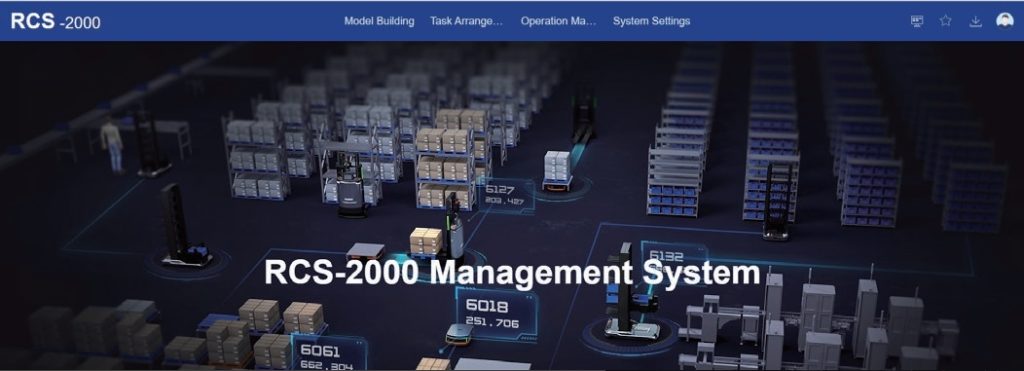
A warehouse automation project also needs traffic rules, station-ready signals, task confirmation, and exception handling. Wesar’s RCS-2000 robot control system is designed for task assignment, robot scheduling, and route planning in mixed mobile-robot facilities. It coordinates movements, but accurate pallet engagement and elevated placement still need appropriate sensors, mechanical interfaces, and commissioned procedures.
Why Discuss the FMR Range With Wesar?
Wesar Intelligence combines forklift mobile robots with warehousing software, equipment integration, project planning, installation, and after-sales support. Its team can review the real carrier, vertical placement requirement, load center, route geometry, and destination interface before confirming whether a floor-level F3 or stacking F4 configuration meets the material-flow task.
Conclusion
The F3-1500 and F3-2000 target horizontal pallet transport with a short 200 mm lifting role. The F4-1000C is a 1,000 kg stacking configuration with a published 2,031 mm fork lifting height, while the public F4-2000 (4.5m) page lists a 2,000 kg rated load and 4,517 mm lifting height. Select the model by verified pallet weight and destination height, then validate carrier fit, aisle space, rack clearances, cycle time, and system interfaces before placing an order.
FAQs
Can an F3 forklift AGV place pallets on elevated racks?
Its 200 mm lifting function is intended for floor-level pickup and set-down. Elevated rack stacking requires a model and mast configuration designed for the needed height.
Does F4-2000 mean the truck lifts 2,000 mm?
No. On the currently published F4-2000 (4.5m) page, 2,000 denotes its rated load in kilograms; the listed fork lifting height is 4,517 mm.
Which measurements should I send Wesar for an FMR quotation?
Share pallet dimensions and underside geometry, loaded weight and load center, required pickup and deposit heights, rack and aisle drawings, routes, hourly moves, and system interfaces.






 English
  Russian
  Chinese
  Japanese
  Italian
  Korean
  Spanish
  Arabic
  French
  German