
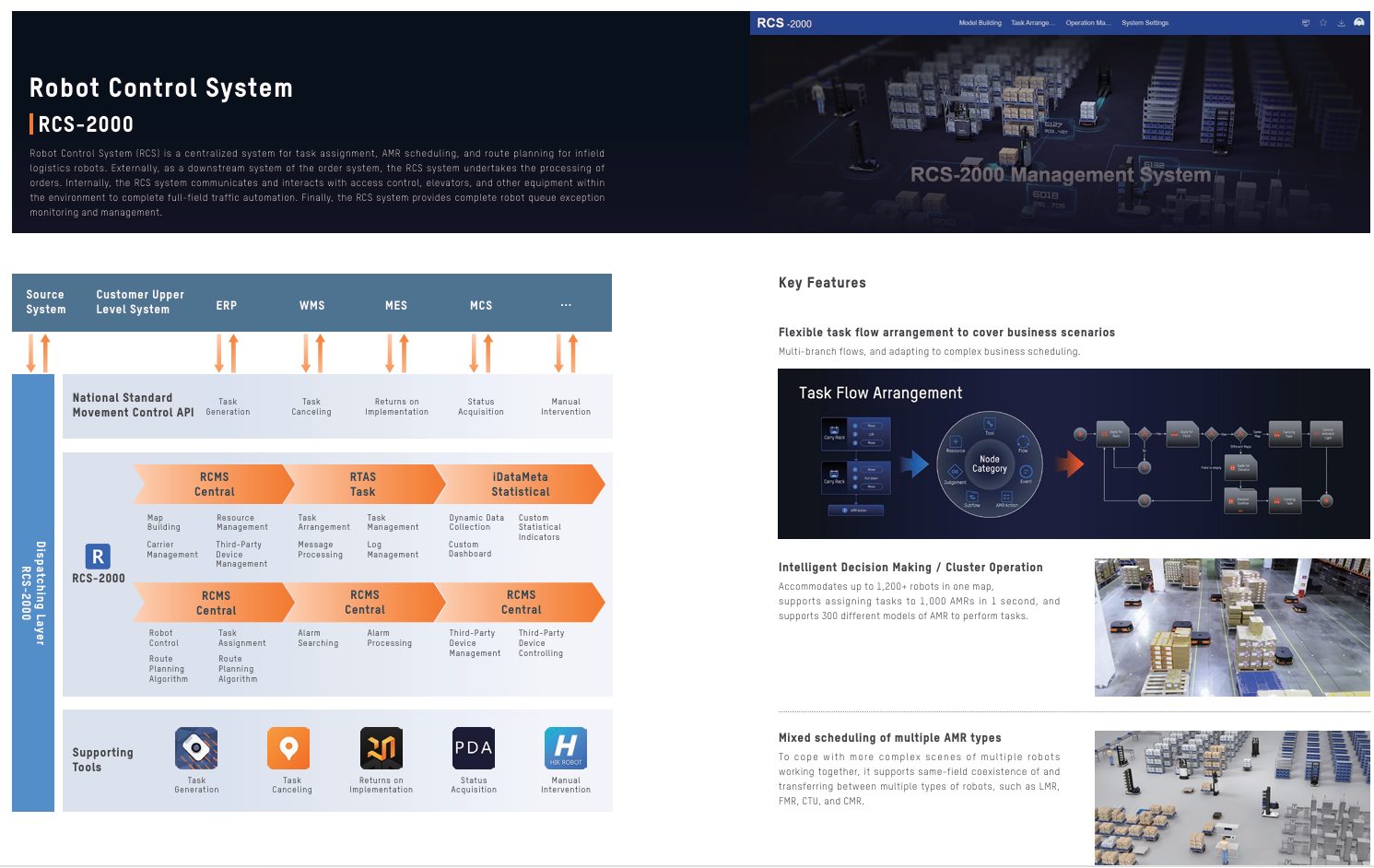
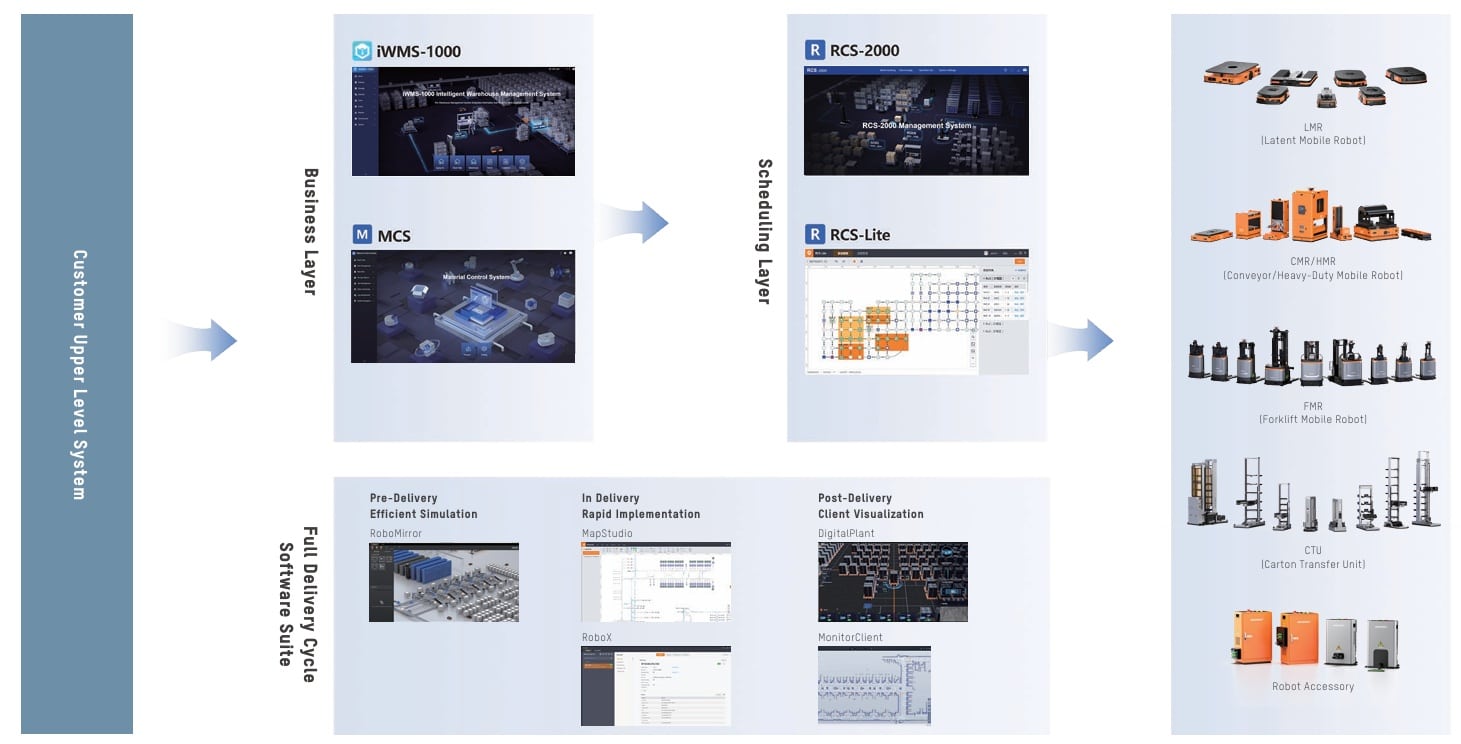
In today’s factories and warehouses, AMRs cannot function as standalone machines. They need to get tasks from business systems. Then, they move materials based on production or warehouse needs. Finally, they send live execution data back to management platforms. This is exactly where a Robot Control System, or RCS, becomes vital. RCS links upper-level systems like SAP, ERP, MES, EMS, WMS, and order platforms with AMR fleets on the shop floor. It turns business data into clear robot missions. Furthermore, it guides traffic, gives out tasks, and handles errors. This helps companies create a highly visible and automated material flow.
Why Do SAP, ERP and MES/EMS Systems Need to Connect with AMR Fleets?
Enterprise systems handle business logic. Meanwhile, AMRs take care of physical movement. The true value of automation shows up only when these two layers operate together.
Why Is Manual Task Creation No Longer Enough?
Many warehouses and factories still depend on workers to call robots manually. Sometimes, staff members type in transport tasks one by one. This approach might work well during a pilot project. However, it gets very slow once order volume grows. The same problem happens when production speed or material movement frequency goes up.
SAP, ERP, MES, and EMS systems already hold the data required for logistics execution. They track what materials are necessary and where inventory sits. They also know which production line needs a refill. Furthermore, they track when finished goods must go to the next step. If this information cannot reach AMRs automatically, companies miss out on the main benefits of smart logistics.
Linking these upper-level systems with RCS allows material handling tasks to start directly from business events. For instance, SAP might release a warehouse order. When this happens, RCS can accept the task and pick the best AMR. Then, it plans the path, watches the progress, and sends back the final status.
What Role Does RCS Play Between Business Systems and Robots?
RCS acts as the active bridge between digital commands and physical robot travel. It does not take the place of SAP, ERP, MES, EMS, or WMS. Instead, it transforms their demands into actual robot actions.
How Does RCS Translate Orders into Robot Missions?
Upper-level systems normally use business terms. These include purchase order, production order, refill request, or picking task. They also use terms like line-side delivery or inventory movement. Robots cannot process these concepts directly. They require plain mission data. This data includes the start point, destination, and priority. It also covers payload type, robot type, and route limits.
RCS takes task data from the business system. Next, it changes that data into robot-ready directions. After that, it sends out the proper robot. It makes this choice based on availability, location, and battery level. It also looks at load type, traffic conditions, and task urgency. Because of this, RCS serves as a core execution layer in AMR automation.
For example, MES might trigger a material call from a production line. RCS can change that request into a transport task and assign an AMR. Then, it guides the robot to the pickup spot. Finally, it sends the robot to the line-side station and reports the finished job back to MES.
How Does RCS Connect with SAP and ERP Systems?
SAP and ERP systems focus heavily on orders, inventory, and purchasing. They also handle production planning and business records. RCS links these planning records with live logistics execution.
How Can SAP Orders Become AMR Tasks?
In a warehouse or factory running SAP, tasks often come from SAP EWM, SAP WM, or another ERP module. These tasks might include inbound putaway or outbound picking. They can also involve production feeding, material transfer, or finished goods movement.
After integration, SAP can pass task data to RCS via a set interface. RCS then checks if the task is possible. Next, it assigns an AMR and handles route planning. Finally, it sends task status updates back to SAP. This status could show that the task is accepted or the robot is dispatched. It might also show material picked up, task in progress, task completed, or an error occurred.
This setup helps cut down on manual scanning and paper instructions. It also lowers the need for constant talking between warehouse staff and operators. Furthermore, it keeps ERP data much closer to actual shop-floor events.
How Does RCS Work with MES and EMS in Smart Factories?
MES and EMS systems sit closer to production execution and machine operation. When linked with RCS, they can start material flow based on live production demands.
How Does RCS Support Line-Side Material Delivery?
In manufacturing spaces, production lines usually require exact and timely material feeding. If parts arrive too early, the line-side area gets too crowded. If they show up too late, production might stop completely.
MES can create a material request based on the production schedule. It can also use station demand or work order progress. RCS gets this request and sends an AMR. The robot then moves the needed materials from a warehouse, buffer zone, supermarket area, or storage rack. Finally, it drops them at the correct workstation.
For EMS or other equipment-related systems, RCS also supports automated moves tied to machine status. For instance, a machine might finish a batch. When that happens, a transport task can start. This task will move semi-finished goods to inspection, storage, or the next stage.
What Integration Methods Can RCS Use?
Different factories use different IT structures. A solid RCS should offer flexible integration methods. This way, it can easily fit into both new and current automation setups.
Which Interfaces Are Common in RCS Projects?
RCS integration might use APIs, database exchange, or message queues. It can also use middleware platforms, OPC UA, MQTT, or custom protocols based on the project. The ideal choice depends on the customer’s current SAP, ERP, MES, EMS, or WMS setup.
In many projects, API integration is the top choice. This is because it supports structured data exchange and gives clear task status feedback. For industrial sites, OPC UA or PLC-related communication might also be necessary. This happens when RCS needs to talk with conveyors, doors, elevators, lifts, machines, or line-side stations.
The main goal is not just sending a task to RCS. A full integration should also feature task confirmation and error messages. It needs to include robot status, execution time, station status, and final feedback. This builds a closed-loop process rather than a simple one-way command.
How Does RCS Coordinate AMRs with On-Site Equipment?
AMRs often share the floor with doors, elevators, and conveyors. They also work around gates, loading stations, charging stations, and human staff. RCS helps manage these elements safely and smoothly.
How Does Equipment Interaction Improve Automation?
If an AMR needs to travel across floors, it must call and use an elevator. When it enters a restricted zone, it might need to talk with access control. If it connects with a conveyor, both the robot and the conveyor must sync up perfectly.
RCS can handle these interactions as part of the main mission flow. It does not treat robot movement as a separate job. Instead, RCS links robot scheduling with nearby automation equipment. This enables full-field traffic automation. In turn, it lowers the need for human help.
This feature is highly useful in multi-floor factories and large warehouses. It also helps in production plants and logistics centers. In these places, AMRs have to navigate through complex spaces.
Why Choose Wesar Intelligence Co., Ltd. as a Reliable RCS Supplier?
Selecting an RCS supplier is not only a software purchase. It is a long-term automation decision that affects system integration, robot performance, project delivery, and future expansion.
How Does Wesar Support Integrated AMR Automation?
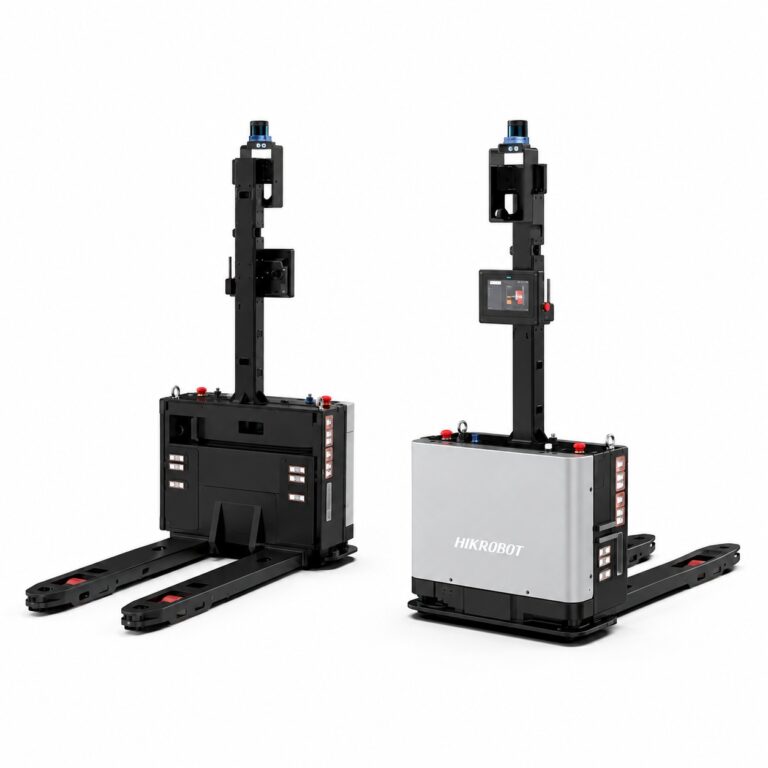
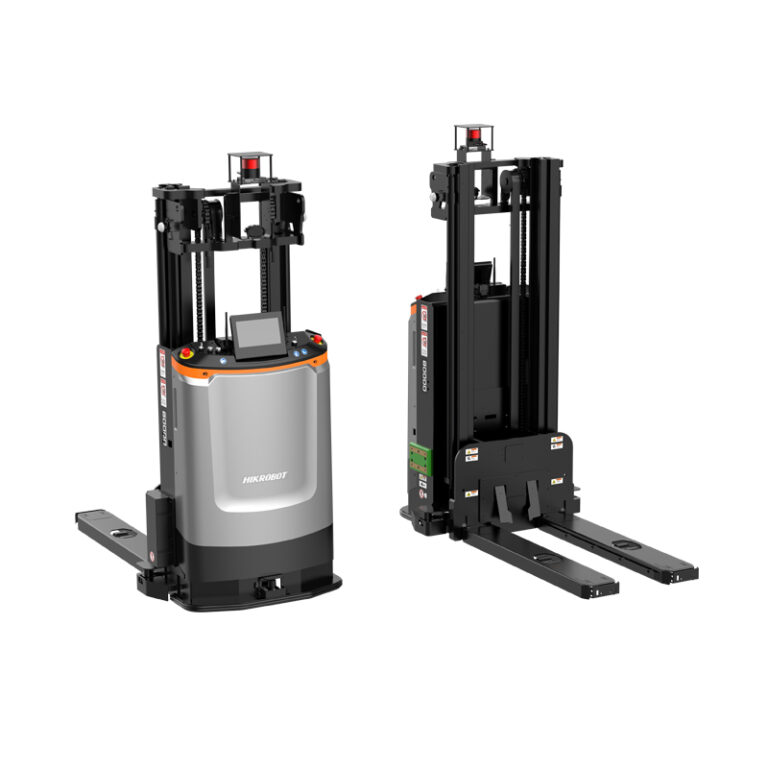
Wesar Intelligence Co., Ltd. offers smart factory and warehouse solutions. These cover logistics robots, software platforms, project setup, and after-sales support. Its RCS-2000 Robot Control System is built for task assignment and AMR scheduling. It also handles route planning, multi-robot teamwork, and communication with on-site gear like access control and elevators. Furthermore, Wesar RCS-2000 supports the management of different AMR types for complex automation projects.
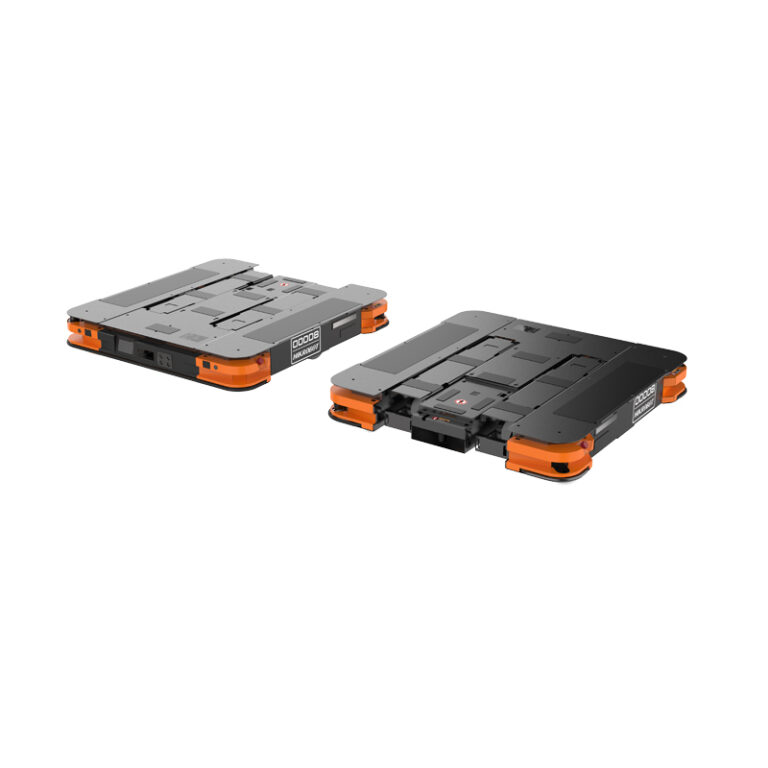
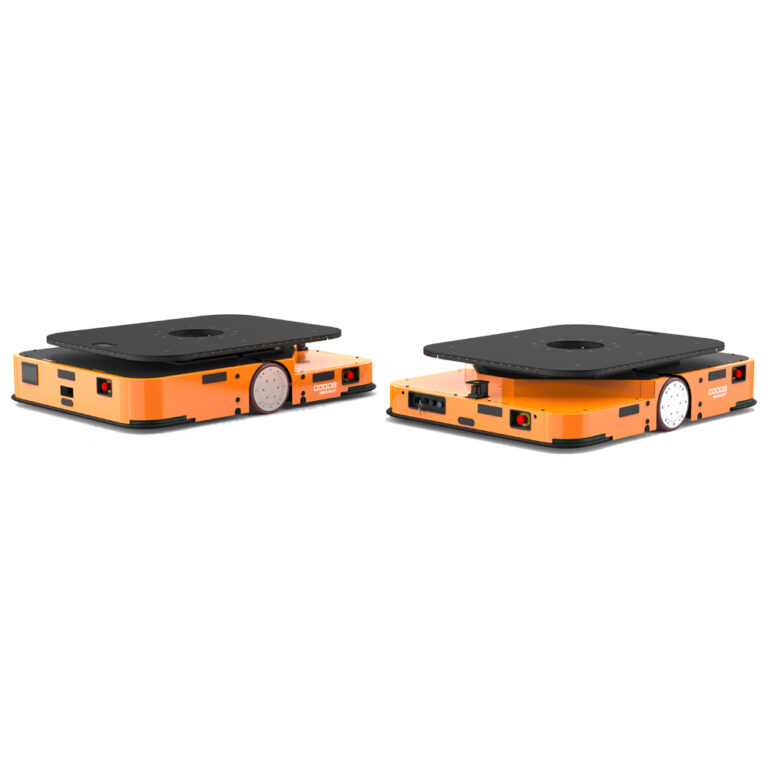
The product lineup from Wesar includes various types of AMRs and software platforms. This helps clients build complete solutions instead of isolated robot setups. For manufacturers, warehouses, logistics centers, and smart factories, this is a big advantage. It makes Wesar a practical partner for linking business systems with actual AMR operations.
Conclusion
After a task is done, RCS sends robot status and mission progress back to upper-level systems. It also sends error alerts and final results. RCS acts as the connection layer that changes SAP, ERP, MES, EMS, and WMS data into real AMR action. It takes in business tasks and creates robot missions. Then, it schedules the right AMR and plans the routes. It also talks with field equipment, watches for errors, and reports results back to the upper-level systems.
Companies planning smart logistics or factory automation should look closely at RCS. It is not just a basic robot dispatching tool. It serves as a central platform for a closed-loop material flow. When set up correctly, it cuts down manual work and boosts delivery accuracy. It also increases visibility and supports a growing AMR fleet operation.
Factories and warehouses constantly demand faster, highly flexible, and data-driven logistics. Because of this, the ability of RCS to link enterprise systems with AMR fleets will remain a huge factor in overall project success.
FAQs
Q1: Can RCS connect with SAP or ERP systems directly?
Yes. RCS can link with SAP, ERP, or other order systems using proper interfaces. This depends entirely on the customer’s IT setup. Following integration, business tasks can go straight to RCS. Then, they are changed into AMR missions.
Q2: What is the difference between RCS and WMS?
WMS usually handles inventory, warehouse spots, picking, putaway, and stock movement rules. On the other hand, RCS focuses on robot task dispatching and route planning. It also manages traffic control, AMR scheduling, and execution feedback. In many projects, WMS creates the warehouse task. Meanwhile, RCS controls exactly how AMRs finish it.
Q3: Why is RCS important for multi-AMR fleet management?
RCS helps various AMR types work together smoothly in a single space. It gives out tasks based on robot type, location, and battery level. It also checks route conditions and mission priority. This lets companies manage larger and highly complex AMR fleets with improved efficiency and clear visibility.






 English
  Russian
  Chinese
  Japanese
  Italian
  Korean
  Spanish
  Arabic
  French
  German