
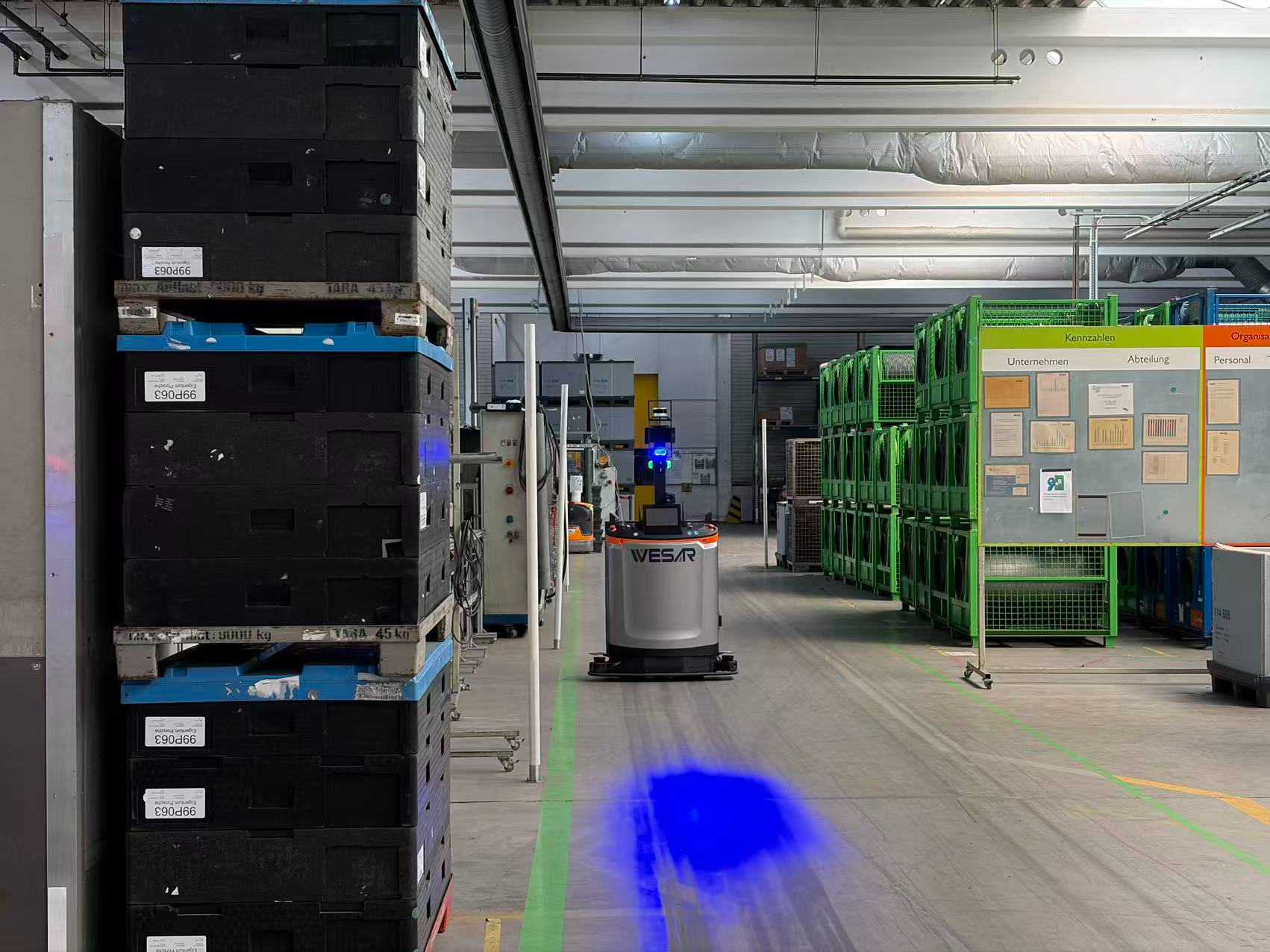
Laser SLAM navigation stands as a vital technology. It enables AGVs to travel precisely across modern warehouses. Furthermore, these machines do not depend heavily upon fixed physical tracks. A laser SLAM AGV does not follow magnetic tape or floor marks. Rather, it scans the immediate surroundings. Then, it constructs a digital map and pinpoints its own location within that layout. The robot also plots routes based on actual operating conditions. Warehouses, factories, distribution centers, and smart logistics projects gain tremendous benefits from this setup. They achieve greater flexibility and safer movement. Operators can also adjust routes easily whenever layouts, workstations, racks, or material flows shift.
What Is Laser SLAM Navigation in AGVs?
Laser SLAM navigation merges laser scanning with simultaneous localization and mapping. This system enables an AGV to draft a map of its working area. At the same time, the machine finds its own exact position within that very space.
How Does Laser Scanning Help an AGV Read the Environment?
A laser scanner emits laser beams. It then calculates the distance between the AGV and nearby items. These surrounding objects might include walls, columns, racks, or machines. Pallets, doors, workstations, and various fixed structures also fall into this group. The AGV gathers this distance data without stopping. As a result, the robot builds a clear digital picture of the warehouse.
This active scanning process grants spatial awareness to the AGV. The robot never moves blindly from point to point. Instead, it compares live laser data against its saved map. The machine might detect that it is approaching a rack corner or a solid wall. In such cases, it instantly tweaks its position. This adjustment keeps the travel route highly accurate.
This feature proves extremely important for warehouse operators. After all, facility layouts are almost never simple. An actual site usually features narrow aisles and packed storage areas. Docking stations, production lines, charging points, and pedestrian zones add to the complexity. Laser SLAM assists AGVs in navigating these tough spaces. Furthermore, it achieves this goal using very few physical navigation markers.
How Does Laser SLAM Help AGVs Build Maps?
A laser SLAM AGV requires a proper map before stable operation starts. This specific map acts as the digital foundation. It supports route planning, traffic control, station docking, and daily task execution.
What Happens During the Mapping Process?
An AGV or an engineer travels across the warehouse during the mapping phase. Meanwhile, the laser scanner gathers crucial environmental data. The system carefully records walls, racks, and columns. Fixed equipment and important boundaries are also saved. Afterwards, the software converts these physical features into a detailed digital map.
Operators can define specific routes once the map is complete. They set up work points, loading areas, and unloading spots. Waiting zones, restricted areas, charging stations, and safety zones are added too. The AGV and the central dispatching system then utilize this map. Together, they guide the daily movements of the fleet.
Laser SLAM offers a major benefit regarding map updates. Users can modify the digital map much more flexibly than physical route systems. A warehouse might add a fresh storage zone. Alternatively, managers might change a material flow path. When this happens, the site usually requires just a simple map adjustment and some software configuration. Staff can avoid large-scale floor reconstruction completely.
How Does Laser SLAM Improve AGV Positioning Accuracy?
Outstanding positioning accuracy remains a primary reason many warehouses select laser SLAM navigation. Precise location tracking allows AGVs to halt at the exact right spot. The robots align perfectly with workstations. Consequently, they handle goods smoothly and require very little manual correction.
Why Is Accurate Localization Critical for Material Handling?
Even a tiny positioning error can trigger massive problems during warehouse operations. For instance, a forklift AGV might fail to insert its forks into a pallet properly. A latent mobile robot could struggle to align with a storage rack. Similarly, a conveyor mobile robot might miss the exact docking position alongside a conveyor line.
Laser SLAM drastically reduces these operational risks. It achieves this by constantly comparing live laser scan data against the saved map. The AGV never relies solely upon wheel movement or basic dead reckoning. Instead, the machine verifies its position using steady environmental features. It actively corrects its location while moving.
This capability proves especially valuable for complex tasks. Pallet handling, line-side delivery, goods-to-person operations, and automated storage projects benefit greatly. The AGV locates itself with extreme precision. As a direct result, the entire material flow becomes noticeably smoother and far more predictable.
Why Is Laser SLAM Useful in Dynamic Warehouse Environments?
Warehouses are definitely not static spaces. People frequently walk through the aisles. Workers move pallets, and manual forklifts drive by constantly. Temporary goods might also appear right near established routes. A reliable navigation method absolutely must handle these sudden changes.
How Does the AGV Keep Moving When the Environment Changes?
Laser SLAM utilizes fixed environmental features as solid location references. However, the AGV also detects shifting objects during active operation. A person, cart, pallet, or forklift might suddenly block the route. The robot quickly recognizes that this new object does not belong to the original map.
The AGV reacts based on predefined system rules. It might slow down, stop entirely, or wait patiently. In some cases, the machine requests an alternative route. This specific ability holds great importance for modern warehouses. After all, humans and robots frequently share the exact same working space.
Older navigation methods often rely heavily upon fixed tracks. Compared to those systems, laser SLAM grants warehouses much more flexibility. It suits sites where racks, workstations, or internal logistics routes shift over time. Therefore, it serves as a highly practical choice. High-mix manufacturing, e-commerce warehouses, 3C electronics, automotive parts logistics, and flexible production lines all utilize this technology effectively.
How Does Laser Obstacle Avoidance Support Safer AGV Operation?
Laser navigation assists the AGV in knowing its exact location. Meanwhile, laser obstacle avoidance helps the machine understand what lies directly ahead. These two vital functions work together seamlessly. They significantly improve overall workplace safety.
What Can an Obstacle Avoidance Laser Detect?
An obstacle avoidance laser effectively detects people, pallets, carts, and equipment. It also spots other random objects located within the AGV’s travel area. Sometimes, a foreign object enters the designated safety detection field. When this occurs, the AGV reduces its speed or stops completely based on its programmed safety logic.
This protective function remains absolutely essential in busy warehouses. AGVs frequently operate quite close to workers or manual forklifts. The laser system helps reduce serious collision risks. It also lowers the likelihood of costly product damage. Obstacle avoidance becomes even more critical for heavy-load or high-lift applications. In those specific scenarios, the general safety risk is noticeably higher.
Furthermore, laser obstacle avoidance boosts daily confidence among human operators. Workers feel much more willing to cooperate alongside AGVs. They easily observe that the robot reacts to people and physical obstacles in real time.
Which AGV Types Can Benefit from Laser SLAM Navigation?
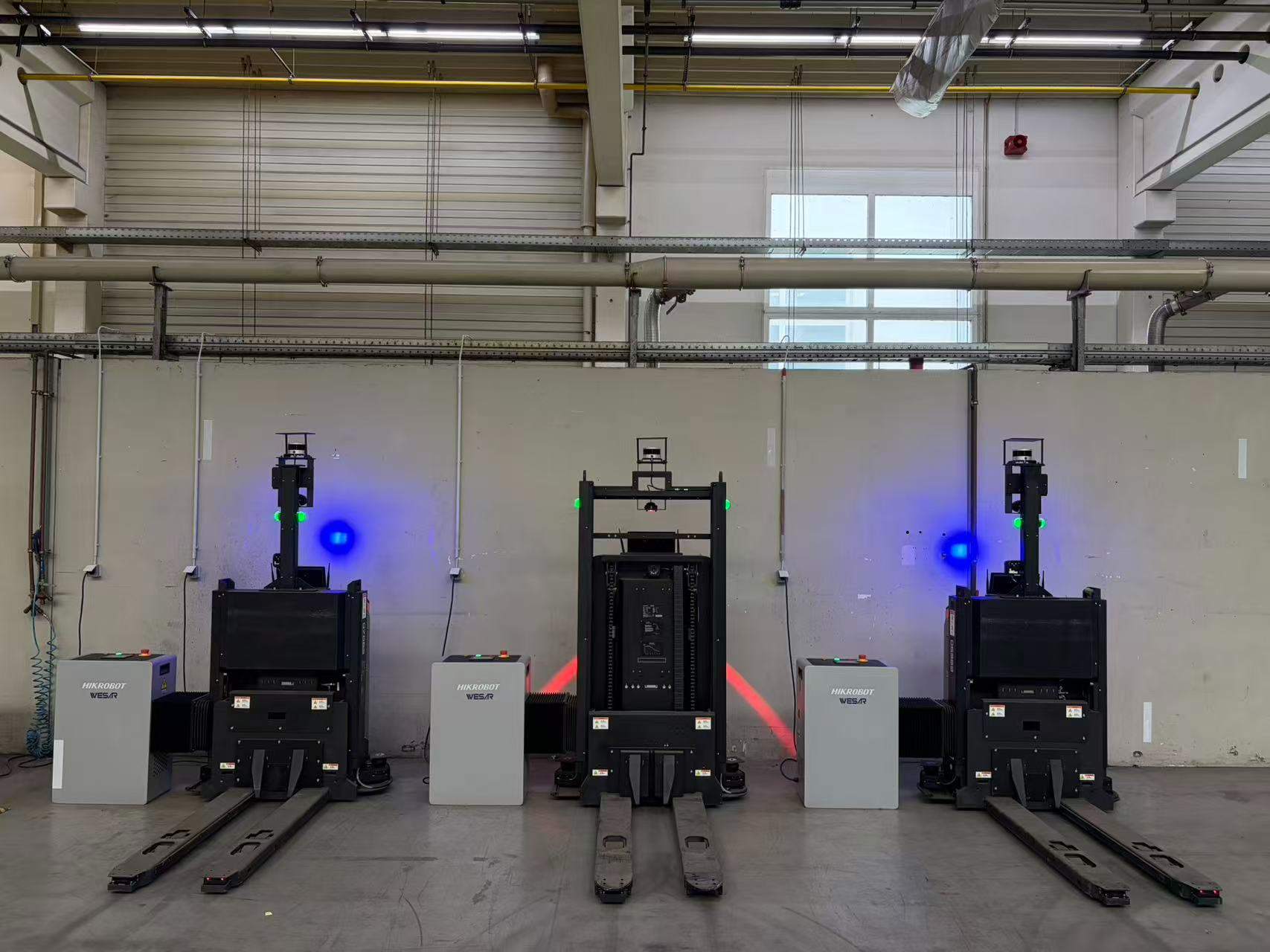
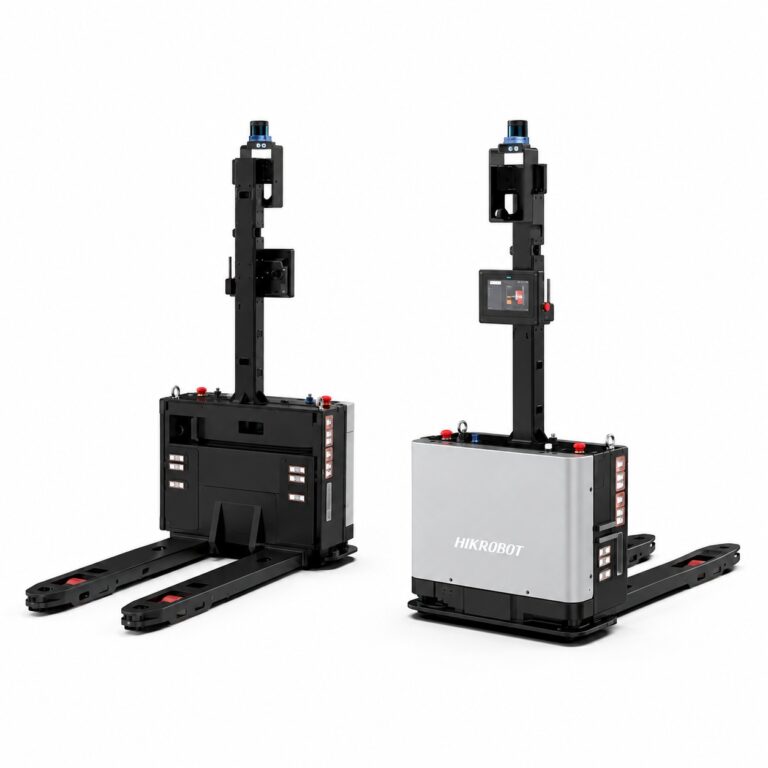
Laser SLAM actively supports many different AGV and AMR forms. These include latent mobile robots and forklift mobile robots. Conveyor mobile robots, carton transfer units, and heavy-duty mobile robots also benefit immensely from this technology.
Why Is Laser SLAM Valuable for Forklift AGVs?
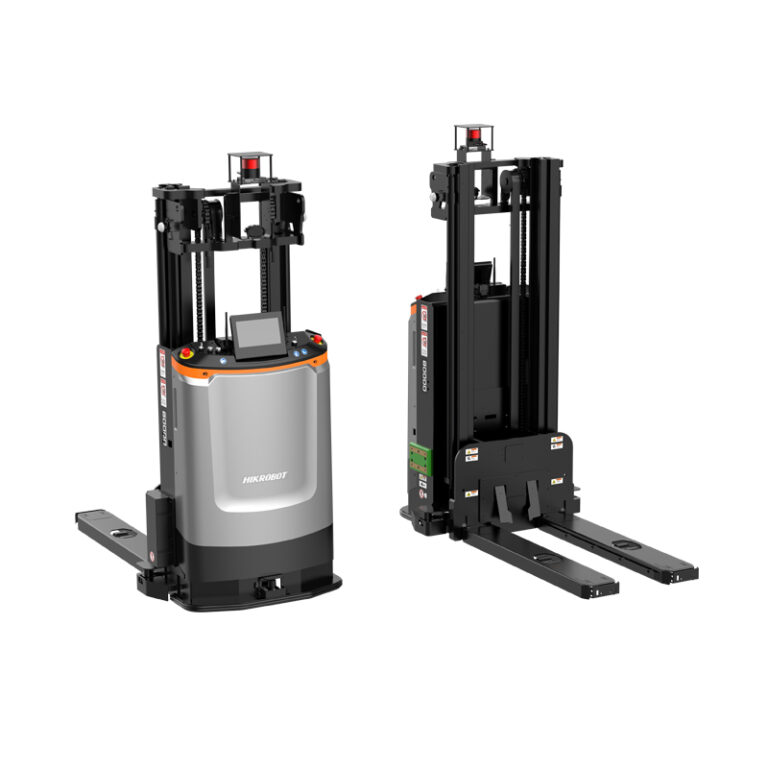
Forklift AGVs regularly handle heavy pallets, tall shelves, and high-position storage zones. They strictly require accurate navigation at all times. Pallet pickup and placement demand incredibly precise alignment. A very small offset might cause a failed pickup or severe pallet damage. It could also force workers to perform extra manual adjustments.
Laser SLAM helps forklift AGVs travel accurately across the facility. They move smoothly between storage areas, production lines, and inbound zones. Outbound zones and docking points are also reached without issue. This navigation method pairs wonderfully with automatic positioning and obstacle avoidance. Together, they allow forklift AGVs to replace countless repetitive manual forklift tasks. This upgrade greatly improves overall safety.
Many warehouses utilize European or American standard pallets. They also feature high shelves and experience frequent inbound and outbound operations. For these specific environments, laser SLAM forklift AGVs prove exceptionally useful.
How Does Laser SLAM Work with RCS and WMS?
Laser SLAM provides the AGV with excellent navigation ability. However, complete warehouse automation also requires solid task management and fleet coordination. This exact situation is where systems such as RCS and WMS become highly important.
How Do Software Systems Turn Maps into Real Tasks?
A WMS effectively manages facility inventory and storage locations. It also handles inbound tasks, outbound tasks, and complex picking logic. Meanwhile, an RCS assigns robot missions and plans efficient travel paths. It manages floor traffic and monitors current robot status. The AGV simply uses its laser SLAM navigation to execute these assigned missions within the real environment.
Consider a scenario where a WMS generates a new pallet transfer task. The RCS quickly selects an available AGV. It sends the machine to the correct pickup point and guides it along the planned route. Finally, the system confirms completion right after successful delivery. The laser SLAM system helps the robot locate itself constantly. It ensures the machine moves accurately throughout the entire process.
This powerful software connection transforms AGVs completely. They change from simple standalone machines into highly intelligent logistics nodes. Furthermore, it helps facility managers track material flow and robot status. They can monitor daily task progress and overall operation efficiency with ease.
Why Choose Wesar Intelligence Co., Ltd. as a Reliable AGV Supplier?
Wesar Intelligence Co., Ltd. provides excellent one-stop intelligent factory and smart warehousing solutions. Their broad offerings include AGV robots, AMRs, WMS systems, and ASRS. They also supply factory equipment, logistics equipment, and sturdy conveyors. Customers can even request fully customized material flow solutions.
How Can Wesar Support Laser SLAM AGV Projects?
Wesar supports clients through every single project phase. They assist from initial consultation and planning straight through to detailed solution design. The company also handles equipment manufacturing, on-site installation, and reliable after-sales service. Its impressive AGV product range covers latent mobile robots and forklift mobile robots. Carton transfer units and conveyor mobile robots are also available. Wesar provides various other logistics robots for diverse industries. These sectors include manufacturing, warehousing, retail, automotive, e-commerce, energy, food, and pharmaceutical applications.
Many customers actively consider deploying laser SLAM AGVs. Wesar can help them evaluate current site conditions carefully. The team plans efficient robot routes and connects the AGVs with existing warehouse systems. They ultimately build a robust solution that fits actual material flow needs perfectly. Consequently, Wesar stands as a highly practical partner. They are ideal for companies looking to boost warehouse efficiency and reduce dangerous manual handling risks.
Conclusion
Laser SLAM navigation helps AGVs build precise digital maps. The robots locate themselves effortlessly and move accurately across busy warehouses. They achieve this without heavy dependence upon fixed physical tracks. The system scans the surrounding environment constantly. It matches real-time data with stored digital maps and supports highly flexible route planning. Ultimately, laser SLAM gives modern warehouses a much more adaptable approach toward daily automation.
AGVs can do much more than merely move goods from one point to another. They reach their full potential when combined with laser obstacle avoidance and smart RCS dispatching. WMS integration and reliable project implementation also play huge roles. Together, these elements allow the robots to become part of a deeply connected smart logistics system. This advanced network improves workplace safety, handling accuracy, daily throughput, and overall operational flexibility.
Warehouses and factories currently face rapidly rising labor costs. They also deal with higher order volumes and much tighter delivery requirements. Furthermore, daily material flow becomes increasingly complex. For these challenging environments, laser SLAM AGVs offer an incredibly strong path forward. They guide businesses toward smarter and highly scalable automation.
FAQs
Q1: What is laser SLAM navigation in AGVs?
Laser SLAM navigation allows an AGV to scan its immediate working environment. The machine builds a detailed digital map and locates itself on that specific map during active movement. This technology helps the robot travel accurately. It removes the need to rely mainly upon magnetic tape or fixed floor markers.
Q2: Is laser SLAM suitable for warehouses with changing layouts?
Yes, absolutely. Laser SLAM is highly suitable for warehouses and factories where internal layouts shift. Routes, racks, workstations, or material flow patterns might change frequently. Managers can often handle these route changes through simple map updates and basic software configuration. They do not need to perform major physical floor reconstruction.
Q3: What is the difference between laser navigation and laser obstacle avoidance?
Laser navigation helps the AGV know exactly where it is located. It also guides the machine on how to move properly through the warehouse. On the other hand, laser obstacle avoidance helps the AGV detect people, pallets, and carts. It spots other physical objects resting in the designated travel area. Because of this feature, the robot can slow down, stop safely, or completely avoid unsafe movement.






 English
  Russian
  Chinese
  Japanese
  Italian
  Korean
  Spanish
  Arabic
  French
  German