
Pallet compatibility is an important but sometimes overlooked part of forklift AGV selection. Two factories may both need to transport 1,500 kg loads, yet their pallets can have very different bottom structures, fork-entry dimensions, and external sizes. An AGV designed around one pallet configuration may therefore be unsuitable for another without mechanical adaptation. Wesar addresses this requirement with different pallet-handling configurations. The standard F3-1500 is suited to common three-runner pallet applications, while the F3G-1500 provides a configuration for full-perimeter pallets. This gives factories more flexibility when introducing automated pallet transport without forcing every site to replace its existing load carriers.
Why Does Pallet Structure Matter When Selecting a Forklift AGV?
A pallet is not simply a platform placed on two forks. Its lower structure determines how a forklift AGV can approach, insert its forks, lift the load, and leave the transfer point.
Why Must the Fork Design Match the Pallet?
Fork length, fork width, fork spacing, fork height, and pallet entry geometry all influence successful handling.
If these dimensions do not match the actual pallet, an AGV may struggle to insert the forks correctly or may require changes to the customer’s existing load carrier. For factories with hundreds or thousands of pallets already circulating between warehouses and production lines, changing every pallet can create unnecessary cost.
Selecting the AGV configuration around the actual pallet is usually the more practical approach.
Why Can Multiple Pallet Types Create an Automation Challenge?
Factories often inherit different carriers from suppliers, production lines, or earlier logistics systems. One area may use a common 1000 × 1200 mm three-runner pallet, while another may rely on a 1100 × 1100 mm full-perimeter pallet.
For this reason, pallet automation should begin with the carrier rather than with the robot specification alone.
Wesar’s F3 series provides different configurations that allow customers to select a forklift mobile robot according to the pallet structure used on site.
What Is the F3G-1500 Forklift AGV?
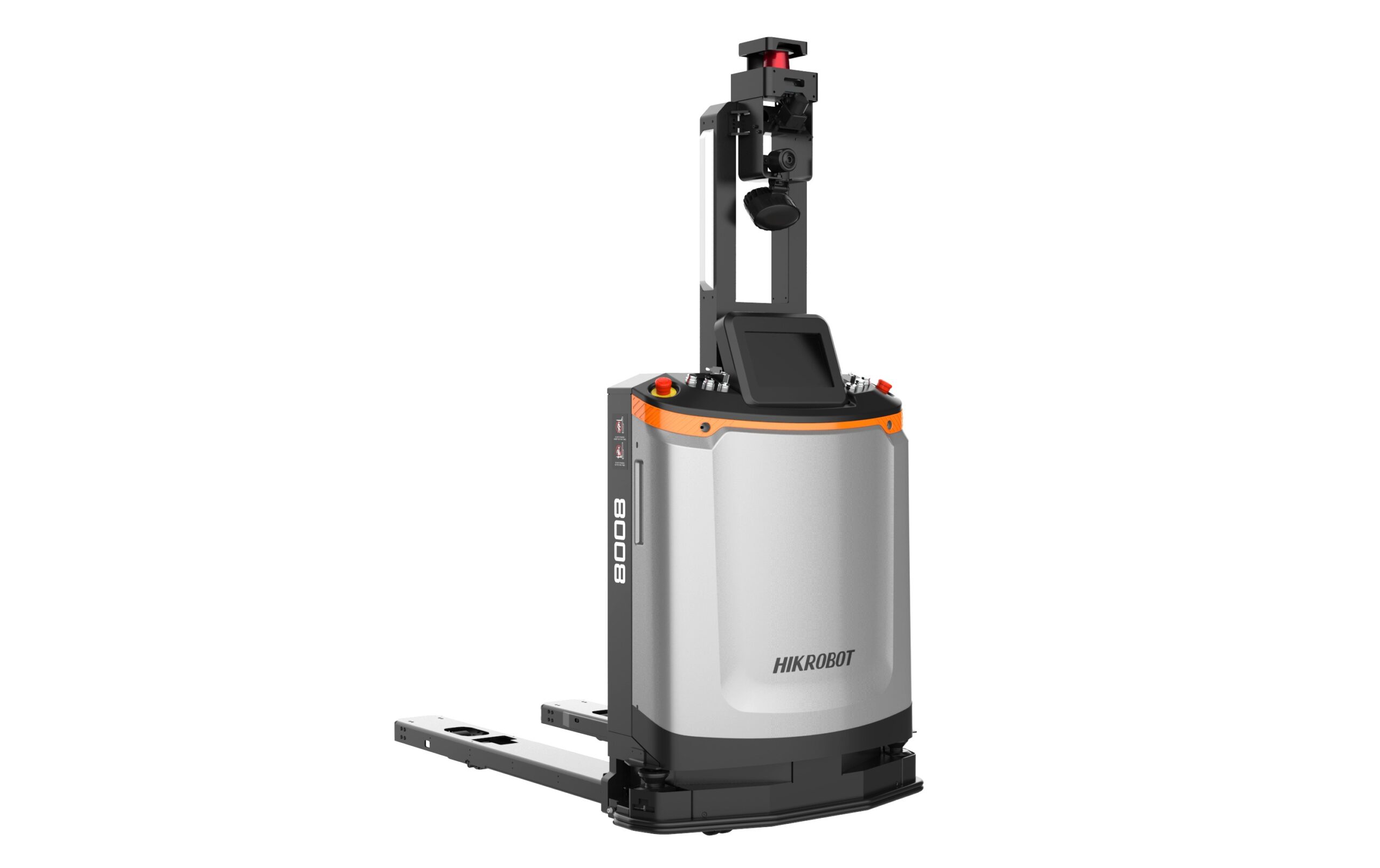
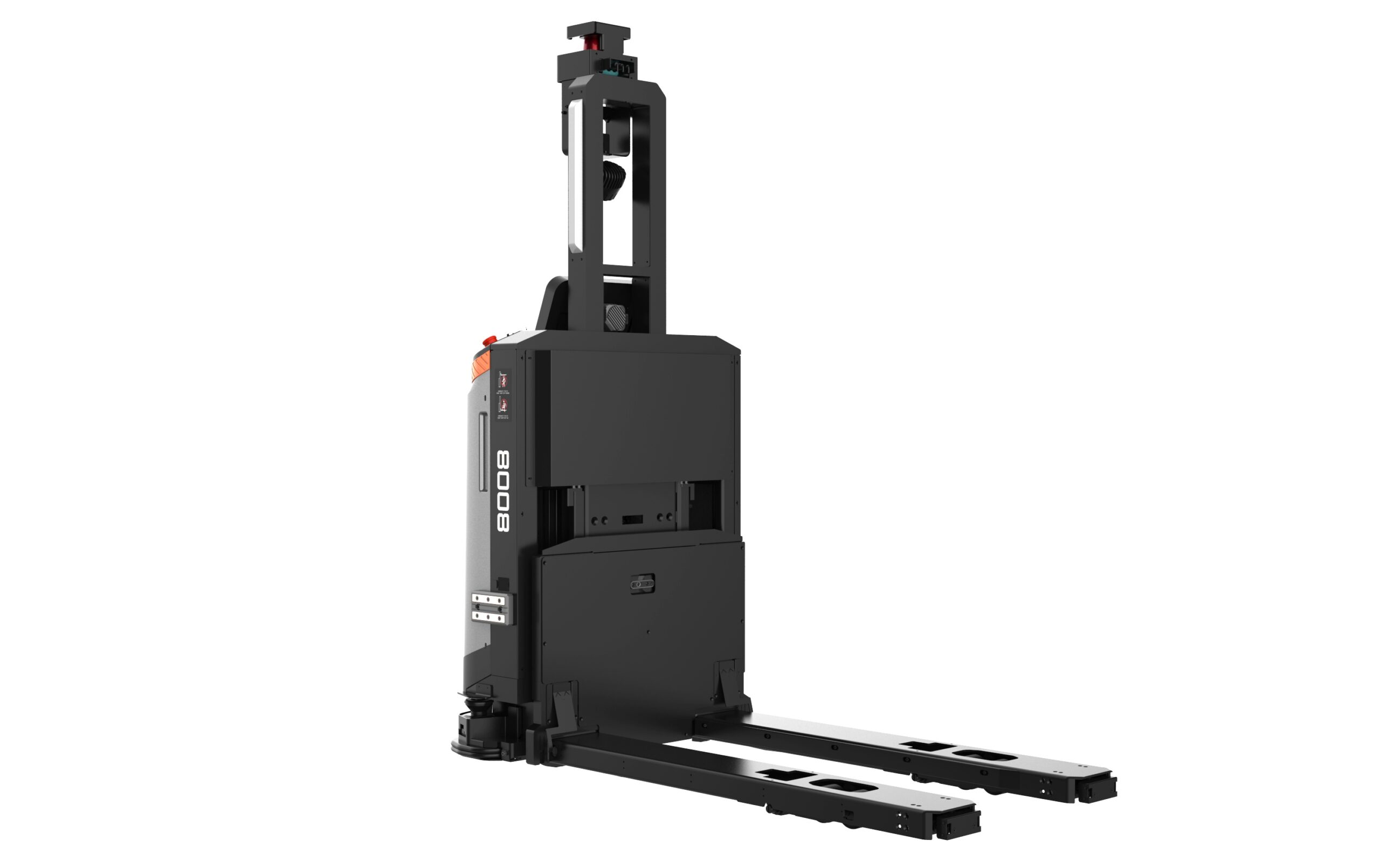
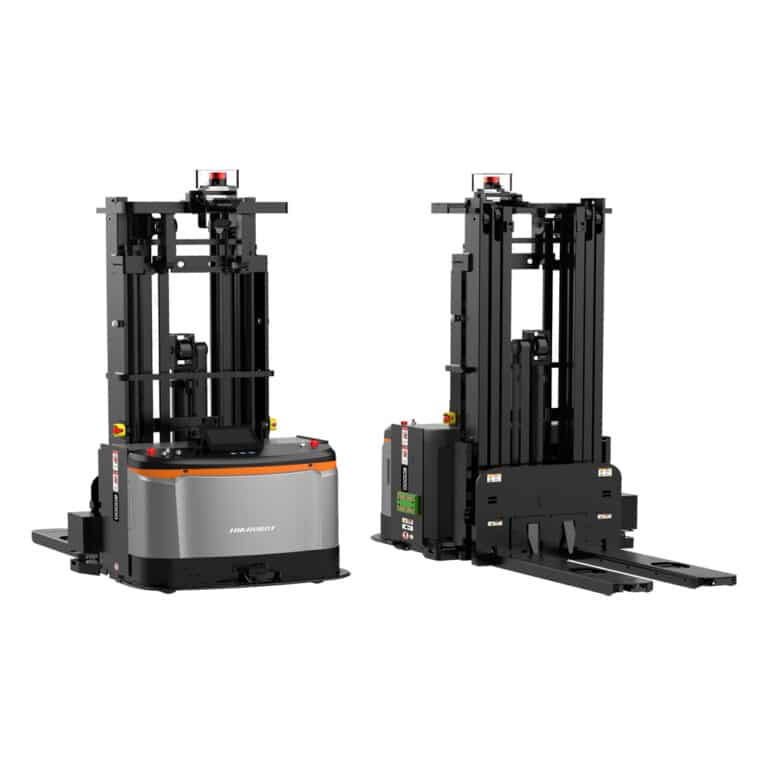
The F3G-1500-A-012-2D-001 is a pallet carrier AGV designed for automated horizontal pallet transportation. It has a rated load of 1,500 kg and uses a welded fork structure.
What Pallet Does the F3G-1500 Handle?
The specified F3G-1500 configuration is designed around an 1100 × 1100 mm pallet, making it suitable for the full-perimeter pallet application addressed by this model.
Its forks are 1,100 mm long, 160 mm wide, and 60 mm thick, with a 620 mm distance between the forks. The lifting height reaches 200 mm, while the lowered fork height is approximately 85–110 mm.
These dimensions are particularly important for companies that want to automate existing full-perimeter pallet logistics rather than converting the warehouse to another pallet standard.
How Much Can the F3G-1500 Carry?
The rated load is 1,500 kg, allowing the AGV to handle many common palletized raw materials, components, work-in-process materials, and finished goods.
Loaded travel speed is 1.2 m/s, while unloaded speed can reach 1.5 m/s. Positioning accuracy is specified at ±10 mm with angular accuracy of ±1°.
The vehicle supports forward movement, reverse movement, curved travel, and in-place rotation.
How Does the F3G-1500 Navigate and Operate Safely?
Reliable pallet movement requires accurate navigation as well as obstacle protection.
How Does Laser SLAM Support Autonomous Transport?
The F3G-1500 uses 2D Laser SLAM navigation. The robot can navigate warehouse or factory routes without requiring operators to manually drive every pallet movement.
Its minimum turning radius is 1,431 mm, while the specified right-angle aisle width is 2,353 mm.
This allows project engineers to evaluate the robot against actual aisle dimensions before deployment instead of selecting a vehicle based only on payload.
What Safety Functions Are Included?
The F3G-1500 uses LiDAR for obstacle detection around the vehicle, together with rear photoelectric sensing. It also supports bumper collision detection, fork-tip safety protection, pallet-position detection, an emergency stop button, and audible and visual alarms.
These protections are particularly relevant in mixed working areas where automated vehicles may operate near people, storage positions, and other equipment.
How Does the F3G-1500 Compare With the Standard F3-1500?
Both models are 1.5-ton pallet-handling AGVs, but their mechanical configuration and target pallet differ.
| Specification | F3G-1500 | F3-1500 |
| Rated load | 1,500 kg | 1,500 kg |
| Main pallet configuration | Full-perimeter pallet | Three-runner pallet |
| Applicable pallet size | 1100 × 1100 mm | 1000 × 1200 mm |
| Fork length | 1,100 mm | 1,230 mm |
| Fork width | 160 mm | 175 mm |
| Fork thickness | 60 mm | 60 mm |
| Fork spacing | 620 mm | 620 mm |
| Lift height | 200 mm | 200 mm |
| Loaded / unloaded speed | 1.2 / 1.5 m/s | 1.2 / 1.5 m/s |
| Positioning accuracy | ±10 mm | ±10 mm |
| Minimum turning radius | 1,431 mm | 1,299 mm |
| Right-angle aisle width | 2,353 mm | 2,213 mm |
| Rated operating time | 4–6 h | 6–8 h |
| Full charging time | ≤2 h | ≤2 h |
What Is the Biggest Difference for Buyers?
The most important distinction is not payload. Both vehicles support 1,500 kg.
The key difference is load-carrier compatibility.
The F3-1500 specification uses 1,230 mm forks and is configured for a 1000 × 1200 mm pallet. This makes it suitable for common three-runner pallet applications.
The F3G-1500 uses shorter and narrower forks with an 1100 × 1100 mm applicable pallet specification. It gives Wesar a solution for customers using full-perimeter pallets.
The correct choice should therefore start with the pallet currently circulating through the customer’s warehouse.
When Should a Factory Choose the F3G-1500?
The F3G-1500 is particularly useful where existing material flow is already based on full-perimeter pallets.
Which Applications Fit This Model?
Typical applications include horizontal pallet movement between receiving and storage areas, warehouse and production lines, production processes, buffer zones, and finished-goods areas.
Because the unit provides only 200 mm of lifting height, its main role is pallet pickup, transport, and set-down rather than high-level racking operations.
For companies replacing manual pallet transport with automation, this makes the F3G-1500 a straightforward option for repetitive floor-level material flow.
When Does the F3-1500 Make More Sense?
The standard F3-1500 remains the better choice when the warehouse mainly operates 1000 × 1200 mm three-runner pallets.
What Advantages Does the Standard F3 Configuration Offer?
According to the current product specification, the F3-1500 has a smaller minimum turning radius of 1,299 mm and a right-angle aisle requirement of 2,213 mm. Its specified operating time is also longer at 6–8 hours.
Therefore, the choice between the two models is not about saying that one is universally better.
The F3-1500 is optimized around one pallet and operating configuration, while the F3G-1500 expands the F3 series to another commonly required carrier structure.
How Does Wesar Support Different Pallet and Load-Carrier Requirements?
A successful AGV project should adapt automation to the customer’s material flow rather than forcing the customer to redesign every carrier around a standard robot.
Both F3 specifications highlight customizable fork dimensions, giving project teams additional flexibility when evaluating actual pallet geometry.
Wesar also provides pallet recognition and position-detection functions. Combined with Laser SLAM navigation, automatic charging, Wi-Fi communication, and warehouse software integration, these features allow pallet transport to become part of a wider automated logistics system.
This is particularly useful for manufacturers with several production areas, different pallet standards, or existing logistics equipment that must remain in service during automation upgrades.
Why Choose Wesar for Pallet Handling Automation?
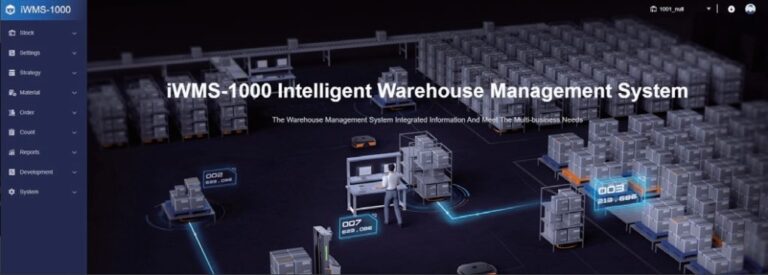
Wesar Intelligence provides forklift mobile robots as part of a wider intelligent warehousing portfolio. Its capabilities cover AGV and AMR equipment, warehouse software, system planning, automated storage, logistics equipment integration, project implementation, and after-sales support.
For pallet-handling projects, this means customers can evaluate more than rated load alone. Pallet structure, fork dimensions, aisle width, navigation, charging strategy, software integration, and material-flow requirements can be considered as one system.
Conclusion
The F3G-1500 expands Wesar’s 1.5-ton pallet-handling capability for factories using full-perimeter pallets.
With a 1,500 kg rated load, 1100 × 1100 mm pallet configuration, Laser SLAM navigation, ±10 mm positioning accuracy, 1.2/1.5 m/s loaded and unloaded speeds, multiple safety protections, and automatic charging support, it is designed for repetitive automated pallet transport.
The standard F3-1500 remains suitable for common 1000 × 1200 mm three-runner pallet applications. The F3G-1500 addresses a different carrier structure.
For buyers, the practical lesson is simple: do not select a forklift AGV by load capacity alone. Confirm the pallet structure, dimensions, fork entry, aisle conditions, transport distance, and daily workflow first. Choosing the correct AGV configuration around the existing load carrier can make warehouse automation much easier to deploy.
FAQs
1. What type of pallet is the F3G-1500 designed for?
The specified F3G-1500 configuration supports an 1100 × 1100 mm pallet and is designed for full-perimeter pallet applications.
2. What is the difference between the F3G-1500 and F3-1500?
Both have a 1,500 kg rated load, but they use different fork dimensions and pallet configurations. The F3G-1500 is configured for 1100 × 1100 mm full-perimeter pallets, while the F3-1500 specification uses a 1000 × 1200 mm pallet configuration suited to common three-runner pallets.
3. Can the fork dimensions be customized?
Yes. Both product specifications state that fork dimensions can be customized, which allows project engineers to evaluate the AGV around specific pallet and load-carrier requirements.






 English
  Russian
  Chinese