
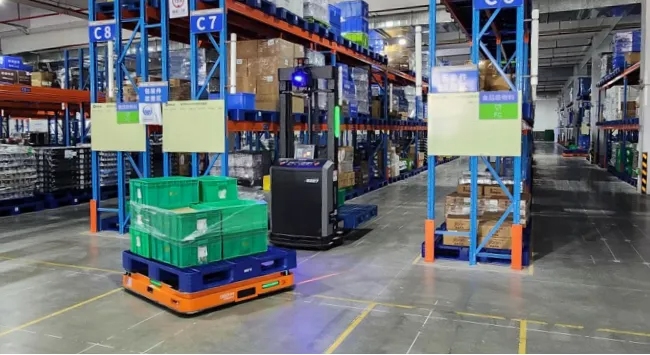
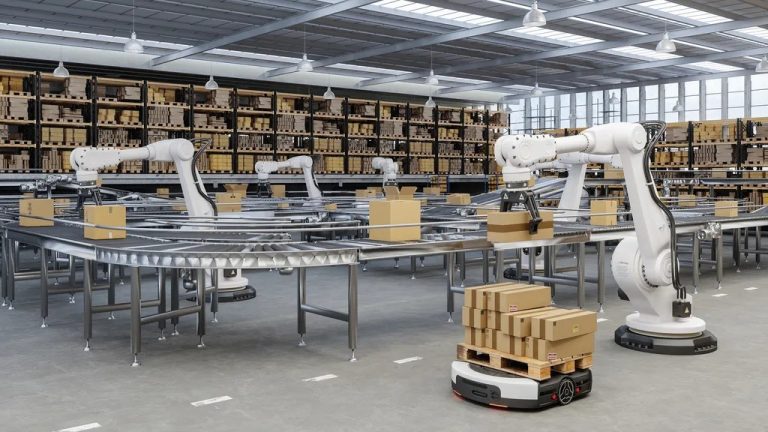
If you spend some time inside one of France’s newer e-commerce warehouses—those big rectangular buildings along the outskirts of Paris, Lyon, or Lille—you pick up on something right away. The place feels busier than ever, but strangely enough, you see fewer people pushing carts. Instead, small automated vehicles weave through aisles, turning tight corners as if they’ve been working there for years. Warehouses that once relied heavily on seasonal labor now depend on fleets of AGVs to keep orders flowing.
This change didn’t come from a sudden fascination with robots. It came from necessity. French e-commerce has been growing fast, and warehouse managers simply ran out of options. They needed a way to move goods quickly, reliably, and with fewer hands. And 自动导引车系统 stepped into that gap almost naturally—not by replacing people, but by taking over the grind that was wearing teams down.
Talk to any logistics supervisor in France and they’ll tell you the same thing: “We didn’t bring in AGVs because it sounded futuristic. We brought them in because the old model was falling apart.”
What’s Driving France Toward AGV Adoption?
Order volumes that keep climbing—sometimes overnight
French e-commerce is a bit unpredictable. One day orders look manageable, the next day a flash sale or national holiday spikes the numbers by 40%. Warehouses weren’t built for this kind of volatility.
Before AGVs, workers walked miles per shift—some studies say 10 km or more—just to keep bins moving. During peak weeks, the entire operation pushed its limits.
AGVs help smooth out these spikes by taking over:
- long-haul tote transfers
- repetitive replenishment loops
- bin movement between zonesWhen the workload explodes, the AGV fleet simply runs harder and longer. Humans don’t.
A labor market that won’t go back to the way it was
France’s logistics sector has been dealing with recruitment problems for years. Younger workers often avoid warehouse jobs because of:
- physical strain
- night shifts
- temporary contracts
Hiring enough staff for the holiday season has become nearly impossible. AGVs provide breathing room—covering tasks that otherwise require a rotating roster of short-term hires.
Even experienced workers appreciate the shift. Instead of hauling loads across the warehouse, they move into tasks where judgment matters—quality checks, picking accuracy, packing.
Safety pressure in high-velocity environments
Forklifts in fast-moving warehouses have always been a concern. During busy periods, aisles become crowded and visibility drops. Even a minor collision can shut down an entire picking lane.
AGVs bring order to the chaos. Their routes are predictable. They don’t speed. They don’t become distracted. And with multi-layer sensors, they stop before anything gets close.
Warehouse managers who install AGVs often report fewer near-misses within weeks.
How AGVs Fit the French E-Commerce Workflow
Faster put-away without burning out your team
Inbound trucks drop materials fast, especially in grocery e-commerce. But without automation, put-away slows everything else down. AGVs shorten that turnaround significantly. Goods roll straight from receiving onto mobile platforms that head directly to assigned aisles.
Workers don’t have to sprint between zones just to keep up.
Helping pickers stay in picking zones—where they’re most productive
Pickers are most efficient when they stay within a defined zone instead of walking back and forth to drop-off points. AGVs handle the movement for them, which:
- saves energy
- shortens cycle time
- reduces mistakes from fatigue
A logistics manager in northern France mentioned that once they added AGVs, pickers didn’t just get faster—they also made fewer errors because they weren’t exhausted.
Making better use of expensive warehouse space
Space in and around major French cities isn’t cheap. Many operators squeeze every centimeter out of their floor layouts. AGVs allow narrower aisles because they don’t need the clearance of forklifts. They also move in smoother patterns, which helps planners densify storage areas without compromising flow.
What French Logistics Operators Want From AGV Vendors
Adaptability—not a system that locks the layout forever
Warehouses change constantly. A new product category arrives, the picking strategy changes, or a storage zone is expanded. AGVs using natural navigation give operators room to breathe, because they can adjust routes without installing reflectors or redesigning aisles.
The ability to carry mixed loads safely
French e-commerce often mixes:
- heavy grocery items
- delicate electronics
- multi-line apparel orders
AGVs must handle this mix without wobbling, tipping, or braking too harshly. Smooth acceleration and predictable cornering matter more than pretty specs on paper.
True IT integration—not a standalone robot
The average French warehouse uses at least three digital systems to manage daily operations. If AGVs can’t talk to the WMS or order-picking software, they add more problems than they solve. Operators expect seamless data flow:
- task dispatch
- location tracking
- real-time fleet status
- automated task assignment
This is where good software matters as much as the robot itself.
Quick deployment and consistent support
Warehouses can’t stop for weeks while an automation project unfolds. They want:
- fast installation
- predictable timelines
- local or remote technical support
- simple maintenance routines
Speed and reliability matter more than fancy demonstrations.
About Wesar Intelligence Co., Ltd.
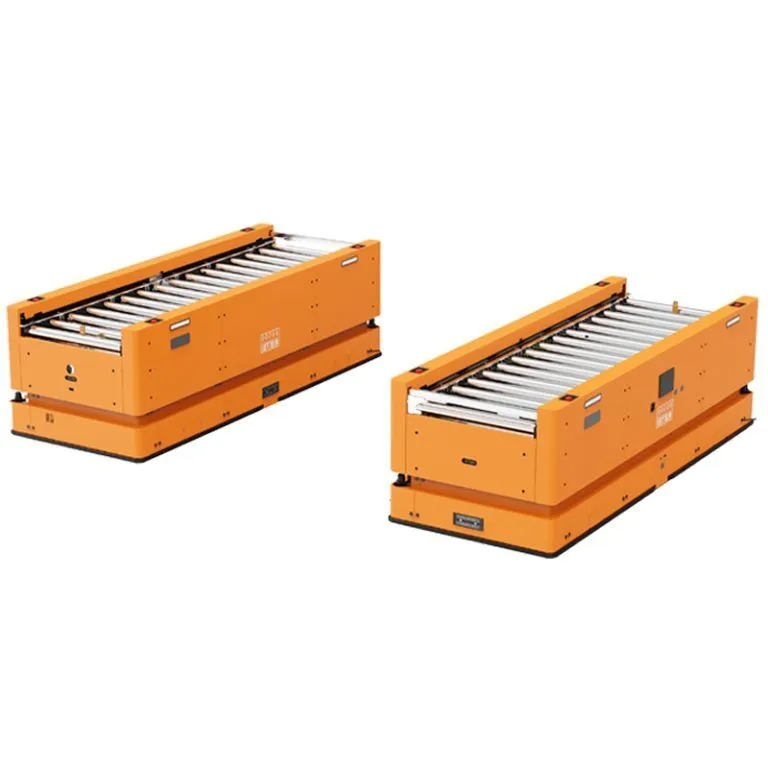
Wesar has positioned itself as a full-scope partner for modern logistics and manufacturing automation. The company develops autonomous mobile robots, CTUs, heavy-load solutions, and integrated warehouse systems designed for industries dealing with rising labor costs and high-throughput requirements.
Its engineering teams build the navigation software, hardware platforms, scheduling algorithms, and integration tools needed to run 自动导引车系统 in complex operations. For e-commerce warehouses—the kind that operate 20 hours a day and shift layouts often—this engineering depth becomes crucial.
Wesar’s strengths lie in system-level thinking:
from consulting and planning, to deployment and long-term support. This approach helps warehouses automate without shutting down operations or rebuilding their entire infrastructure.
结论
France’s e-commerce boom didn’t just increase shipments—it rewrote the rules of warehouse operations. Facilities must move faster, push more volume, and stay consistent even when labor is short and demand is unpredictable. AGVs bring order, stability, and a more sustainable pace to this environment.
Most importantly, they help warehouses grow without stretching people beyond their limits. When AGVs handle the repetitive transport that once consumed hours of labor each shift, workers can stay focused on tasks where human judgment still matters.
As more French operators evaluate automation, the question is shifting from “Do we need AGVs?” to “Which AGV system fits our warehouse today—and tomorrow?”
Vendors like Wesar, who build both the hardware and the system intelligence behind it, are becoming key partners in answering that question.
FAQs About AGVs in France’s E-Commerce Warehouses
Why are AGVs expanding so quickly in French e-commerce?
Because warehouses face rising order volumes, tight deadlines, and labor shortages. AGVs stabilize workflow and take over repetitive transport tasks.
Can AGVs operate in older French warehouse buildings?
Yes. Systems using natural navigation handle narrow aisles, shifting layouts, and mixed traffic without needing heavy infrastructure changes.
Are AGVs compatible with common WMS platforms used by French operators?
Modern AGV systems—including those from Wesar—are built to integrate with WMS, picking systems, and warehouse scheduling tools.
Do AGVs reduce walking distance for workers?
Significantly. Instead of carrying bins across zones, workers stay in picking areas while AGVs handle transport. This reduces fatigue and improves accuracy.
Why do logistics operators choose Wesar for AGV projects?
Wesar provides full-stack support—from consulting to deployment—and builds AGVs designed for fast installation, stable navigation, and heavy daily workloads.






 Chinese
  English
  Russian