
自动导引车(AGV) keep changing how material moves through pharmaceutical and chemical plants. The pharma side deals with strict cleanroom rules, full batch traceability, and zero tolerance for contamination during transfers. Chemical operations face different pressures: corrosive substances, flammable zones, heavy bulk loads, and the constant need to limit exposure risks. AGVs step in to handle those routine transports—from raw intake through production to outbound—giving steady, repeatable results that manual forklifts or carts rarely sustain over long shifts.
Pharma sites use 自动导引车系统 to pull human traffic out of controlled areas, dropping airborne particles and cutting cross-contamination chances. In chemicals, the right AGV setups—sealed components, anti-static finishes, explosion-proof ratings—match zone requirements and reduce incident frequency. Field installations regularly show pallet throughput jumping 50% or higher, with tighter inventory logs from direct WMS links.
Coverage here focuses on forklift AGVs for pallet-heavy duties, latent AGVs for low-profile cart moves, and Carton Transfer Unit (CTU) systems for carton-level sorting—applied across raw material unloading, inter-process feeds, finished goods warehousing, and inbound/outbound flows.
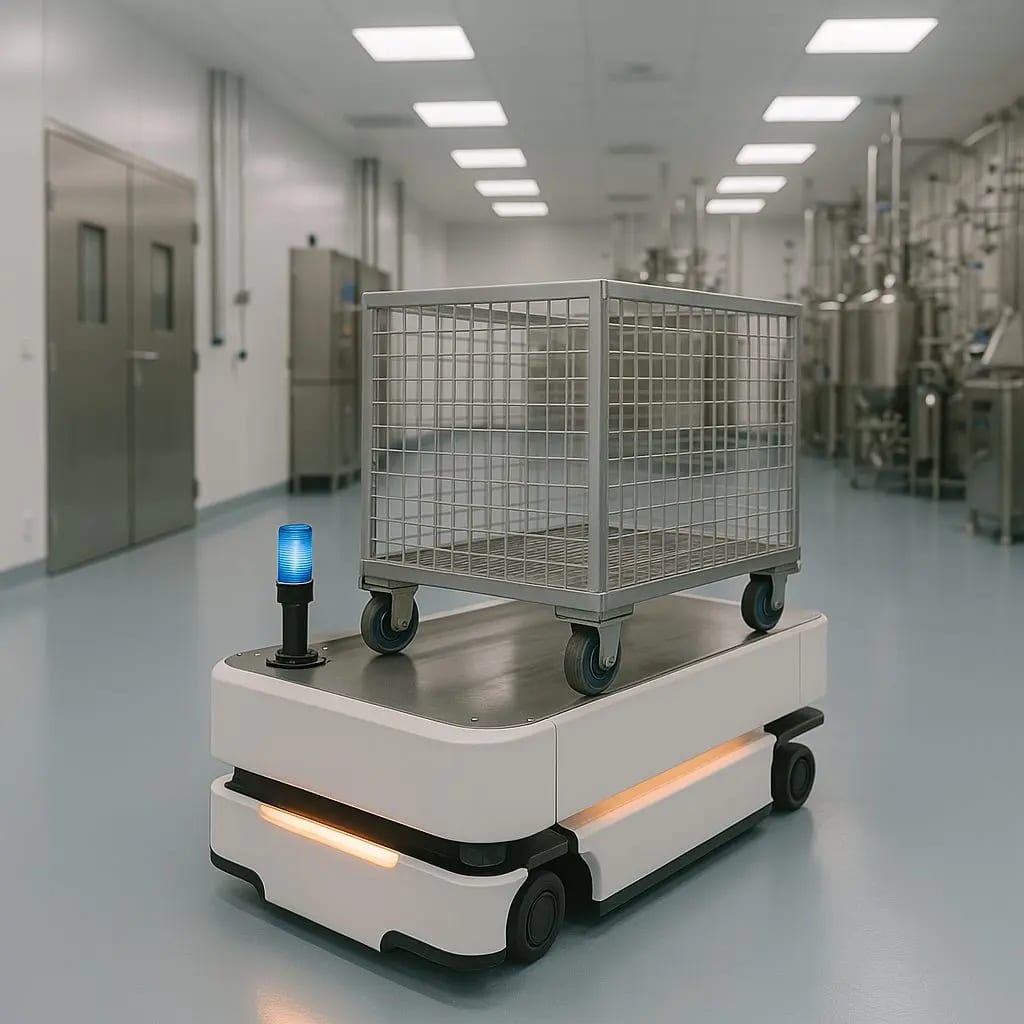
Why AGVs Are Essential in Pharmaceutical and Chemical Industries
Pharmaceutical lines run on Good Manufacturing Practice standards that penalize any inconsistency. Manual transport brings variables: operators walking clean zones spread particles, and fatigue causes off-position pallets that break batch chains. AGVs stick to laser, vision, or guided routes, docking precisely for handoffs. Integration with conveyors or AS/RS keeps material cycling nonstop.
Chemical plants add hazard layers. Vapors, aggressive liquids, and bulk weights turn standard handling into spill or spark risks. AGVs built for these use certified safety designs, robust frames, and surface treatments to fit classifications. Beyond meeting regs, the setup lowers near-miss events, steadies output, and can trim insurance costs tied to exposure.
Both sectors gain from reassigning staff away from driving to inspection or upkeep, quicker cycle times, and reliable delivery windows. Pharma warehouses often see pallet moves double without headcount increases; chemical reactors stay fed without feedstock delays halting batches.
Key AGV Types and Their Applications in Pharma & Chemicals
AGV choice comes down to load specs, aisle widths, and process rhythm.
Forklift AGVs (e.g., Counterbalanced and Stacking Models)
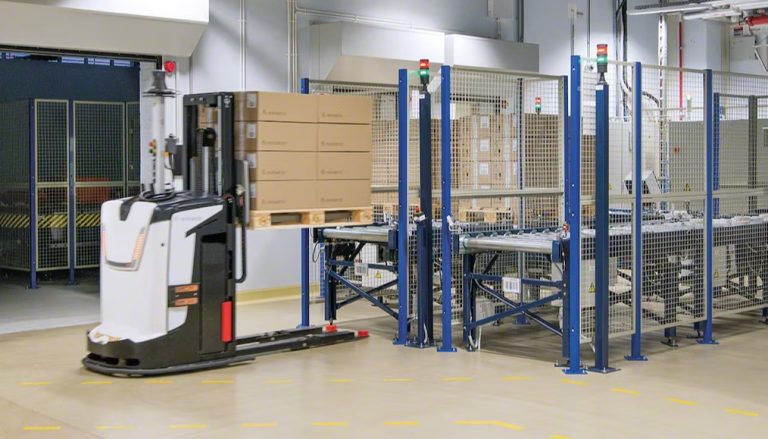
Forklift AGVs take on big weights and heights. In pharmaceutical warehouses, they shift finished pallets from packaging ends to high-bay racks or cold storage. Stacking reaches several levels, packing more into temperature zones where space costs run high.
Chemical facilities use them for drum or IBC unloading at docks, then routing to feed points. Lift ratings manage bulk raw materials without strain, and tight navigation works in older, narrow-aisle plants.
Multi-shift consistency shines. Once set, cycles repeat accurately—protecting fragile pharma packaging and keeping chemical stock rotation on schedule.
Latent / Lurking AGVs
Latent AGVs stay low, slipping under carts or dollies to lift and carry. Compact builds suit tight pharma formulation spaces and chemical intermediate areas.
Pharma sees them delivering APIs or excipients from weigh stations to mixers, preserving airflow. Small exposed area eases cleaning, and towing enclosed carts keeps sterility intact.
Chemicals apply them for partial batch moves between vessels or labs. Low height clears under conveyors or door sills, enabling just-in-time drops that keep reactions running.
CTU-Based AGVs for Sorting and Inbound/Outbound
CTU AGVs target single cartons, cases, or small units over full pallets. Pharma distribution uses them to sort vials, blisters, or bottles into outbound orders before loading.
Chemical secondary packaging routes labeled cases from fillers to palletizers or racks. Vision checks catch label issues inline.
Inbound, CTU breaks mixed pallets by SKU or lot, routing faster than hand sorting in variant-heavy lines.
Real-World Applications: From Raw Materials to Finished Goods Shipping
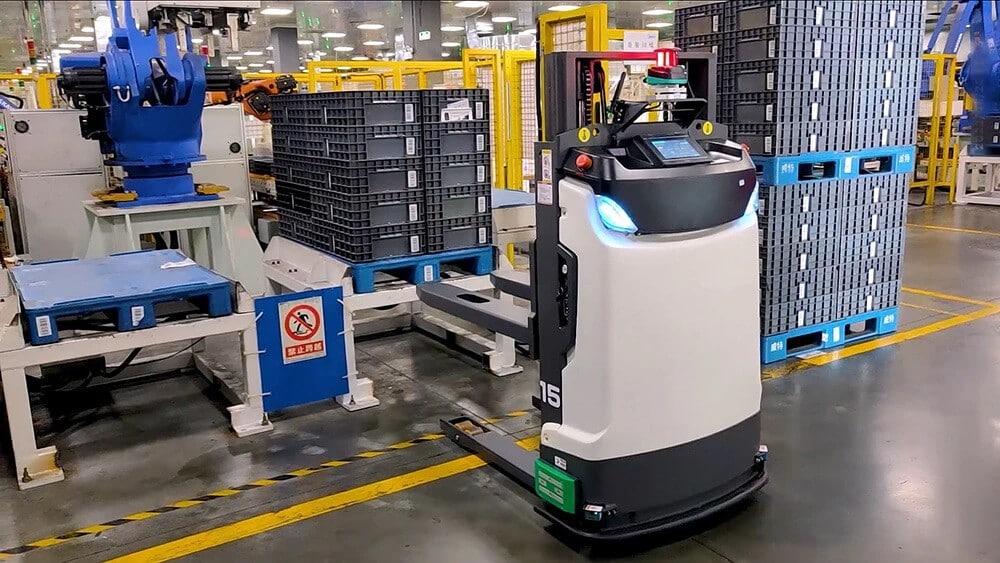
Raw Materials Loading/Unloading and Delivery
Receiving starts the chain. Forklift AGVs unload incoming pallets—APIs for pharma, solvents for chemicals—scan tags, and route to quarantine. Cleared loads go via latent AGVs to fine stations. Installations cut delivery from hours to under half an hour, with zero misplacements.
Chemical bulk uses heavy forklift AGVs to place containers at racks, capturing every step for audits.
Inter-Process Transfer in Production
Production keeps flowing with AGVs. Pharma granulate bins move from granulators to presses via latent units without airflow breaks. Chemical feedstock hits reactors on schedule through forklift or latent timed drops.
No waits mean higher equipment run rates and steadier batches.
Finished Goods Handling, Warehousing, and Outbound Shipping
Post-pack, forklift AGVs rack finished pallets or stage outbound. High-reach fills pharma’s valuable storage. Loading matches manifests for smooth dispatch.
CTU handles pharma outbound mixes; chemicals lean pallet flows.
CTU Sorting for Inbound/Outbound Efficiency
Inbound CTU splits receipts by lot or expiry, directing precisely. Outbound assembles with accuracy rates over 99.9% in busy pharma logistics.
Challenges and How to Overcome Them When Implementing AGVs
Uneven floors disrupt paths; laser guidance tolerates some, or targeted repairs fix chronic spots. Legacy system ties need mapping, but flexible software cuts complexity.
Hazard certifications come early—many AGVs offer modular options for zones. Staff training on dashboards and overrides avoids stops.
Returns land in 18–36 months from labor shifts, fewer damages, and capacity lifts. Pilot zones prove value before scale-up.
Wesar Intelligence Co., Ltd.: Providing Tailored AGV Solutions
威萨智能股份有限公司有限公司。, located in Suzhou, Jiangsu, China, brings nearly two decades of focus on intelligent factory and smart warehousing. Operating from a 5,000㎡ production site, a team exceeding 100—including 35 production personnel and 26 technical specialists—handles full-cycle delivery: consulting, software builds, equipment fabrication, installation, and support. The AGV range covers Forklift Mobile Robot (FMR) for pallet loads, Latent Mobile Robot (LMR) for under-cart work, Carton Transfer Unit (CTU) for box handling, Heavy-Duty Mobile Robot (HMR) for tough applications, Conveyor Mobile Robot (CMR), and Mobile Collaborative Robot (MCR). Designs stress precision, safety, and adaptability to fit pharmaceutical and chemical process demands.
结论
自动导引车系统 bring concrete advances to material handling in pharmaceutical and chemical operations by satisfying needs around compliance, hazard management, speed, and tracking. Forklift AGVs cover pallet bulk from receipt to shipment, latent AGVs manage sensitive-zone transport quietly, and CTU systems refine sorting for smooth throughput. Facilities running them note productivity rises, risk drops, and better asset use. As volumes grow and rules tighten, AGVs stand as solid progression. Site reviews typically uncover the strongest starting points.
常见问题
What benefits do forklift AGVs bring to pharmaceutical warehouse operations?
Forklift AGVs take over pallet transport, stacking, and retrieval, easing labor loads while aligning with GMP through reduced access and solid tracking. They hold cold-chain stability and lower damage compared with manual runs.
How do latent AGVs support raw material handling in chemical facilities?
Latent AGVs carry carts or containers at low level between storage and zones, avoiding floor clutter. Reliable paths prevent holdups during key reactor feeds.
Do CTU AGVs enhance outbound sorting for finished pharmaceutical goods?
CTU AGVs sort cartons or cases quickly by priority or destination prior to pallet build or load. This curbs mix-up risks in diverse orders and hastens urgent dispatches.
Which safety elements matter most for AGVs in chemical plants?
Chemical operations need sealed drives, anti-static builds, and zone certifications on AGVs. Extra detection sensors, quick stops, and alerts raise protection in mixed areas.
How quickly can AGV systems pay back in pharmaceutical or chemical settings?
Payback usually hits 18 to 36 months through staffing cuts, incident drops, extra moves per shift, and handling savings. Early pilots in raw or finished sections show results fast.






 Chinese
  English
  Russian