消息

RCS-2000 Robot Control System: How to Manage Large-Scale AGV/AMR Fleets in Smart Warehouses

目录

RCS-2000 robot control system operates as the central dispatcher that takes care of task assignment, AMR scheduling, and route planning for logistics robots inside plants and warehouses. Fleets routinely grow to include latent mobile robots handling cart pulls, forklift mobile robots managing pallet lifts and stacks, carton transfer units breaking down cases, and conveyor mobile robots linking process steps. When vehicle numbers reach triple digits and multiple types share the same floor space, simple controllers or operator-directed moves begin to break down—paths intersect, tasks pile up unevenly, and key stations sit idle waiting for material.


RCS-2000 Robot Control System How to Manage Large-Scale AGVAMR Fleets in Smart Warehouses

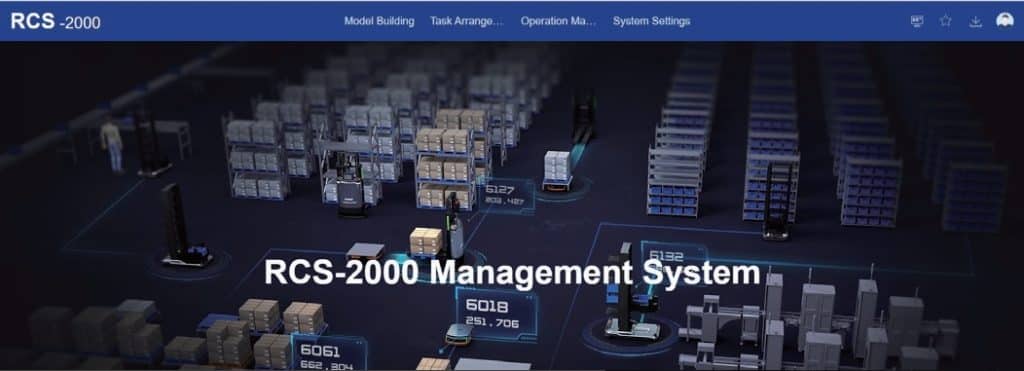
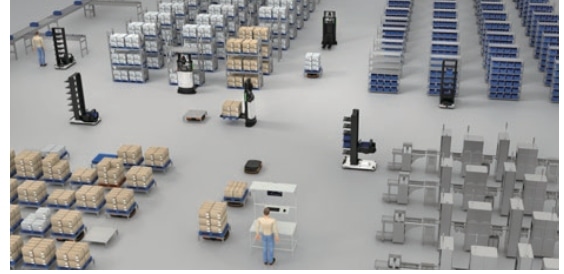
Narrow corridors, transfers across floors, high-rack storage, demand swings, and the requirement to sync robot actions with production orders or WMS directives keep adding complexity. RCS-2000 deals with those conditions by supporting 1,200+ robots under one map, dispatching up to 1,000 tasks in a single second, and accommodating 300 different AMR models. Mixed fleets function without friction—LMRs, FMRs, CTUs, and CMRs coordinate load handoffs and movements. The platform connects to doors, elevators, and peripheral equipment for automated traffic handling while supplying live queue monitoring and exception resolution.

The sections below cover what RCS-2000 actually provides in daily use, its primary capabilities, deployment patterns seen in manufacturing and logistics, tangible results from installations, rollout procedures, and practical factors when selecting a control system for growing fleets.

What Is a Robot Control System (RCS) and Why It Matters for AGV/AMR Operations

Robot control systems form the coordinating layer sitting above the individual vehicle controllers. They pull orders from WMS, MES, or ERP platforms, break those into executable moves, assign vehicles, compute paths, and apply traffic rules. Lacking effective dispatching, even advanced robots end up creating congestion in busy zones or leaving coverage gaps during high-demand periods.

Entry-level fleet managers work adequately for small groups following fixed routes. Platforms at the level of RCS-2000 scale to very large clusters, adjust routes in real time around blockages, and unify fleets where guidance technologies vary—laser, vision, magnetic, or hybrid setups. Integration with facility hardware converts static floor plans into dynamic systems: access doors trigger automatically, elevators receive calls in proper sequence, and junction rules prevent deadlocks.

Smart warehouses linked to fast order fulfillment depend on a capable RCS to shorten dwell times, distribute workloads evenly across vehicles, and deliver uninterrupted material supply to lines. Installations regularly demonstrate dependable delivery timing even with variable loads, reduced empty travel, and longer battery run times from better task queuing.

Key Features of RCS-2000 Robot Control System


RCS-2000机器人控制系统

RCS-2000 stands apart in several areas that influence throughput and reliability during peak operations.

Ultra-Large-Scale Cluster Scheduling and Task Assignment

One map handles 1,200+ robots. Task allocation reaches 1,000 AMRs per second. In settings that feed multiple automotive assembly lines or distribute electronics parts at speed, that dispatch rate stops queues from building. Prioritization handles rush tasks while keeping routine flows balanced so critical points stay supplied.

Mixed-Type Robot Coordination (LMR, FMR, CTU, CMR)

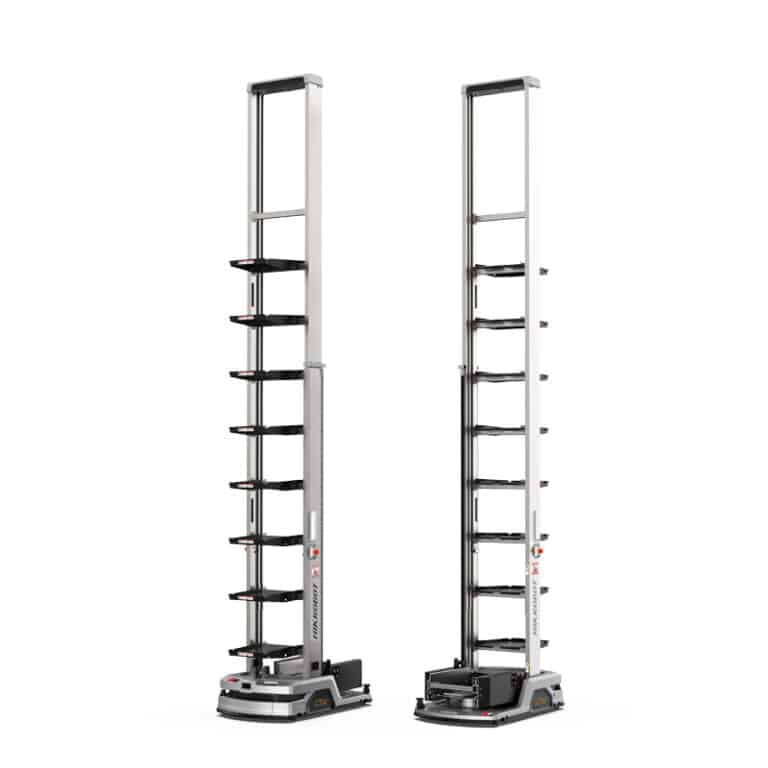
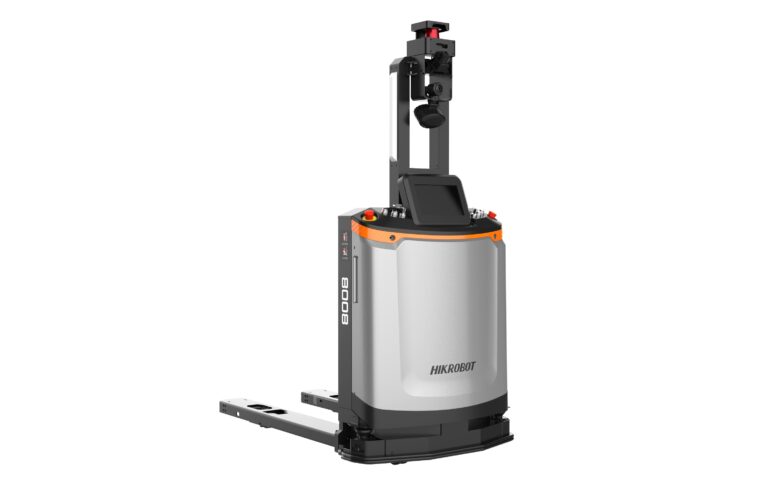
The system supports 300 AMR models. Different classes operate together: an LMR positions a cart at a transfer station, an FMR raises the pallet for high placement, a CTU processes cases further down the line. This capability suits layered layouts—extended horizontal distances combined with vertical storage or floor-to-floor movement. Handoffs remain consistent, cutting manual touch points.

Advanced Path Planning and Traffic Management

Path generation looks ahead to avoid congestion and makes adjustments on the fly. Continuous carrying mode links successive tasks so vehicles seldom travel empty. Traffic logic sets priority at merges while real-time corrections divert around temporary issues like maintenance equipment or spills. The net effect shows in higher moves per hour and reduced energy spent on detours.

Real-Time Monitoring, Visualization, and Exception Handling

Operator interfaces present vehicle positions, task progress, queue conditions, and performance indicators in 3D format. Congestion points—such as vehicles stacking at a narrow passage—stand out immediately, enabling fast reassignments or overrides. Statistical tracking captures throughput patterns, idle ratios, and exception trends, feeding into process refinements. Exception detection identifies low battery, sensor problems, or path deviations early to limit unexpected stops.

Real-World Applications: RCS-2000 in Manufacturing and Logistics

Field deployments show how RCS-2000 manages different operational profiles.

Large-Scale Fleet in Automotive and Electronics Plants

A new energy vehicle facility operates more than 1,100 multi-model AMRs on one floor with limited space and strict timing requirements for parts delivery to assembly stations. RCS-2000 delivers the ultra-large cluster scheduling and successive carrying required for on-time performance while maintaining order accuracy through sequenced algorithms. Electronics manufacturing sites apply similar mixed fleets for component inbound and finished outbound, coordinating varied navigation methods in shared zones without conflicts.

Warehouse and Production Line Integration

Multi-floor and long-distance transfers depend on linked elevator and door controls. RCS-2000 sequences robot arrivals at lifts to reduce waiting periods. In multi-level racking setups, FMRs perform high-bay storage while LMRs manage ground-level distribution, all coordinated centrally. Production lines receive timed material arrivals, decreasing the need for large buffers.

High-Throughput Logistics and FMCG Scenarios

Fast-moving consumer goods operations handle demand spikes and short cycle requirements. RCS-2000 allows phased zone deployment so growth proceeds without halting current flows. Peak inbound and outbound periods use CTUs for case sorting and FMRs for pallet grouping, preserving performance through seasonal peaks.

Benefits and ROI of Implementing RCS-2000 for Your Fleet

Results emerge across several operational layers. Throughput frequently doubles in space-constrained areas from tighter routing and lower idle periods. Transport-related labor decreases 50–60% in typical cases as personnel shift to monitoring and exception management. Sequence errors decline because algorithms preserve order integrity and visualization flags issues quickly.

Floor space efficiency increases through multi-level access and task chaining, sometimes opening up substantial areas. Collected data supports decisions: identify sluggish zones, adjust fleet sizing, or tune task priorities. Energy consumption drops with fewer empty runs and planned charging sequences.

Investment recovery generally occurs within 18–36 months, driven by labor cost reductions, expanded capacity without facility additions, and lower damage from precise positioning. In high-turnover or high-value environments, faster material cycles reduce inventory carrying costs noticeably.

How to Implement RCS-2000: Step-by-Step Guide and Integration Tips

The process starts with a detailed site survey: record current material paths, robot types, and integration locations. Digital maps are created using efficient modeling tools. Connections to WMS/MES are established through standard APIs for order receipt and status reporting.

Staged rollout minimizes risk—begin in one zone like raw material inbound, confirm task execution, then extend gradually. Elevator and access hardware links need early testing. Training emphasizes dashboard operation and common exception responses.

Dense-area path tuning during early phases often requires the most adjustment; simulation capabilities help anticipate issues. Compatibility verification with existing systems prevents late-stage changes. Wesar delivers full-cycle support from initial consulting to field commissioning and ongoing service.

Wesar Intelligence Co., Ltd.: Providing Tailored AGV Solutions

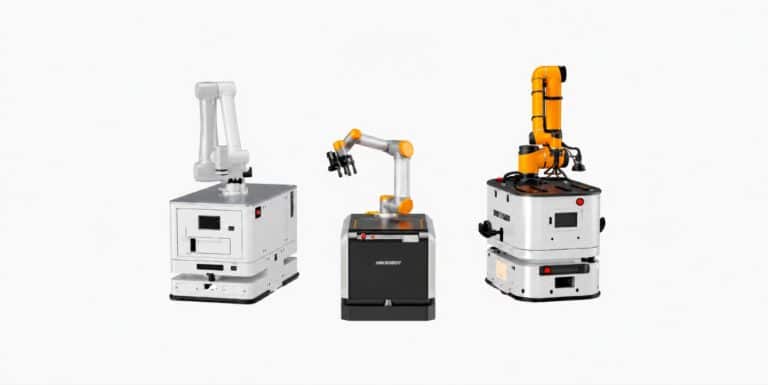
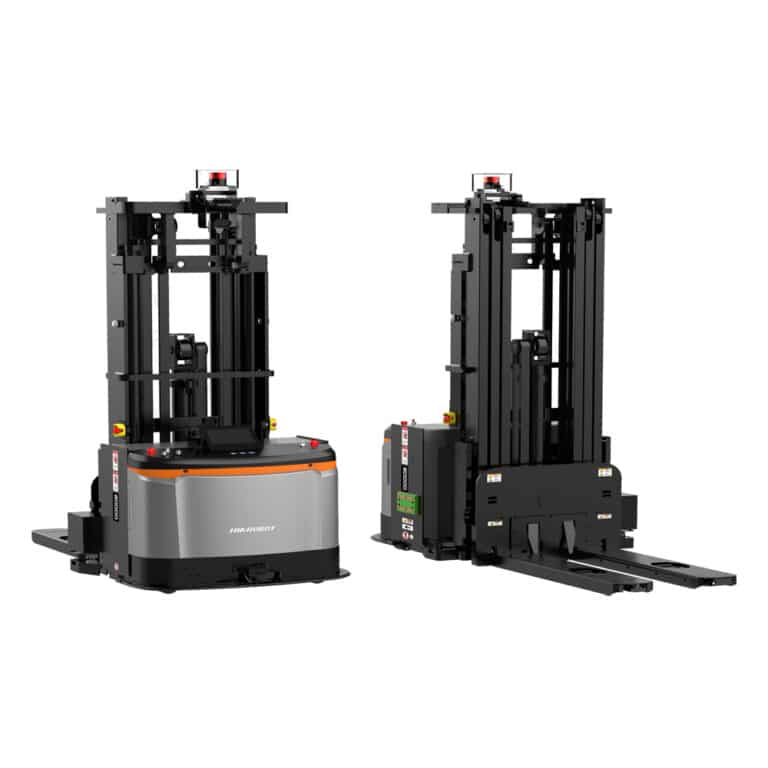
威萨智能股份有限公司有限公司。, based in Suzhou, Jiangsu, China, brings nearly twenty years of focused work in intelligent factory and smart warehousing systems. From a 5,000㎡ production facility, a team of more than 100—35 production technicians and 26 technical specialists included—handles the complete range of services: consulting, software development, equipment manufacturing, on-site installation, project execution, and after-sales maintenance. The lineup features Forklift Mobile Robot (FMR) for heavy pallet work, Latent Mobile Robot (LMR) for under-cart movement, Carton Transfer Unit (CTU) for box sorting, Heavy-Duty Mobile Robot (HMR), Conveyor Mobile Robot (CMR), and Mobile Collaborative Robot (MCR). RCS-2000 pairs closely with these models, providing the precision, safety features, and scalability needed across pharmaceutical, chemical, automotive, electronics, and general logistics applications.

结论

RCS-2000 robot control system changes fleet coordination for large-scale AGV/AMR operations through rapid task distribution, support for mixed robot types, proactive routing, and detailed operational visibility. Manufacturing plants and warehouses experience more reliable material flows, reduced interruptions, higher move rates, and data-backed process improvements. As robot populations increase and workflows become more demanding, a solid control platform stands as a fundamental requirement for maintaining efficiency and consistency. Assessments of specific site conditions against these capabilities typically highlight clear directions for implementation.

常见问题

What is the maximum fleet size supported by RCS-2000 robot control system?

RCS-2000 supports up to 1,200+ robots on a single map, accommodating the scale found in large automotive facilities or high-volume distribution centers.

How does RCS-2000 handle mixed AGV and AMR types in the same warehouse?

It manages 300 different models and coordinates seamless handoffs among types including LMR, FMR, CTU, and CMR, enabling unified performance in multi-robot settings.

Can RCS-2000 integrate with existing WMS or MES systems?

Integration takes place through APIs connecting to WMS, MES, ERP, and production platforms for order processing, status feedback, and complete logistics synchronization.

What are the key benefits of RCS-2000 for large-scale smart warehouse operations?

It assigns up to 1,000 tasks per second to AMRs, minimizes idle time with advanced path planning, offers real-time 3D visualization for immediate issue resolution, and raises overall throughput while lowering labor and error rates.

How long does it typically take to implement RCS-2000 in a manufacturing facility?

Phased implementations—covering site mapping, system integration, zone-by-zone deployment, and final tuning—usually reach operational status within months, with peak performance emerging after optimization cycles.

分享
Facebook
LinkedIn
有关的 文章
RCS-2000 Robot Control System How to Manage Large-Scale AGVAMR Fleets in Smart Warehouses
RCS-2000 Robot Control System: How to Manage Large-Scale AGV/AMR Fleets in Smart Warehouses
AGV in Pharmaceutical and Chemical Industries Applications, Benefits, and Real-World Solutions
AGV in Pharmaceutical and Chemical Industries: Applications, Benefits, and Real-World Solutions
Latent AGV Guide Traditional Lurking, Roller Conveyor, and Heavy-Duty Variants – Integration with Lines, Machines, Elevators, and Doors
Latent AGV Guide: Traditional Lurking, Roller Conveyor, and Heavy-Duty Variants – Integration with Lines, Machines, Elevators, and Doors
AGV vs ASRS Key Differences and Comparison for Warehouse Automation
AGV vs AS/RS: Key Differences and Comparison for Warehouse Automation
zh_CNChinese