
A meter assembly plant can have plenty of rack space and still struggle to get materials to the line. Storage and replenishment are different jobs, after all. In an F4 series stacking forklift AGV discussion, I’d ask the stores team to show me a pallet retrieval and follow it through to acceptance by production. You can then work back to the lift requirement with a destination already agreed. Palletized incoming stock, packaging supplies, and packed meters are possible loads to assess. Small components can have their own CTU route. An AGV and AMR proposal ought to show how those routes meet, since that transfer is part of the assembly process too.
Where Does an F4 Stacking Forklift AGV Fit
Have the pallet drawing open when you look at the rack elevation. Then add the floor plan. The review can easily become a discussion of robot features, so keep bringing it back to the load’s actual pickup and placement positions.
Receiving and rack storage
Take palletized housings or packaging stock as possible starting loads. After inspection and acceptance, they can be assigned to rack locations for later issue. Don’t let the transport step obscure the stock status. Has the receiving team released the material? If a stored pallet is still booked at receiving, production and the warehouse are already looking at different versions of the job. That record needs attention before the material is issued, however the pallet was moved.
Replenishment near assembly
A supermarket near the line is often the sensible place to discuss a pallet handoff. The forklift arrives with bulk stock; a separate operation prepares smaller quantities for assembly. Circuit boards and fasteners don’t necessarily belong on the same vehicle as a pallet of housings. You might use a CTU for the tote work, or retain a manual kitting step. The decision should follow the container the operator actually receives.
Which F4 Parameters Should the Buyer Compare
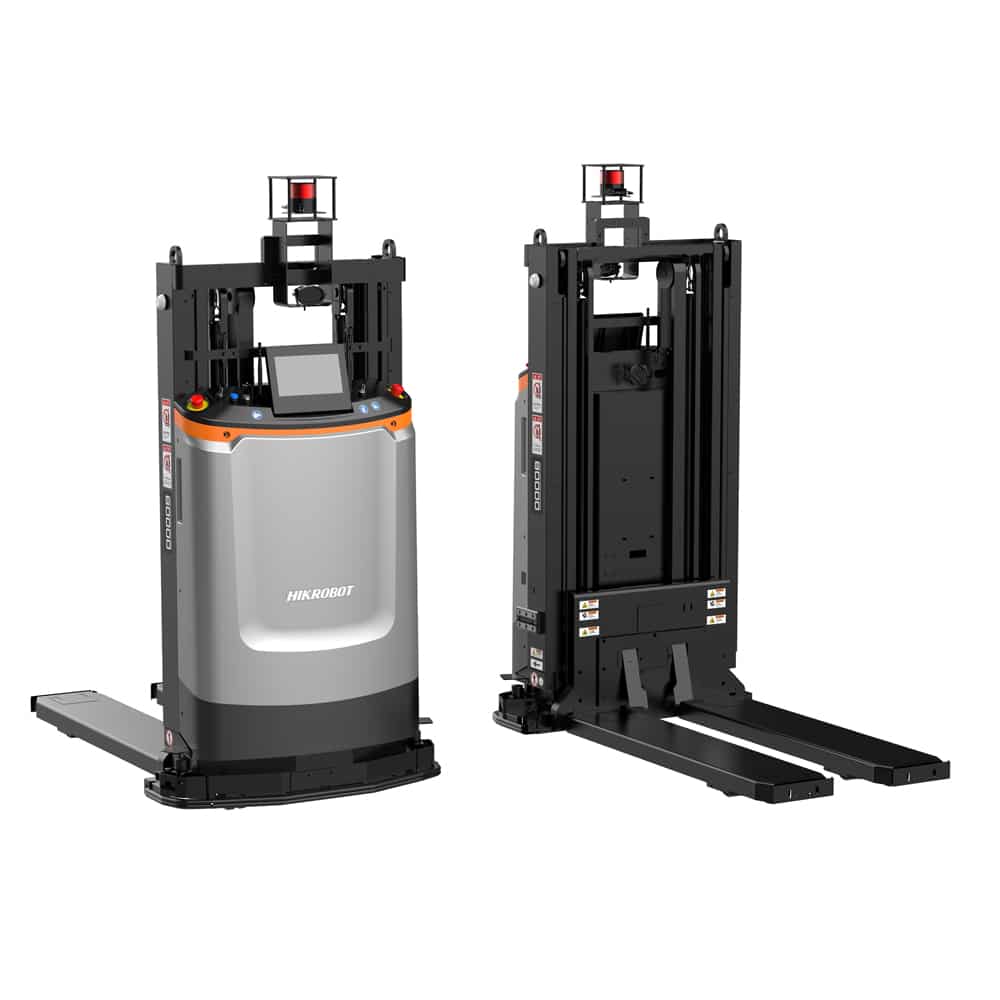
Send the rack elevation when asking about the Gama de robots móviles para carretillas elevadoras. With the pickup and placement points marked, the supplier can look at the lift you need. That is a more useful first conversation than asking which pallet vehicle is best.
Read the lifting specification with the pallet drawing
For initial screening, Wesar’s F4-1000C Forklift Mobile Robot has published figures of 1,000 kg rated load, 2,031 mm fork lifting height, and 2,062 mm minimum aisle width; the page identifies L-SLAM and customizable 3D L-SLAM navigation. Keep a copy of the pallet drawing beside those numbers. I’d want the quotation to state whether that carrier and its load center are acceptable at the required elevation. Otherwise you’re comparing a catalog figure with a job the supplier has not yet confirmed.
Measure the approach as well as the aisle
Look again at the corner leading into the rack. Has the drawing allowed for the pallet that’s waiting there, or only for the empty aisle? Picture the vehicle pulling back out, now carrying the load. The space it needs there belongs in the review, too. For an elevator route, get the loading arrangement reviewed with the lift operator or equipment owner. Write the proposed F4 model beside the dimensions you’re using, so nobody inadvertently approves the maneuver from a different vehicle’s sheet.
How Should the Warehouse Supply the Meter Line
Write down a replenishment job as the people on the line would describe it. When they call stores, what do they expect to arrive, and where? Turn that account into the source and destination of the transport task, with someone identified to accept it.
Keep bulk deliveries separate from kit preparation
Ask stores how they’d prefer to issue the material: a full pallet to a supermarket, or smaller quantities prepared at a separate point? Production needs to agree on what arrives. It’s also worth choosing a waiting point for a pallet whose destination is full. The vehicle has to put it somewhere; an occupied buffer isn’t a problem that route planning alone can resolve.
Give finished goods a release point
At the other end of production, packed meters can be moved to a dispatch or finished-goods area once they are released. The release is the key condition. A transport robot cannot decide that testing is complete. A held pallet might look no different from one ready for dispatch. Whoever releases stock has to pass that decision into the transport process before a job is sent.
What Must WMS MES and RCS Agree On
Run through a pallet job with the software teams. WMS has the stock and location record; MES brings in the production requirement. Between them sits the fleet process that sends the vehicle. I’d ask all three teams to describe the completion event in the same terms.
Close the movement and inventory transaction together
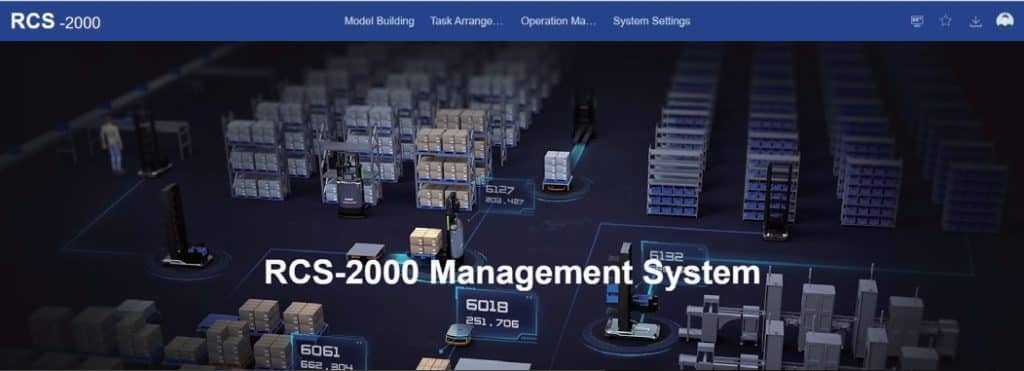
Para Sistema de control de robot RCS-2000 integration, I’d ask the software team to show the job as messages exchanged with the vehicle and equipment. The product description covers task assignment, AMR scheduling, routes, equipment interaction, and exception monitoring. Which message authorizes pickup? Which one acknowledges placement? A closed door or a manually removed pallet is a useful test of whether everyone has agreed on recovery.
Test the complete loaded route
Use the intended pallet and load in the acceptance trial. Include retrieval as well as placement, and try a blocked route and a manual intervention. Check pallet presence, fork protection, charging, and emergency stops within that process. The final installation also needs a review of its applicable safety requirements. It would be premature to approve the site from the vehicle description alone.
What Project Support Can Wesar Provide
With Compañía de Inteligencia Wesar, Ltd., the application discussion can include the warehouse system and the pallet vehicle together. Wesar’s portfolio lists AGV robots, WMS, ASRS, conveyors, and customized material-flow solutions. Planning, software development, equipment manufacturing, implementation, and after-sales support are included in its service scope. Bring the drawings and the replenishment job you’ve described to that discussion. Ask the team to review the proposed configuration against the load, route, and handoff, then identify the interface work still required.
Conclusión
An F4 project needs a defined lifting job to begin with. Follow it from accepted incoming stock through storage and replenishment to the released finished pallet. That gives the stacking forklift AGV a defined role. CTUs or other AMRs can handle smaller containers where appropriate. Once those handoffs are settled, you have a much better basis for comparing the vehicle, layout, and software proposal.
Preguntas frecuentes
Can an F4 forklift AGV deliver directly to an assembly station
It can serve a defined pallet handoff if the route and safety arrangements support it. A supermarket or kitting point may be preferable for smaller assembly quantities. Check how the station receives material before choosing the destination.
What should a factory send for F4 selection
Send the drawing that shows the loaded pallet, including its weight and load center. Put the required pickup and placement heights on the rack elevation. On the floor plan, mark the measured aisles and each transfer point, with the expected number of moves. The supplier will also need to know which systems and equipment are waiting at those points; include the door and elevator details where they affect the route.
Does the F4-1000C fit every smart meter assembly plant
No. The published figures are an initial reference. Confirm the carrier, required lift, load center, traffic, and handoff process against the proposed configuration before accepting it.






 Spanish
  English
  Russian
  Chinese
  Japanese
  Italian
  Korean
  Arabic
  French
  German