
What happens to a tote after an operator takes five parts out of it? That question is a useful place to begin a CTU project for smart meter assembly. You haven’t finished with the container just because the operator has finished that pick. There’s stock left inside it, with a record to update and a return trip to arrange. A Carton Transfer Unit gives that container a repeatable physical journey between storage and picking. For displays, terminals, fasteners, and other smaller materials, I’d examine the picking transaction alongside the robot move. Pallet AGVs and other AMRs can deal with the larger loads. Here the tote is the unit to follow, all the way through its return.
Which Meter Assembly Materials Belong in a CTU Flow
A sample container would be my first request at the planning meeting. Put the proposed packing arrangement inside it, too. It’s much easier to discuss the gripping surface and the operator’s reach with something in front of you.
Choose the tote before planning the rack
Displays, seals, labels, communication parts, and fasteners are possible tote-storage candidates. They won’t necessarily suit the same internal arrangement. With the material in the sample tote, have the operator try taking it out. That can expose a partition that’s in the way before you approve it for storage. Put loaded weight on the review sheet with the dimensions. For electronic parts, leave the ESD and packaging decision with the process owner; selecting a CTU doesn’t settle either issue.
Keep material identity attached to the container
Knowing a tote’s number is only a beginning. Someone looking at the picking record should also be able to tell which item and revision it contains, how much is left, and which lot was used. Agree on those fields while you discuss mixed lots and leftovers. They shape the receiving and picking procedure, so changing them later could also mean changing the container arrangement.
What Does the TP5-50DC Specification Tell Buyers
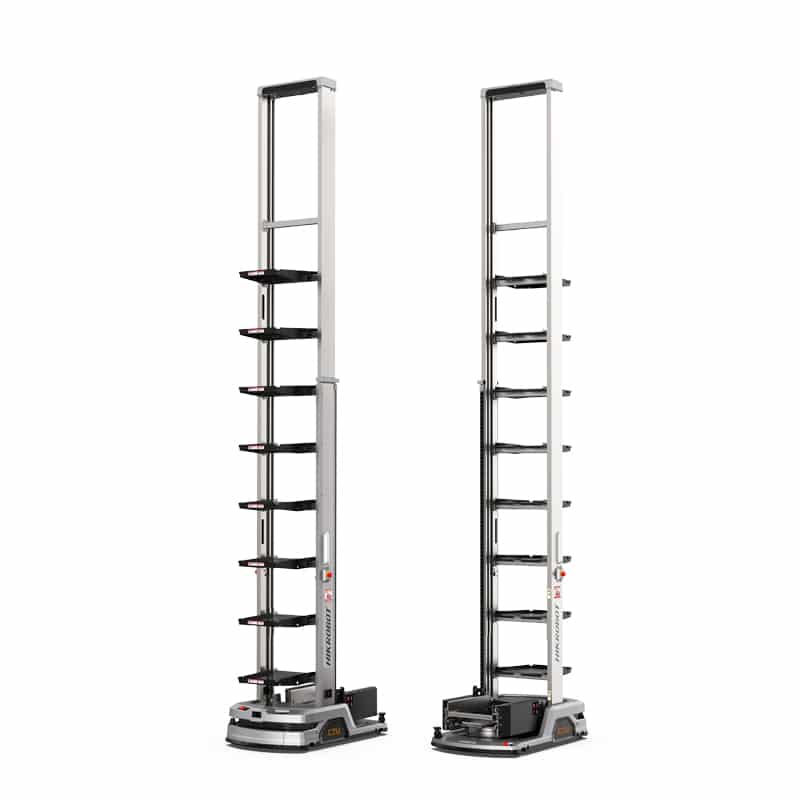
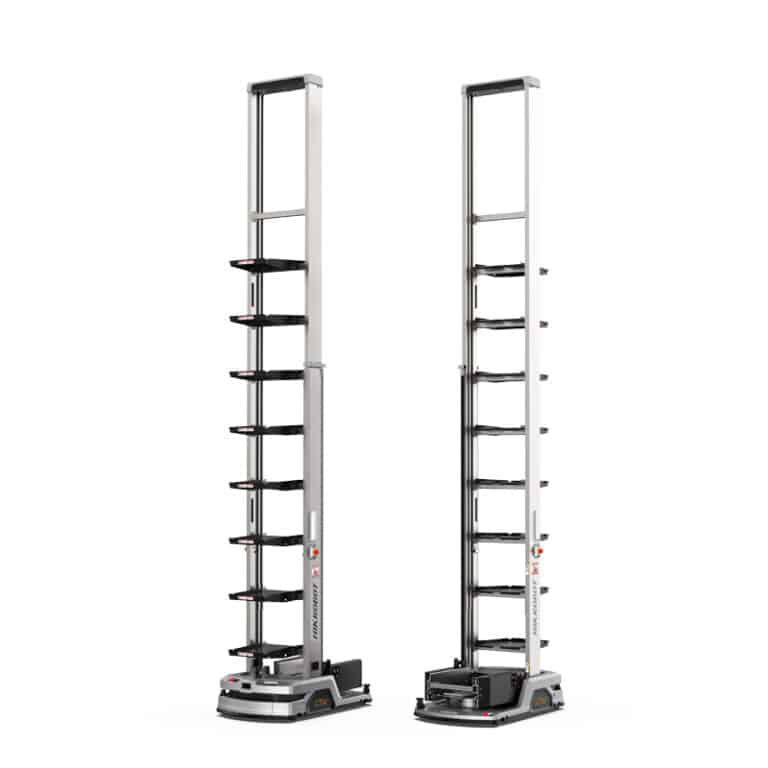
Wesar’s Carton Transfer Unit product category describes narrow-roadway and multi-level tote options. Take a candidate model back to the container review rather than choosing solely from that description. You still have to agree on how the tote enters and leaves the mechanism.
Distinguish total robot load from the handling mechanism load
Wesar quotes both the whole-robot and handling-structure capacities for the TP5-50DC Kartontransfereinheit: 300 kg and 50 kg, respectively. Those are two checks to discuss with the supplier, not alternate ways of stating one payload. The published sheet gives picking heights from 200 to 4,000 mm, an aisle width of 1,050 mm, and travel stopping accuracy of ±10 mm/±1 degree. It lists V-SLAM, 2D barcode, and L-SLAM navigation. Keep the tote and rack drawings beside that sheet during selection; the quotation needs to confirm the configuration for the proposed delivery position.
Check the storage position and station together
Check the receiving station as carefully as the storage rack. Does the tote protrude? Is there room for recovery? Then consider the release and receiving actions together. They should describe one transfer, with agreed heights and permissions. If the robot supplier and station supplier describe different actions, there is still an interface to resolve.
How Would a CTU Serve the Assembly Workflow
Draw the tote’s trip back to stores before you call the route complete. If incoming stock is decanted from a pallet, show that step as well. Both operations may affect how often the container moves, even though neither is the assembly pick itself.
Receive and store accepted material
At receiving, accepted stock and stock awaiting inspection need different instructions. Once the contents are identified, the CTU can move the compatible container into storage. Inventory should show the completed location change. If the code cannot be read, give the receiving team a holding point to use. Otherwise an identification problem can disappear into the rack without actually being resolved.
Retrieve the tote for the production order
An order can call its required totes to a picking station. That’s the goods-to-person idea: bring the container to the operator. What matters next is the confirmation of the pick and the remaining stock. Bring the line’s kit-receiving team into this review. Ask where they can accept the prepared material and how they will acknowledge it. The software transaction should describe the chosen arrangement rather than a generic delivery.
Plan empty totes and returns from the outset
Ask the team how a partly used tote is handled after an order change. The process needs somewhere for it to go. The same applies to empties and material coming back from rework. These are design questions to resolve, not assumed results from a meter installation. Name the return locations and decide who accepts their contents. Don’t send returned material straight into normal replenishment without preserving its identity and status.
How Do WMS MES and RCS Keep the Jobs Coordinated
You can review the software through the same container journey. The warehouse needs its stock and location transaction, production supplies the demand, and the fleet layer directs the vehicle. Name the roles of WMS, MES, and RCS at the handoffs, including the point where each receives completion.
Specify the exception as well as the normal delivery
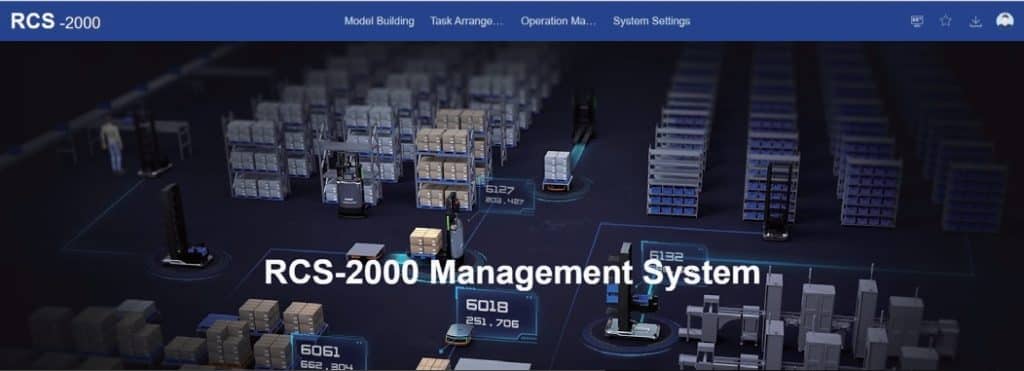
Wesar’s published RCS-2000 Robotersteuerungssystem scope covers task assignment, AMR scheduling, route planning, equipment interaction, and exception monitoring, along with mixed scheduling of LMR, FMR, CTU, and CMR vehicles. Put those functions into the proposed meter workflow. For a missing tote or occupied station, what does the system tell the operator to do? A rejected component also needs a destination and an owner; an alarm is only the start of recovery.
Review the operator handoff on the floor
The station review belongs on the floor, with the proposed tote and picking action. Where does the operator stand? Where does the robot wait? How is held material distinguished from ready material? Include tote protrusion, obstacle protection, emergency stops, charging, and manual recovery in the acceptance trial. Use representative loads and include container returns when checking the workload.
How Can Wesar Support the Project
An application review with Wesar Intelligence Co., Ltd. can cover both the physical move and the warehouse process. Wesar lists AGV robots and warehouse systems in its portfolio, with software, equipment integration, execution, and after-sales services in its published scope. Use the tote and rack drawings to make that discussion specific. Bring the demand at each station, the identification rules, and ESD requirements, too. The aim is to review the handling configuration and decide where a manual operation still belongs.
Abschluss
For a smart meter CTU project, I’d finish the process description before finalizing the route. Can the team account for accepted stock, the pick, the remainder, and the empty or returned container? If so, there is a defined job to automate. Forklift AGVs and other AMRs can serve the larger loads, with a planned transfer into the tote flow. Judge the CTU proposal on that complete round trip and the workload it has to carry.
Häufig gestellte Fragen
Can a CTU supply the assembly line directly
It can, provided the proposed container and station transfer are suitable. If assembly needs a counted kit instead of the whole tote, discuss delivery to a picking station or supermarket first. That preparation step may decide the route.
When does a factory need both a CTU and a forklift AGV
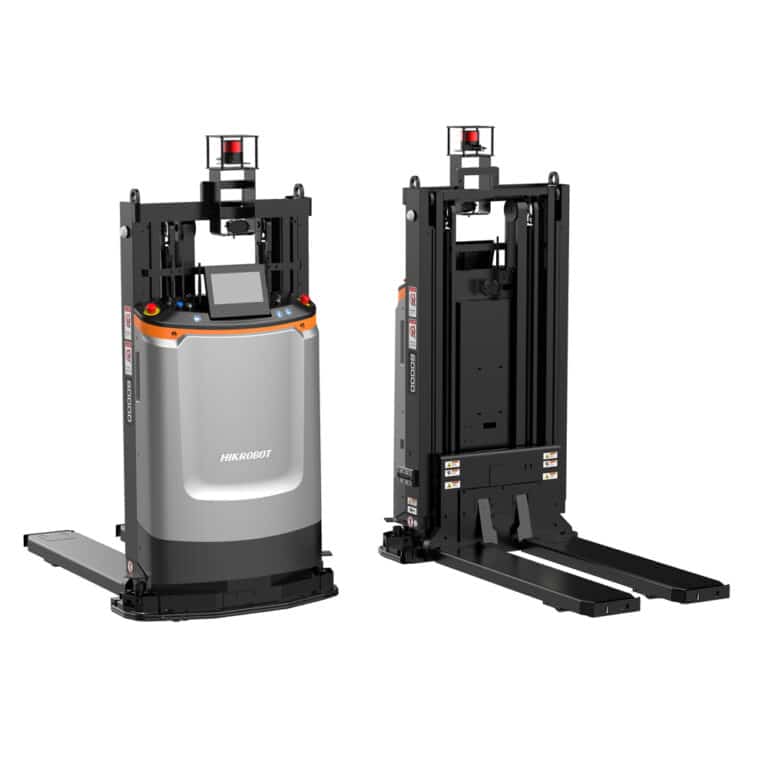
Consider both where bulk stock travels on pallets and assembly quantities travel in totes. The forklift serves the fork-compatible carrier. The CTU serves the smaller container, with a defined process at the transition.
Which details are needed for a CTU quotation
Tote dimensions and weight, rack and aisle drawings, picking heights, station interfaces, peak demand, charging assumptions, network conditions, ESD needs, and identification rules. Include returns and manual recovery in the requested scope.






 German
  English
  Russian
  Chinese
  Japanese
  Italian
  Korean
  Spanish
  Arabic
  French