
Chemical operations don’t forgive sloppy material movement. A late pallet of additives can stall a batch. A mislabeled drum can trigger a quarantine. And a forklift cutting through a busy aisle near a hazardous area can turn a routine shift into a reportable incident. That’s why AGV applications in the chemical industry have moved from “nice-to-have automation” to a practical way to stabilize throughput, reduce handling risk, and make warehouse-to-line execution more predictable. For a quick view of the robot types and software categories discussed here, see Wesar’s products for warehouse automation and material handling.
This article is written for plant managers, intralogistics leaders, EHS teams, and engineers who need a realistic view of what works, what breaks, and what decisions actually matter when you put automated guided vehicles to work around chemicals. You’ll see the common use cases, the safety logic behind them, the typical failure points, and a clear way to judge whether AGVs—or AMRs—fit your site.
Why Chemical Sites Adopt AGVs (And Why Some Regret It)
In many industries, AGV projects are about labor savings. In chemical plants, the driver is usually operational stability. Even a modest site has a long list of moves that must happen at the right time: raw materials to staging, packaging to palletizing, finished goods to quarantine, empty packaging back to line-side, and returns to inspection. When those moves depend on “who’s available with a forklift,” the system behaves like a lottery.
AGVs change the conversation because they run to schedule. They don’t take shortcuts. They don’t forget stops. A well-run AGV system can make line-side delivery feel boring—in a good way. The benefit isn’t just speed; it’s that the process becomes repeatable enough to measure and improve.
Still, chemical operations also expose the weak spots. If your site has inconsistent pallets, uneven floors, frequent layout changes, or unclear rules around hazardous zones, AGVs can struggle. The most common disappointment happens when a company buys robots expecting them to “figure it out,” while the underlying intralogistics process remains messy. AGVs are disciplined. They reward discipline.
The Chemical Intralogistics Map: Where AGVs Deliver Real Value
Chemical plants and chemical warehouses have a few recurring movement patterns. If you can map these clearly, you’re already ahead of most projects.
Raw material receiving and putaway
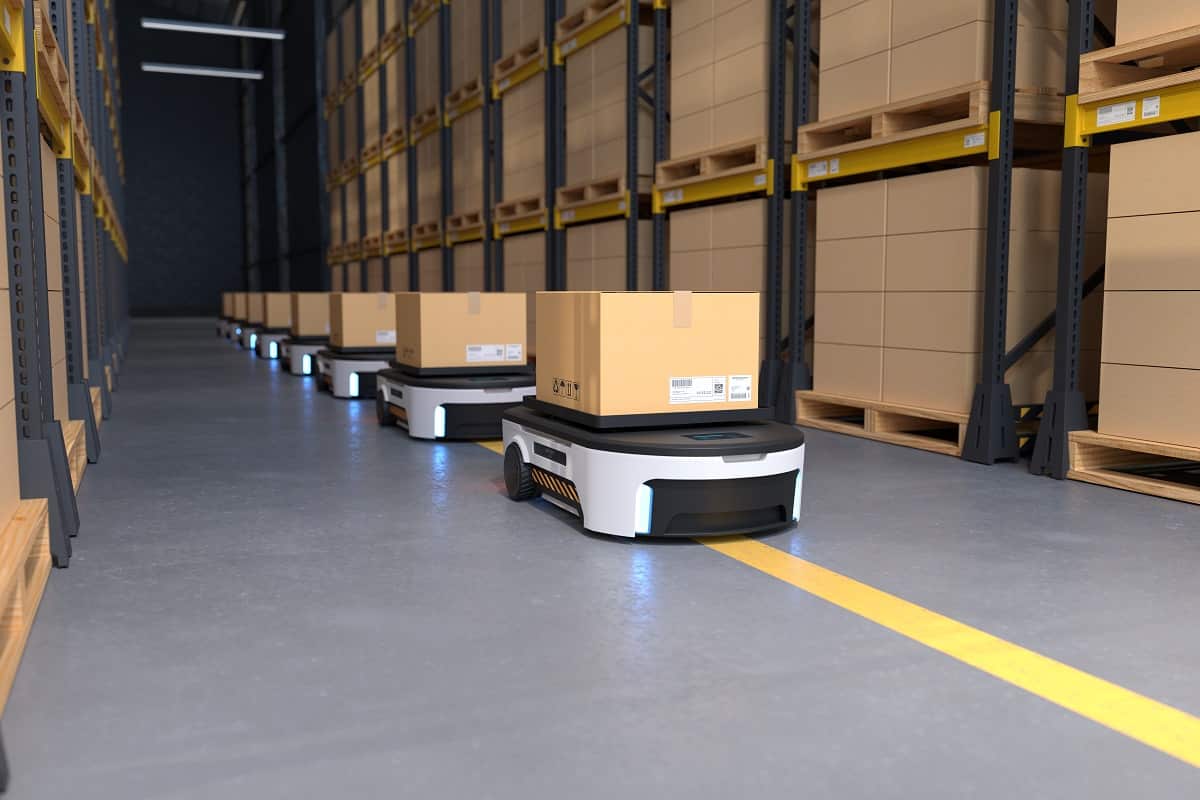
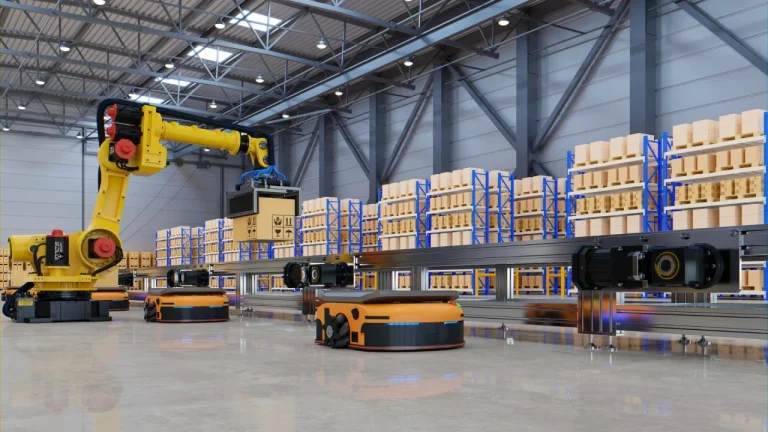
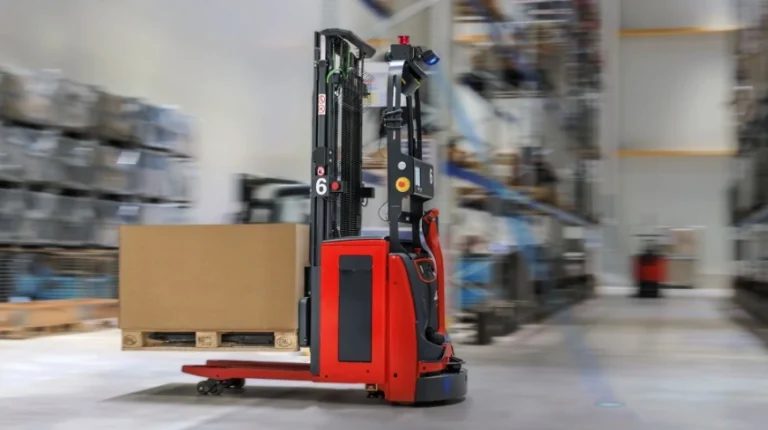
This is where automated pallet transport shines. The receiving dock is often busy, and the pressure is to get materials off the dock fast, then keep FIFO and traceability intact. An autonomous forklift robot (or a pallet-handling AGV/AMR) can run dock-to-stock moves all day with consistent scan discipline. The operational value comes from reducing the “temporary storage” problem—pallets parked wherever there’s room, then hunted down later.
Drum handling and tote movement inside chemical warehouses
Drums and totes bring specific issues: containment, stability, and labeling. A predictable route and controlled speed can reduce tip risk and limit the chances of a load clipping racks or door frames. Many sites don’t automate every drum move, but they do automate repetitive internal transfers: staging to filling, filling to curing/hold, hold to packout, and packout to shipping.
Line-side delivery for packaging and blending
Line-side delivery in chemical production often includes packaging materials (cartons, caps, labels) and sometimes semi-finished goods. The move itself is simple; the timing is not. If the line runs dry, the cost is immediate. AGVs can support just-in-time replenishment when paired with basic rules: clear call points, stable drop zones, and a way to confirm completion.
Finished goods movement, quarantine, and outbound staging
Chemical distribution often requires quarantine or quality holds. Finished goods cannot always go straight to ship. Automated movement helps keep these rules clean: the right pallet goes to the right status area, and the system records the move. When you combine that with warehouse management logic, you’re no longer relying on tribal knowledge to keep compliance in place.
Small-item internal transport in high-density storage
Some chemical operations also manage many SKUs of small containers, components, or secondary packaging. For these flows, tote-handling systems can make sense. A carton transfer unit (CTU) is designed for moving and storing totes with precise inbound/outbound behavior, especially where narrow aisles and deep storage are involved. That structure can reduce pick travel while keeping high SKU variety under control. Depending on whether you’re moving pallets, carts, or totes, the right fit often comes down to equipment design and control logic—areas covered across autonomous mobile robots and warehouse software from Wesar.
AGV vs AMR in Chemical Facilities: What the Labels Miss
A question that shows up in almost every search journey is “AGV vs AMR.” The honest answer is that the label matters less than the operating model.
AGVs are often associated with fixed paths and controlled environments. AMRs are commonly linked to more flexible navigation. In chemical environments, flexibility is only useful if the safety logic is equally strong. If operators frequently move pallets into aisles, or if staging zones change weekly, a system that can adapt may help. But flexibility can’t replace standards. A robot that can navigate around a problem does not fix the root cause of the problem, and chemical sites have enough risk already.
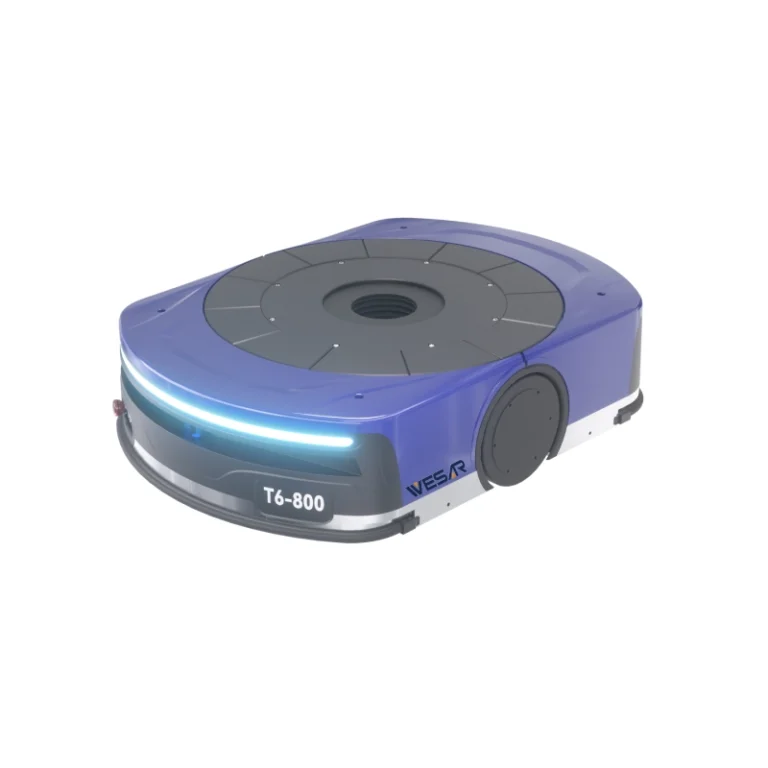
For most chemical warehouses, the more important split is not AGV vs AMR. It is pallet handling vs tote handling, and floor transport vs autonomous forklift capability. If you are lifting and stacking standard pallets, autonomous forklift mobile robots are usually the backbone. If you are feeding line-side with carts or pallets on fixed routes, latent lift robots can fit. If you are moving totes in dense pick modules, CTUs can carry the workload.
The Four Risks Chemical Teams Must Design Around
Chemical automation projects need more than “traffic avoidance.” The risk profile is different than a general warehouse.
Hazardous areas and “where robots are allowed to be”
Many chemical facilities have hazardous area classifications. That reality changes how you define routes, access control, charging locations, and maintenance practices. Even if your AGVs never enter a classified zone, they often pass near it. The safe approach is to treat zone boundaries like hard constraints, not suggestions.
Spill and leak response
Humans respond to a spill by improvising—sometimes well, sometimes not. Robots respond to a spill by following rules. That’s good if the rules exist. If your spill response requires immediate aisle shutdown, your AGV traffic management should support that. If you use temporary barricades, the robots need to recognize them as meaningful barriers. This is where many “pilot” projects break down, because the exception handling was never defined.
Static electricity and material compatibility
Static and corrosion aren’t theoretical problems in chemical logistics. If you’re moving solvents, powders, or sensitive intermediates, your team should assume that static control and material compatibility will show up in engineering conversations. It’s not always a robot issue; it can be a facility grounding and housekeeping issue. But it has to be discussed early, not after commissioning.
Traceability discipline
Batch traceability is often a compliance requirement, not a preference. If your process relies on manual scanning that is inconsistently executed, automation can either fix it or expose it. The fix is straightforward: define scan points, tie them to system status changes, and make exceptions visible. The exposure happens when a robot completes moves flawlessly but the system records remain incomplete because upstream data is weak.
A Practical Selection Framework for Chemical AGV Projects
If your main goal is stable, safe movement—not a flashy demo—you need a selection logic that matches real chemical workflows.
Start with load type, not robot type
Ask a simple question: are you moving standard pallets, carts, or totes? Standard pallets push you toward forklift mobile robots. Carts and pallet transfers in loops may favor latent lift robots. High-SKU tote environments may justify CTUs. Conveyor-based transfers may justify conveyor mobile robots where handoffs to conveyors are common.
Decide how much stacking you need
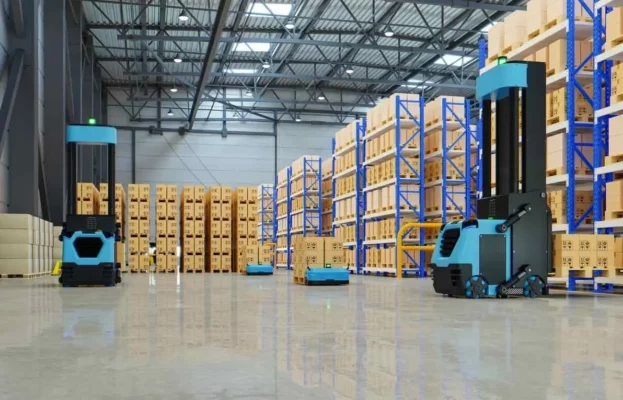
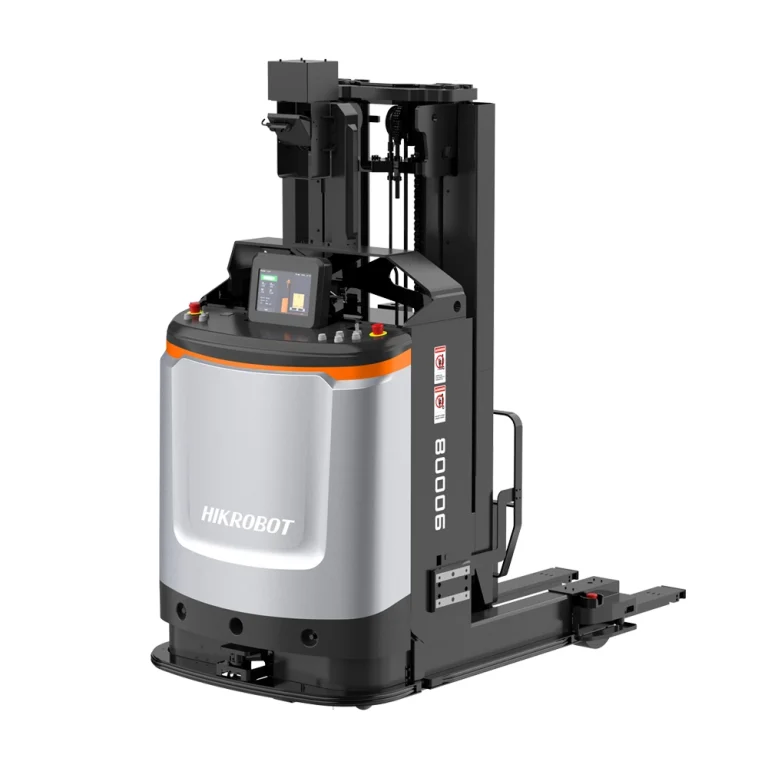
Chemical warehouses often stack. If you need rack putaway, high lifts, or narrow-aisle behavior, autonomous forklift solutions tend to be the direct answer. Forklift mobile robots are positioned for standard pallet transport, with multiple series covering use cases like carrying, stacking, and omnidirectional movement for tight maneuvers.
Treat software as part of the system, not an add-on
Chemical logistics isn’t just “move pallet from A to B.” It’s “move pallet A with batch X to hold area Y, then release to shipping only after status change.” That logic lives in software. A complete system typically includes warehouse management, robot control, and material control layers. A warehouse management system coordinates inventory and process rules. A robot control system coordinates robot traffic and tasks. A material control system supports equipment integration and flow control where conveyors or stations are involved. When those roles are clear, projects go smoother and troubleshooting becomes less personal.
Plan for how the plant behaves on bad days
AGVs look great on good days. The chemical world has bad days: late trucks, urgent orders, quality holds, rework, spills, blocked aisles, and sudden changeovers. A selection decision should include how the system handles exceptions. Can it reroute? Can it pause a zone? Can it hand off tasks cleanly? Can supervisors see what’s happening without digging through logs? This is where “reads well in a brochure” separates from “runs well on a night shift.”
Prevention Advice: How to Avoid the Most Common Project Failures
Many chemical AGV projects fail softly. They don’t crash; they just never scale. The pattern is predictable.
Keep pallets and load carriers boring
Robots like standardization. If your pallets vary in quality, your forks may struggle. If your tote types are inconsistent, your storage logic becomes fragile. A chemical warehouse that wants automation should treat pallets, IBC bases, and carts as part of the system design, not as random consumables.
Make routes and interfaces explicit
Robots don’t read intent. They read maps, markers, and permissions. Define your “robot right-of-way” the way you define forklift lanes today, then enforce it. If doors, elevators, or fire partitions are part of the route, integrate them intentionally. If you’re not ready to integrate, keep routes away from them.
Lock down the line-side interface
Line-side delivery fails when drop zones drift. Put the drop zone on the floor, name it, and protect it. Tie it to a system location ID. That discipline alone can raise delivery reliability, even before the first robot arrives.
Train supervisors, not just operators
When automation struggles, supervisors decide whether it gets fixed or quietly abandoned. They need to understand traffic rules, exception handling, and what the dashboards are telling them. A good deployment treats supervisors as system owners, not passive users.
Decision Guidance: When AGVs Are a Strong Fit (And When to Wait)
AGVs are a strong fit in chemical environments when the workflow is repetitive, the loads are standardized, and the facility is willing to treat intralogistics as a system. They shine when you have long internal transfers, predictable line-side consumption, and a clear division between safe and restricted zones. If you’re comparing routes, safety constraints, and system roles at a high level, Wesar’s warehouse automation solution approach is a useful reference point.
You should consider waiting when your site is in constant layout change, when pallets and carriers are not standardized, or when process ownership is unclear. In those cases, the fastest way forward is often a short “process cleanup” phase: fix load standards, fix location labeling, set traffic rules, and then re-evaluate. The irony is that those steps improve performance even if you never buy a robot. If you do buy robots later, you’ll be ready.
About Wesar Intelligence Co., Ltd.
Wesar Intelligence Co., Ltd. positions itself as a one-stop intelligent factory solution provider built around two core business branches. One branch focuses on smart warehousing solutions, including green intelligent logistics robots and intelligent factory system design and implementation. The second branch delivers specialized services for the electronics and machinery industries, supported by a 5,000㎡ production facility and a team of over 100 professionals. Across these capabilities, Wesar describes an end-to-end delivery model that spans consulting, software development, equipment manufacturing, project execution, and after-sales support—paired with an on-site installation and service team for implementation support.
Conclusion
AGVs in chemical plants aren’t about chasing automation trends. They’re about making material movement predictable in environments where mistakes are expensive and risk tolerance is low. The best results come from matching the robot type to the load, treating software and control layers as part of the solution, and designing around chemical realities like hazardous zones, spill response, static control, and traceability. If your workflows are repetitive and your load carriers are standardized, AGVs can turn daily logistics into a controlled process instead of a daily scramble. If those basics aren’t in place yet, fixing them first isn’t a delay—it’s the groundwork that makes automation work.
FAQs
What are the most common AGV applications in the chemical industry?
The most common AGV applications in the chemical industry include pallet transport from receiving to storage, internal transfers between staging and production, line-side delivery of packaging materials, and finished goods movement into quarantine and outbound staging. Facilities with dense SKU environments may also automate tote movement for picking and replenishment, especially where narrow aisles and deep storage are used.
Is an autonomous forklift robot better than a standard AGV for chemical warehouses?
If your chemical warehouse needs rack putaway, stacking, or frequent pallet lifts, an autonomous forklift robot is often the more direct fit than a basic transfer AGV. The deciding factor is not the name; it’s whether the system must lift and place pallets at height or simply move them at floor level between fixed points.
How do chemical plants manage safety risks when deploying AGVs?
Chemical plants manage AGV safety by defining where robots can travel, treating hazardous area boundaries as strict constraints, and designing clear exception handling for blocked aisles or spill events. Many sites also connect material movement rules to system status changes so traceability and compliance are maintained without relying on memory or informal habits.
AGV vs AMR: which is better for chemical plant automation?
For chemical plant automation, the better choice depends on how stable your routes and operating rules are. If routes are consistent and you want disciplined movement, an AGV-style operating model can be effective. If you have controlled variability and need more flexible navigation, AMR-style systems may help—provided the safety logic and access rules are equally robust.
Do AGVs help with chemical warehouse automation and traceability?
Yes, AGVs can support chemical warehouse automation by making moves repeatable and time-stamped, which strengthens batch traceability and inventory accuracy. The key is integrating task execution with warehouse rules so that moves, scans, and location status changes stay aligned with your quality and compliance process.





 English
  Russian
  Chinese