
Warehouses rarely move just one kind of load. A pallet arriving at receiving, a rack needed at a picking station, and a carton stored several levels above the floor all call for different mobile robot interfaces. Knowing the main types of AGVs helps buyers select machines by material flow rather than by a broad automation label. Wesar’s mobile robot portfolio covers latent mobile robots (LMR), forklift mobile robots (FMR), and carton transfer units (CTU), with other families for specialized transfer work.
Which AGV Types Should a Warehouse Buyer Know?
AGV is often used as an umbrella term for driverless material-handling vehicles, although autonomous mobile robots (AMRs) may use more adaptive navigation. For procurement, the useful distinction is not the acronym: it is how a robot picks up its load, where it transfers it, and what must happen at the destination. Wesar’s mobile robot range covers several mechanisms because pallets, racks, cartons, and production components need different handling methods.
Why is a single “universal” AGV rarely enough?
A low-profile lifting robot can move a storage rack but cannot automatically reach a high pallet position. A forklift robot can pick up a compatible pallet, whereas a carton transfer unit can retrieve individual totes from multiple storage levels. Buyers should map the carrier, payload, transfer height, warehouse layout, and required throughput before comparing vehicles. That first decision prevents a robot with impressive travel speed from being assigned to an unsuitable handling task.
How Do Latent Mobile Robots Handle Racks and Carriers?
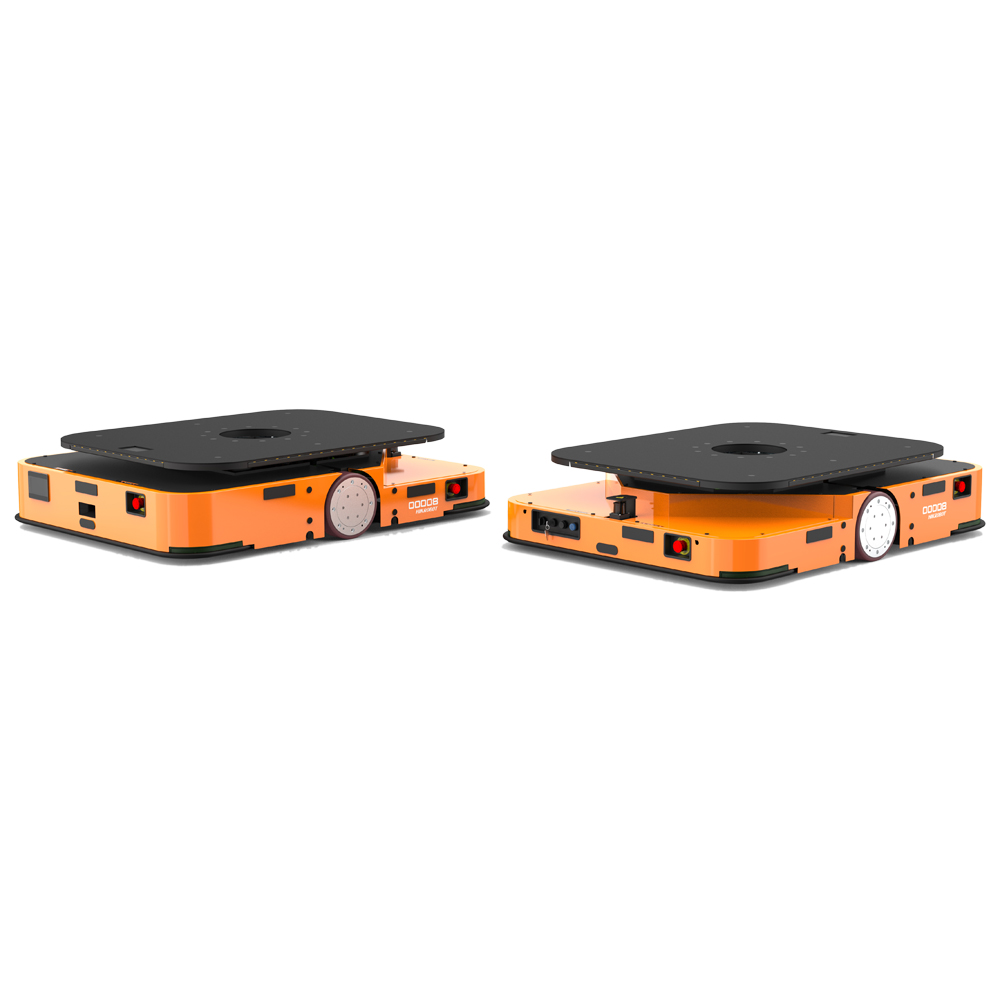
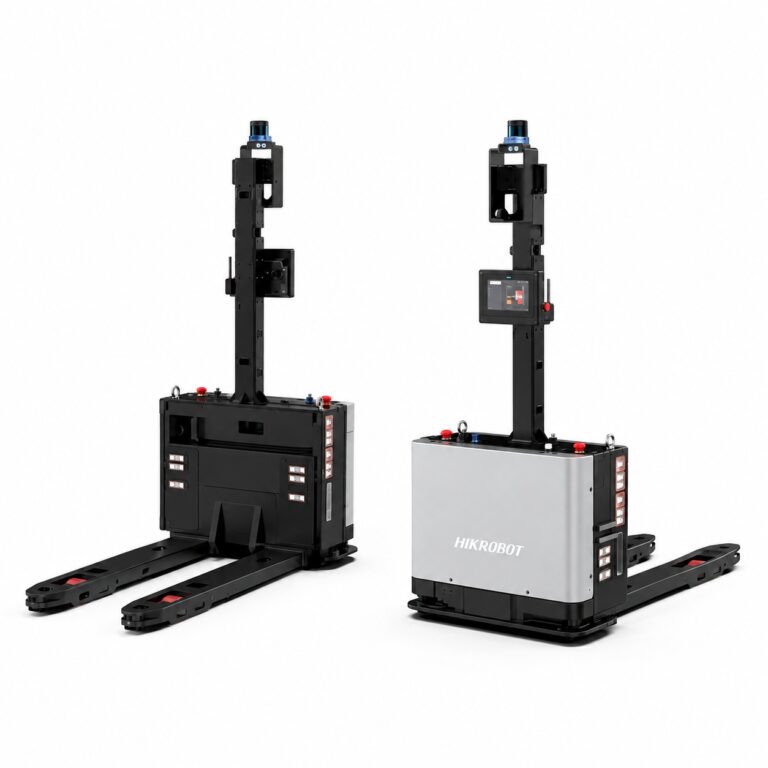
Latent mobile robots, also called under-riding or lifting AMRs, drive beneath an approved rack or load carrier, lift it slightly, and take it to another point. Their compact body makes them useful in goods-to-person picking, warehouse-to-line transfer, and rack replenishment.
Where does the LMR series fit?
A latent mobile robot (LMR) can bring a loaded rack to a picking station rather than sending staff repeatedly into storage aisles. It can also return empty carriers or reposition work-in-process materials in assembly operations. The lifting interface must match the rack footprint, ground clearance, weight distribution, and allowable travel route. These factors often matter more than the rated capacity on the brochure.
What does one Wesar model illustrate?
The Q8-2000A lifting mobile robot is listed with a 2,000 kg rated load and a 100 mm lifting stroke. Its job is to raise a compatible carrier for transport, not to stack pallets several meters high. Different LMR models serve lighter racks, while fork-type latent robots offer another carrier interface. The right design follows the actual load geometry.
What Jobs Are Forklift Mobile Robots Built For?
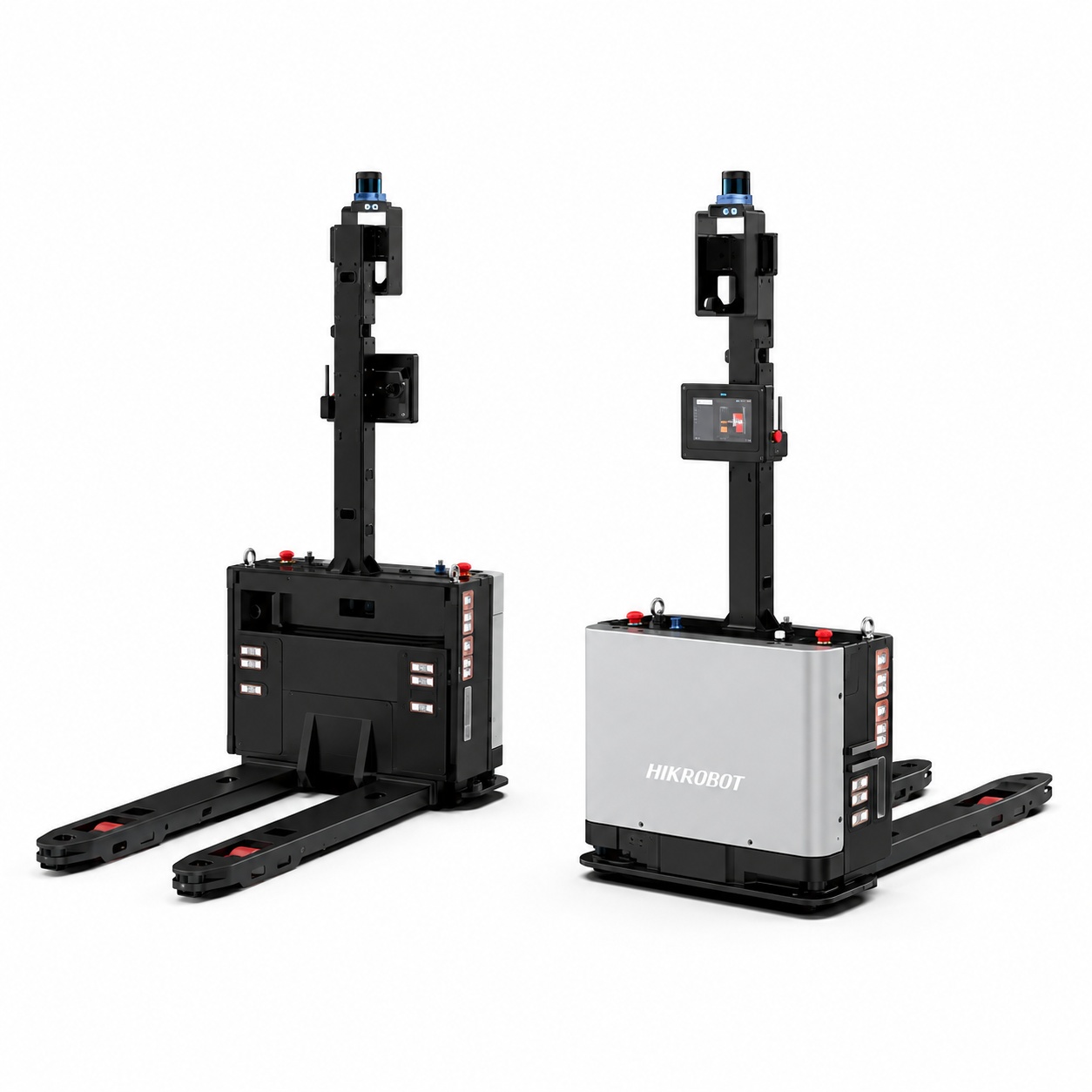
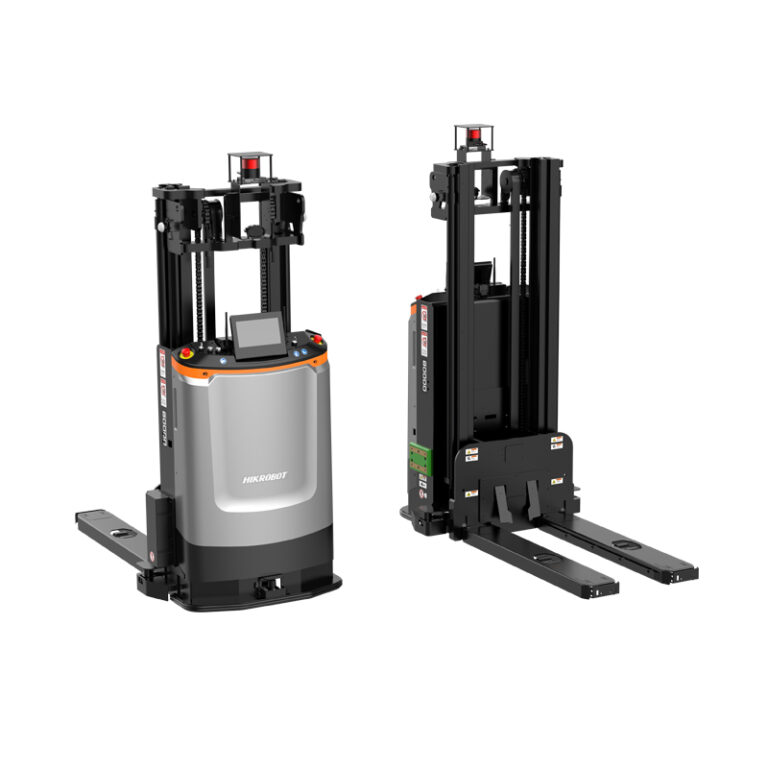
Forklift mobile robots (FMRs) use forks to collect, transport, lower, and, on suitable models, stack pallets. They address an everyday intralogistics requirement: transferring full pallets between receiving, storage, production, and finished-goods areas without a driver for every repetitive trip.
How do horizontal carriers differ from stackers?
The F3-1500 forklift mobile robot is an example of a floor-level pallet carrier with 1,500 kg rated load and 200 mm fork lifting height. That lift is suitable for pallet pickup and set-down but not elevated racking. By contrast, stacking FMRs have a taller mast and must be evaluated for rack beam height, load center, aisle clearance, and load stability at elevation. The FMR category includes both horizontal carrying and stacking configurations.
Pallet underside design is also critical: fork entry must fit the actual carrier, whether a three-runner pallet or a full-perimeter design. A pallet dimension alone does not establish compatibility. Confirm the sample pallet, fork height, approach direction, and receiving position before an acceptance test.
Why Are Carton Transfer Units Different From Other AGVs?
A carton transfer unit (CTU) is designed around bins and totes rather than full pallets or whole racks. It can retrieve or place individual cartons at specified shelf locations, supporting denser storage and goods-to-person workflows. Wesar’s carton transfer unit range includes configurations for single or multiple totes and multi-level storage.
Which warehouse problems does a CTU address?
In an electronics spare-parts warehouse, thousands of small SKUs may need accurate picking without dedicating an operator to each aisle. A CTU can bring the correct tote to a workstation, while software keeps tote identity and location aligned with the order. The buyer must still evaluate carton dimensions, usable shelf height, retrieval time, workstation capacity, and how empty totes return. CTU capacity is not interchangeable with a forklift’s pallet rating.
What Other Robot Families Complete the System?
Wesar also lists conveyor mobile robots (CMRs) to transfer compatible items to fixed conveyors or machines, heavy-duty mobile robots for specially engineered large loads, and mobile collaborative robots combining a mobile base with manipulation. These are useful when the transport interface goes beyond a rack, pallet, or tote. A mixed fleet can use each vehicle where its mechanism provides value instead of standardizing every workflow around one chassis.
How does one mixed fleet operate as a warehouse system?
Warehouse orders and inventory rules can flow through WMS, while robot scheduling, traffic control, and route allocation are handled by an RCS. A mixed operation might assign a CTU to retrieve totes, an LMR to reposition a rack, and an FMR to deliver a pallet to the production line. Reliable handoffs and task feedback matter more than simply adding more vehicles.
Why Work With Wesar on Mobile Robot Selection?
Wesar Intelligence provides mobile robots together with warehousing software, system planning, equipment integration, project implementation, and after-sales support. Its engineering team can assess carrier types, storage geometry, travel routes, shift demand, and software interfaces before assigning tasks to a suitable robot family. That approach is useful when a customer’s warehouse contains several material formats.
Conclusion
The main AGV types solve different physical tasks: LMRs move compatible racks and carriers, FMRs transport or stack pallets, and CTUs retrieve and deliver totes. CMRs, heavy-duty platforms, and mobile manipulators cover more specialized transfer requirements. Choose by load interface and workflow first, then validate throughput, safety, and software integration. A mixed fleet can be more practical than expecting one robot type to serve every part of an automated warehouse.
FAQs
Is an LMR the same as a forklift AGV?
No. An LMR normally moves under a compatible load or rack and lifts it, while a forklift AGV inserts forks into a suitable pallet or carrier. Their transfer interfaces are different.
Which AGV is used for goods-to-person picking?
LMRs can bring complete racks to operators, while CTUs can retrieve individual totes. The choice depends on inventory size, storage density, and the picking workstation design.
Can different Wesar robot types share a facility?
Mixed fleets can be coordinated through an appropriate robot-control architecture, provided traffic rules, handoff interfaces, and task priorities are designed for the site.






 English
  Russian
  Chinese
  Japanese
  Italian
  Korean
  Spanish
  Arabic
  French
  German