
Forklift Automated Guided Vehicles (AGVs) enable warehouse automation by incorporating robotics, a navigation system and intelligent control software. These vehicles are used for material handling and transport of for example pallets. They are able to stack and put away the pallets in a warehouse. There are several leading manufacturers that provide forklift AGVs, like the F3-1500 which is a flatbed vehicle that is able to transport 1500 kg. The F4-1000 is able to stack and put away the pallets in a warehouse. In this article we will explain the possibilities, the technologies, the advantages and applications of forklift AGVs. We will also explain also the possibilities of Wesar Intelligence Co., Ltd., a supplier of forklift AGVs.
What Are Forklift AGVs and How Do They Operate?
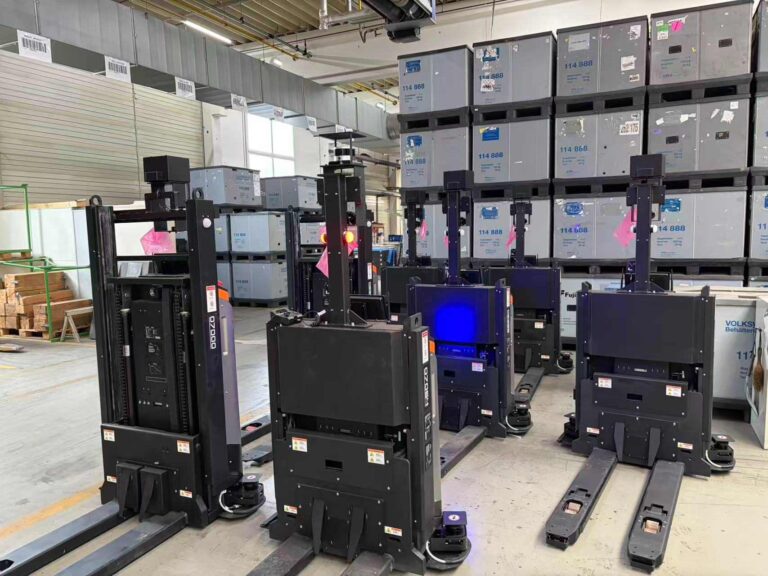
Forklift AGVs are autonomous mobile robots that perform material handling tasks without human intervention. They are designed to move pallets, containers, or other goods within warehouses, factories, and distribution centers. Their operation relies on an integration of sensors, navigation algorithms, and intelligent control systems that ensure precise and safe movement through complex industrial environments.
Core Components of Forklift AGVs
Navigation Systems: Modern forklift mobile robots are often equipped with cutting-edge navigation solutions like laser guidance, SLAM (Simultaneous Localization and Mapping) or even localization via QR codes. This allows the systems to adapt to changing circumstances in real time. Forklift mobile robots as well as AGVs are used in internal logistics of manufacturing industries like the automotive industry, home appliances, electronics and machining. Here, they support the entire value-added process from receipt of goods and internal transportation to warehousing of finished goods.
Control Units: Plan a route, prioritize tasks, avoid obstacles and communicate with other higher level management systems. The Control Units can be integrated with Warehouse Management Systems (WMS) or Robot Control Systems (RCS) in order to control a fleet of robots in a coordinated manner.
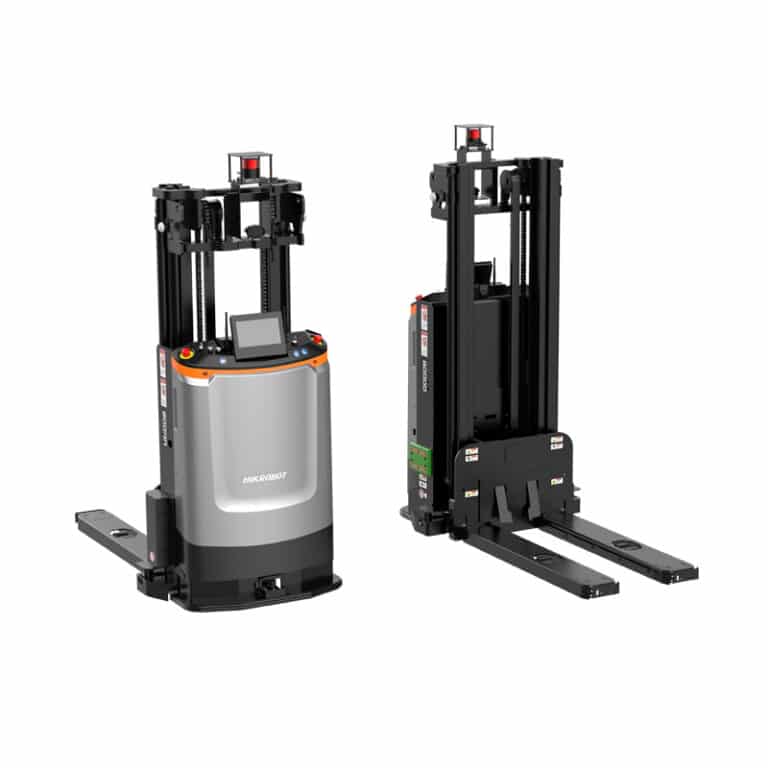
Forklift AGVs, such as those from the demo, come equipped with safety features including LiDAR sensors, bumpers, an emergency stop button, and of course, visual and audio alarms to protect staff and other walking personnel. Additionally, the F3-1500 Forklift Autonomous Mobile Robot also includes laser obstacle avoidance, bumper strip detection, pallet in-position detection, fork collision detection, an emergency stop button, indication light, and sound-light alarm.
Key Differences Between F3-1500 and F4-1000 Models
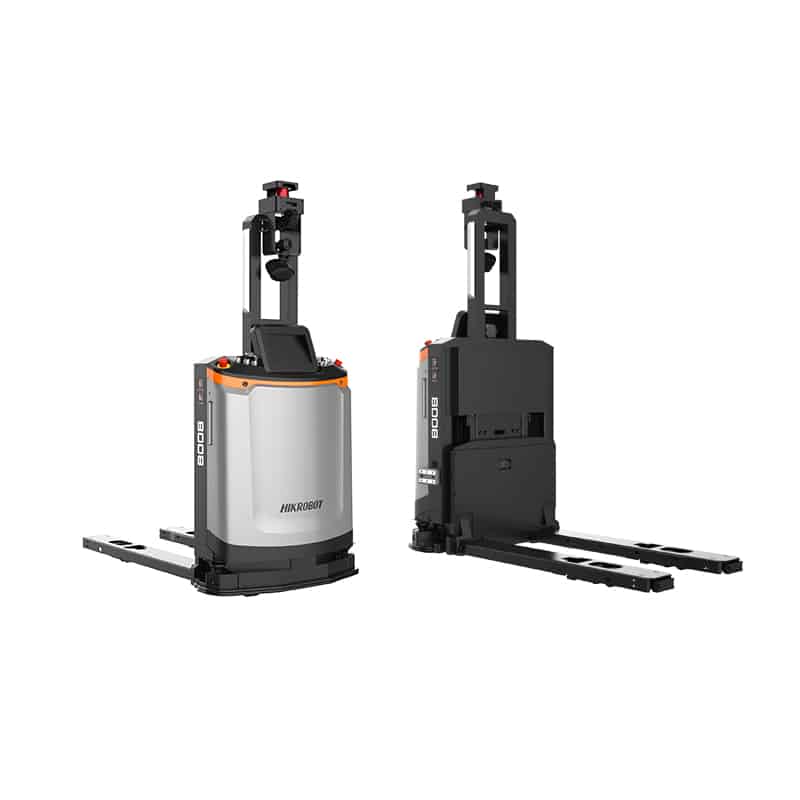
F3-1500 Wesar Forklift Mobile Robot 1500 kg / 200 mm. The forklift is designed for the horizontal transportation of pallets between production lines and storage zones using L‑SLAM/3D L‑SLAM navigation modes. It has a maximum speed of 1.2 m/s with positional accuracy of ±10 mm / ±1°. The robot is designed to travel forward and backward, as well as to rotate in place, with a minimum aisle width of 2191 mm. The forklift is rated for horizontal pallet work.
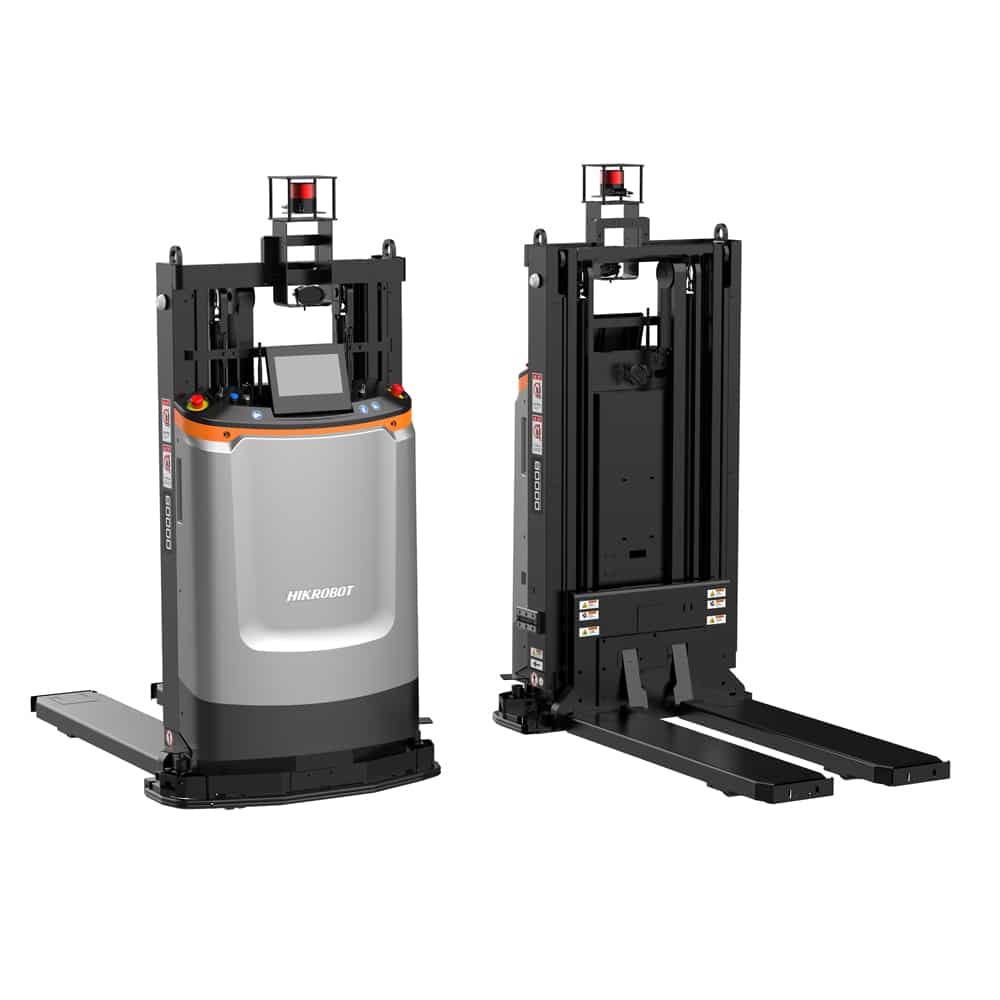
F4-1000C Forklift Mobile Robot: The F4‑1000C Forklift Mobile Robot is designed for lifting heavy loads with a rated load of 1000 kg and a fork lifting height of 2031 mm. The F4‑1000C is part of the stacking series and is a Forklift Mobile Robot with a modular architecture, which supports payloads of 300 kg to 1400 kg. The robot reaches a top speed of 1.5 m/s and is equipped with hybrid laser‑vision positioning, which allows for a high level of accuracy down to the millimeter. Due to the compact design of the body, the aisle width can be kept low with only 2062 mm and thus allows for vertical stacking in racking systems.
How Do Forklift AGVs Contribute to Warehouse Automation?
Forklift AGVs are changing the way of warehouse automation by bridging the gap between manual operations and digital logistics ecosystems.
Enhancing Operational Efficiency
Automation eliminates repetitive driving tasks while ensuring continuous operation across multiple shifts. AGV systems offer route planning, dynamic task dispatching, and obstacle avoidance, ensuring accurate and efficient transport. When integrated with WMS platforms like iWMS‑1000 or RCS‑2000 scheduling software suites, forklift AGVs enable synchronized inventory tracking and optimized routing decisions that minimize idle time.
Improving Safety and Accuracy
Replaced manual forklifts with autonomous navigation to remove risk of accidents caused by fatigue or human error. Our AGVs equipped with laser-based obstacle avoidance and auto-positioning ensure a safe workplace, eliminating the risk of injury to self or others. The auto-positioning feature also enables accurate pallet placement, reducing risk of product damage, whilst maintaining the high levels of service and throughput required.
What Technologies Drive the Performance of Forklift Mobile Robots?
The technological innovation behind modern forklift mobile robots is what determines their reliability and adaptability.
Navigation and Localization Technologies
Our Laser-based SLAM technology is able to create a map of the surroundings and localize itself at the same time. This enables the vehicle to adapt to new obstacles or changes in the warehouse layout while driving. Our F3‑1500 and F4‑1000 models both support L‑SLAM/3D L‑SLAM customizable navigation modes, which offer high accuracy in mapping out the environment.
Intelligent Control Systems
Traffic flow management is optimized by AI-based algorithms that work in the background based on highest priority or lowest battery charge. In the backend, this integration also enables traffic management to be monitored remotely in real-time through dashboards of IoT platforms such as RCS‑2000 which also enables all robots to be coordinated in real-time even if they are part of a large fleet of robots.
Energy Efficiency Innovations
Lithium-ion battery systems combined with intelligent charging management extend operational uptime while reducing power consumption. The F3‑1500 runs continuously for six to eight hours per charge with charging time ≤2 hours; the same applies to the F4‑1000C model. These quick-charging capabilities support uninterrupted multi-shift operations.
In Which Scenarios Are F3-1500 and F4-1000 Most Effective?
Each forklift AGV model deals with specific challenges in different warehouse environments.
Applications of F3-1500 in Planar Transport
The F3‑1500 is primarily suited for horizontal movement of goods such as moving pallets between Inbound Docks and production lines and replenishing of production Buffer Zones. Due to the very compact dimensions of this forklift (Length: 1645mm, Width: 870mm, Height: 1984mm) it is also very suitable to work in narrow aisles. The forklift is designed for stable transportation in a straight line.
Applications of F4-1000 in Stacking Operations
F4‑1000C is designed for vertical stacking applications. It can be used in multi-tiered warehouse with storage of all types, in high-density racking warehouses and in general warehouse environments. The picker is very slim to minimize the required operating aisle width while keeping high storage height. It can be connected to elevators and conveyors to realize pick and put away from upper and lower floors in smart logistic centers.
Why Should Businesses Choose Wesar Intelligence Co., Ltd.?
Wesar intelligence Co., Ltd. is a one-stop intelligent factory solutions provider. Its core services consist of green intelligent logistics robots and intelligent factory system design and construction. Their solutions include AGV robots, WMS platforms, ASRS systems, conveyors, storage cabinets, and many more automation components for various industries.
Nimbo is a market-driven company, managed by a team of experienced and knowledgeable professionals with many years of industry expertise. The company’s professional on-site installation teams can deploy products rapidly across the world. Products meet high technical standards and are CE certified. This applies to all of Nimbo’s product ranges including the forklift mobile robot series.
Wesar’s Customer Service: We offer a comprehensive, one-stop integrated smart warehousing service. From the initial consultation to the planning and design of the solution, to production, on-site installation and after sales service, our customer-centric approach provides a seamless experience from the start of the project to its post-deployment maintenance.
What Are the Long-Term Advantages of Implementing Forklift AGVs?
Short-term benefits of adopting forklift mobile robots can quickly be followed by more strategic benefits in the long term, in line with Industry 4.0 goals.
Economic Benefits
Automation takes the “human” element out of dependance on manual labor and delivers consistent throughputs 24/7 even across different shifts. By being able to more accurately manage resources within warehouse operations, automation results in less expenditure over time.
Scalability for Future Growth
Forklift AGV networks are easily scalable by adding units and/or by integrating additional modules, such as carton transfer units (CTUs), without changing the underlying infrastructure. This also supports various expansion strategies for increasing volumes of business.
Sustainability Impact
By incorporating energy-efficient powertrains into the newest generation of transportation, Navitas is able to create a range of environmentally responsible solutions that support a corporation’s overall ESG goals. The adaptive, highly efficient AMRs are created to improve the throughput and efficiency of the warehouse and to future-proof its key infrastructure.
Conclusion
Forklift AGVs like the F3‑1500 for planar material transport and F4‑1000C for stacking operations represent cutting-edge advancements in warehouse automation technology. Their combination of precision navigation, robust safety mechanisms, modular flexibility, and energy efficiency empowers enterprises to achieve smarter intralogistics workflows under the guidance of trusted providers such as Wesar Intelligence Co., Ltd.
FAQs
1. What distinguishes forklift AGVs from traditional forklifts?
Forklift AGVs are operated with sensors instead of a human driver. Thus they can work around the clock without any downtime due to fatigue.
2. Can forklift AGVs be integrated into existing warehouse systems?
Yes; they connect straight away to your WMS / ERP software by means of standardized interfaces.
3. How does the F3-1500 differ from other planar transport robots?
This robot comes with a large payload capacity of up to 1500 kg and is equipped with L‑SLAM navigation especially for horizontal pallet transport.
4. What maintenance requirements do forklift AGVs have?
Routine activities comprise calibrating sensors, monitoring the battery in 6-8 hour runtime cycles, and updating software using RCS platforms.
5. Are forklift AGVs suitable for small-scale warehouses?
Yes; their modular designs permit best utilization of available space within narrow aisle facilities without structural changes.






 English
  Russian
  Chinese
  Japanese
  Italian
  Korean
  Spanish
  Arabic
  French
  German