
Latent mobile robots (LMRs) mark a major advance in warehouse automation. These robots slide under shelves or pallets. They lift them up. Then, they move goods around facilities on their own. Their skill in traveling without any human help makes them vital for today’s logistics and manufacturing tasks.
Latent mobile robots stand out due to their short height. This lets them work below regular racks. They can rotate a full 360 degrees. Plus, they handle movement in two directions. They even turn right in place. Such a setup allows easy fitting into crowded warehouse spaces. There, making the most of every inch matters a lot.
Core Functions of Latent Mobile Robots
The main jobs of LMRs involve self-guided travel. They use SLAM or QR code methods for this. They lift and carry items in a smooth way. Also, they link up with warehouse management systems (WMS). This setup helps with smart task planning.
These robots handle SLAM navigation. They also manage QR code navigation. Their fit with WMS platforms means real-time teamwork. It happens between robot groups and people working alongside.
Key Benefits in Warehouse Automation
LMRs boost work flow through nonstop running and smart path choices. They cut down on the need for hands-on labor. At the same time, they lower mistakes in daily operations.
AGV systems provide path mapping. They offer quick task assignment. They include ways to dodge barriers too. All this ensures spot-on and speedy transport. On top of that, their small build improves how space gets used. It allows bendy route planning in tight setups.
How to Evaluate the Right Latent Mobile Robot for Your Automation Project?
Picking the best LMR means checking several key performance aspects. Think about load capacity. Consider navigation technology. Look at battery life. Weigh system integration ease. Factor in upkeep demands. Each of these plays a role in the full return on investment (ROI) for your automation effort.
Factors That Influence Selection
Load Capacity: This sets the top weight a robot can manage safely.
Navigation System: It shapes accuracy and flexibility in changing settings.
Battery Efficiency: This influences how long it runs steadily. It also affects how often it needs recharging.
Integration Flexibility: This makes sure it works well with current WMS or MES systems. Thus, work flows stay smooth without breaks.
Importance of Matching Robot Specifications to Application Needs
Choosing robots with too many features can raise costs without reason. Picking ones that fall short might cause stops in work or poor results. So, it is key to match robot details to real daily needs. This way, you get the best output in your automation projects.
What Are the Features of the 600kg Latent Mobile Robot?
The 600kg latent mobile robot suits medium-weight tasks. It fits well in e-commerce warehouses. It also works in electronics assembly lines. There, quick moves are essential.
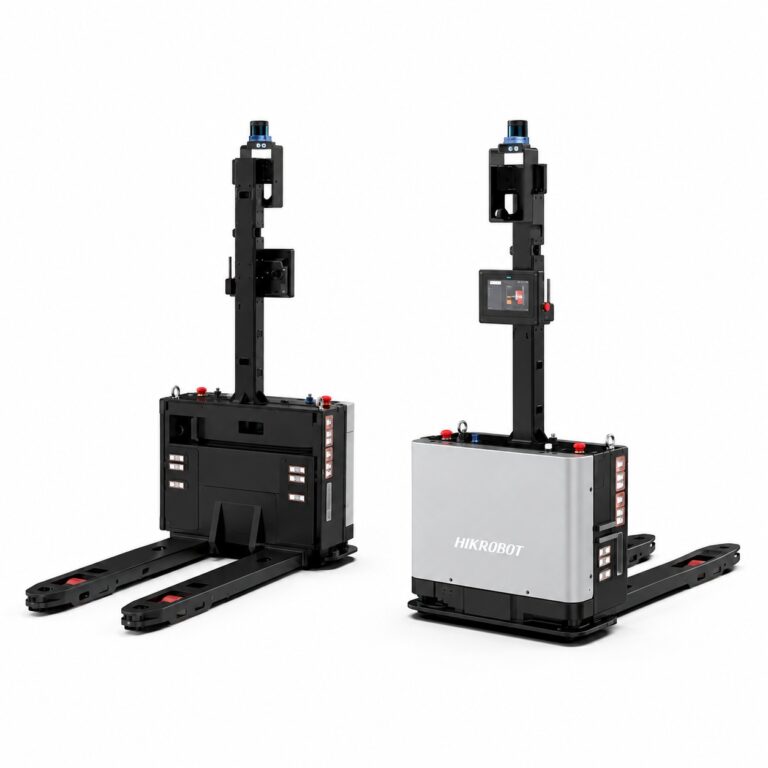
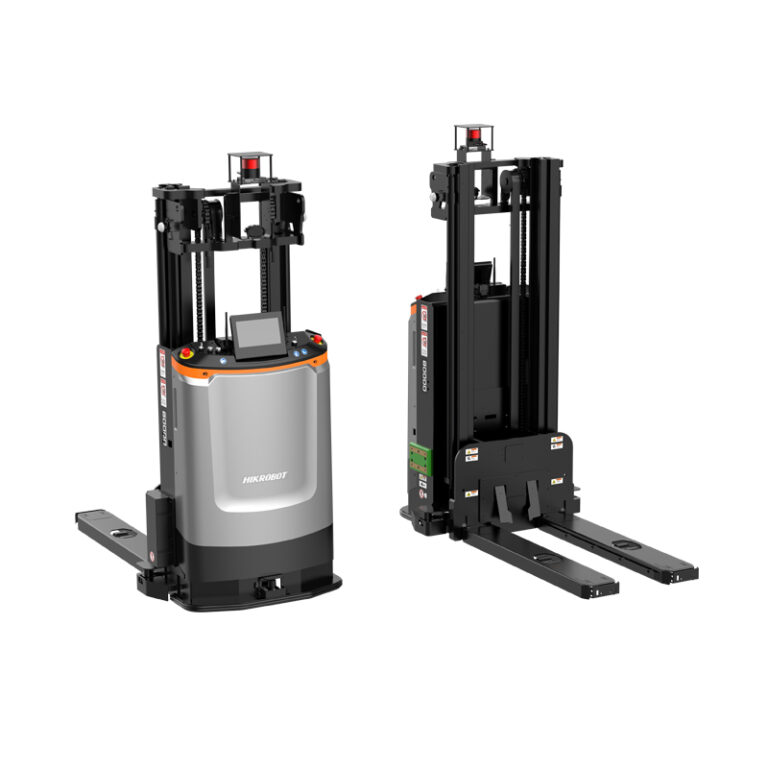
This clever forklift option blends the small quickness of Laser-guided Mobile Robots (LMR) with the strong carrying power of Forklift Mobile Robots (FMR). It mixes ease with toughness. As a result, it brings steady intralogistics automation.
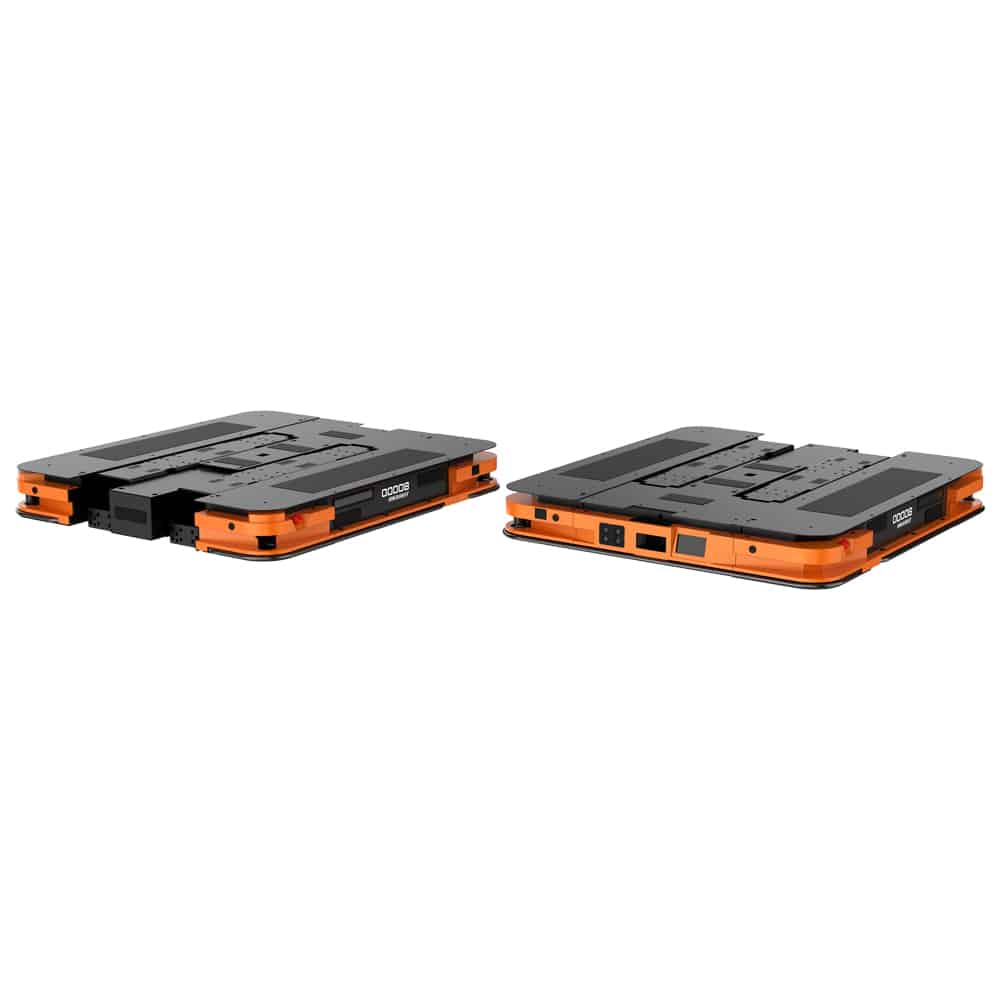
Technical Highlights of the 600kg Model
Rated load: 600 kg; lifting stroke: 335 mm; rotation diameter: 1682 mm; rated operating time: 8 hours.
It allows movement in all directions. The highest speed reaches 1.4 m/s. Positioning stays accurate at ±10 mm/±1°.
Users can switch between V-SLAM, L-SLAM, and 2D barcode navigation on the fly. This keeps things adaptable in various places. The setup has safety layers too. Laser sensors spot obstacles. Emergency stops add protection.
Ideal Application Scenarios for the 600kg Robot
This version works best in pallet-to-person setups. It also docks automatically with unstacker cranes in e-commerce spots. Moreover, it handles just-in-time delivery of materials. This suits electronics lines. There, fast throughput keeps production going without hitches.
When Should You Choose the 1000kg Latent Mobile Robot?
For tough logistics jobs that need bigger loads and solid build, the 1000kg latent mobile robot gives top-notch results. It keeps tight control at the same time.
Forklift LMR joins the perks of LMR and FMR. It has both the base and forks. So, it keeps LMR’s bendiness. Yet, it can pick up pallets straight away.
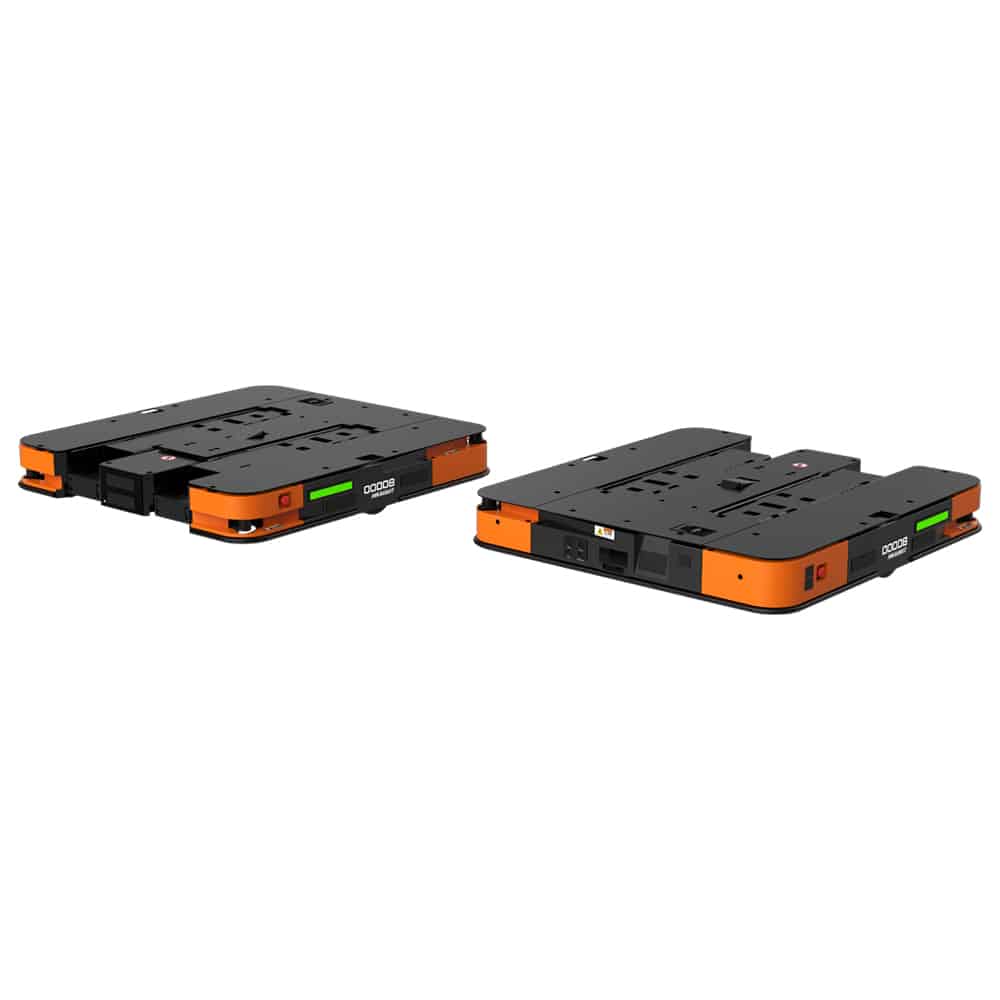
Technical Highlights of the 1000kg Model
Rated load: 1000 kg; lifting stroke: 335 mm; rotation diameter: 1640 mm; rated operating time: 8 hours. Its differential-drive setup hits speeds up to 2 m/s when empty. Still, it holds ±10 mm/±1° positioning accuracy.
It connects directly with outside tools. Examples include ground roller conveyors. Think elevators and freight elevators too. Air shower gates fit as well. Safety sensors in many directions guard during fast runs.
Ideal Application Scenarios for the 1000kg Robot
This type shines in automotive plants. It handles large distribution centers too. There, it moves heavy pallets or machine parts. It fits cold storage logistics as well. Such places demand long self-run times. Frequent charging breaks are not welcome.
How Do These Two Models Compare in Real Operational Environments?
Both models use Wesar’s shared software structure. However, they vary in load handling and base design. The choice hinges on your exact work aims. It is not about which one is better overall.
Comparative Overview: 600kg vs 1000kg Models
| Feature | 600kg Model | 1000kg Model |
|---|---|---|
| Load Capacity | Up to 600 kg | Up to 1000 kg |
| Size & Agility | Compact & agile | Larger & more stable |
| Typical Use Cases | E-commerce & light manufacturing | Heavy logistics & industrial handling |
| Battery Duration | Moderate runtime | Extended runtime |
The smaller one focuses on easy turns in slim paths. The bigger one stresses firm build for hard industrial weights.
Decision Criteria Based on Operational Goals
Go for 600kg if your site values quick moves in tight spots. Or if you need fast pallet changes. Choose 1000kg for steady long-distance hauls. It suits when reliable heavy loads keep work smooth.
Why Is Wesar Intelligence Co., Ltd. a Reliable Supplier of Latent Mobile Robots?
Wesar Intelligence Co., Ltd. acts as a full-service provider for smart factory setups. It focuses on key areas like eco-friendly smart logistics robots. It also handles smart factory planning and building. The firm blends robot parts with cutting-edge software like iWMS-1000 and RCS-2000. This creates growing automation systems. They serve fields such as manufacturing, warehousing, retail logistics, energy, food processing, and pharmaceuticals.
Advantages of Partnering with Wesar Intelligence Co., Ltd.
- Proven track record in delivering customized automation solutions.
- Comprehensive after-sales support including system integration guidance.
- Continuous innovation backed by strong R&D capabilities.
- Global service network ensuring timely technical assistance.
On top of that, Wesar’s customer service rules promise fast replies. Technical questions get answers in twelve hours. On-site teams reach you in forty-eight hours after okay. This keeps disruptions low during setup times.
In practice, Wesar has helped many clients transform their operations. For instance, in busy warehouses, their robots cut down travel times by up to 30 percent. This leads to quicker order fulfillment. In manufacturing lines, the integration with existing systems ensures no major overhauls are needed. Clients often praise the ease of scaling up as business grows. The company’s commitment to quality materials means fewer breakdowns over time. Safety features, like those multi-sensor setups, have prevented accidents in high-traffic areas. Overall, partnering with Wesar means gaining a partner that understands diverse industry needs and delivers tailored fixes.
What Are the Key Takeaways When Selecting a Latent Mobile Robot?
When picking between Wesar’s QF2-600O and QF3-1000D models, focus on your clear work targets. Do not just look at basic specs. Both offer forward-thinking automation tools. They aim to lift output while cutting human involvement.
Strategic Considerations Before Procurement
Review your daily load patterns in the logistics flow. This helps spot weight needs. Check space limits in warehouse designs. Aisle size directly affects how robots move. Think about growth plans for the future too. A well-fitted model guarantees lasting automation success through its full life.
Before buying, it helps to run a site audit. Map out peak hours and traffic flows. This reveals if lighter or heavier models fit better. Budget for training staff on the new systems as well. Wesar offers resources for this. Long-term, consider how updates to software can extend the robot’s value. Matching these elements ensures the choice boosts efficiency without regrets.
FAQs
What type of navigation system do Wesar’s latent mobile robots use?
Wesar’s latent mobile robots employ hybrid navigation combining laser SLAM with visual markers or QR codes for precise localization even in complex layouts.
Can these robots integrate with existing warehouse management systems?
Yes—both models feature open communication interfaces compatible with most enterprise-level WMS through API-based integration.
How long is the typical lifespan of a latent mobile robot from Wesar Intelligence?
With regular maintenance cycles observed under standard operating conditions, these units typically maintain optimal performance between five to seven years before major component replacement becomes necessary.






 English
  Russian
  Chinese
  Japanese
  Italian
  Korean
  Spanish
  Arabic
  French
  German