Factories require material-handling systems that move pallets securely, reliably, and on time. Standard forklifts stay valuable for flexible, worker-guided jobs. However, forklift automated guided vehicles (AGVs) are frequently selected for routine hauling and stacking. AGV forklifts merge self-driving technology, exact placement, safety sensors, and computer-managed dispatching. As a result, they establish a steadier movement of goods among storage, assembly, and dispatch areas.

Why Are Manufacturers Replacing Traditional Forklifts with AGV Forklifts?
The primary distinction goes beyond just missing a driver. A standard forklift relies on worker presence and personal choices. In contrast, an AGV forklift obeys digital commands and strict travel rules.
How Do AGVs Improve Labor Utilization?
Standard forklifts need skilled drivers for each running machine and work period. When staff shortages, busy seasons, or overnight shifts happen, a lack of workers can limit output. AGV forklifts handle regular point-to-point pallet transfers. This change lets staff concentrate on quality checks, repairs, stock issues, and workflow upgrades.
Using automation directs human skills toward overseeing operations and fixing problems rather than doing repetitive driving tasks.
How Do AGVs Improve Consistency and Safety?
Human driving can change based on the worker, busy paths, and task volume. An AGV forklift travels along set paths at fixed speeds. It uses exact pickup spots and delivery orders. This consistency ensures assembly lines get items steadily. It also provides supervisors with electronic job records.
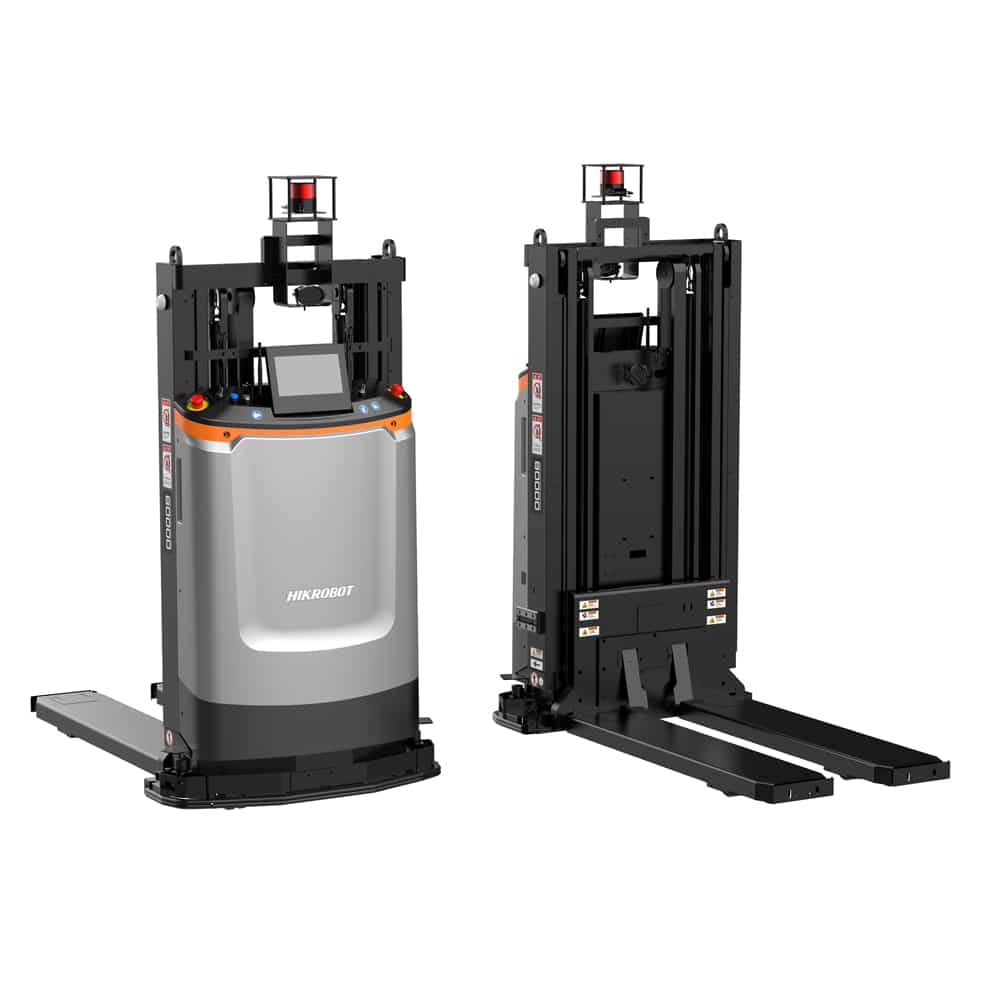
Wesar forklift mobile robots feature laser obstacle avoidance, bumper-strip detection, pallet in-position detection, fork collision detection, emergency-stop buttons, and sound-and-light alarms. These tools offer multiple layers of safety in zones where staff and machinery work together.
How Do Forklift AGVs Compare with Traditional Forklifts?
The best choice relies on how tasks are organized. AGV forklifts offer the highest benefit when pallet movements are frequent, steady, and linked to a factory schedule.
What Are the Main Operational Differences?
Standard forklifts can enter service fast. A driver can also redirect them right away. Yet, their productivity relies heavily on having enough staff, proper training, and driver skill. AGV forklifts need path mapping, layout planning, system connections, and process design before they start. Once they run, they deliver steady movement, trackable jobs, and organized fleet control.
Factories can also bring in more machines, lengthen paths, or change goals as production needs shift.
When Are Traditional Forklifts Still Better?
Manual forklifts stay useful for outside lots, broken pallets, huge items, rare tasks, and constantly shifting paths. Many plants employ a mixed fleet. AGVs run steady indoor transport, while standard forklifts manage odd loads and special cases.
Which Wesar AGV Forklift Models Fit Popular Applications?
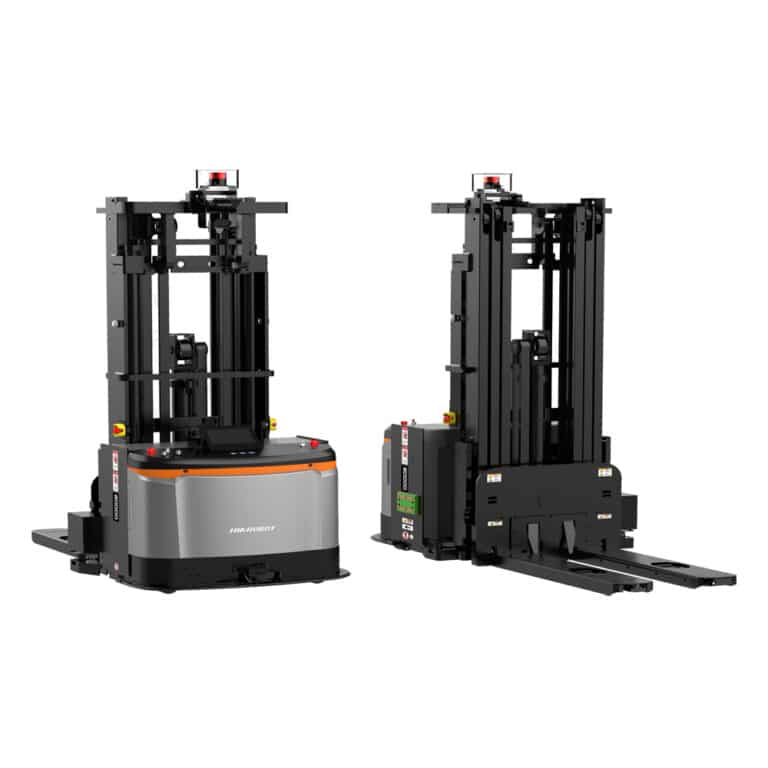
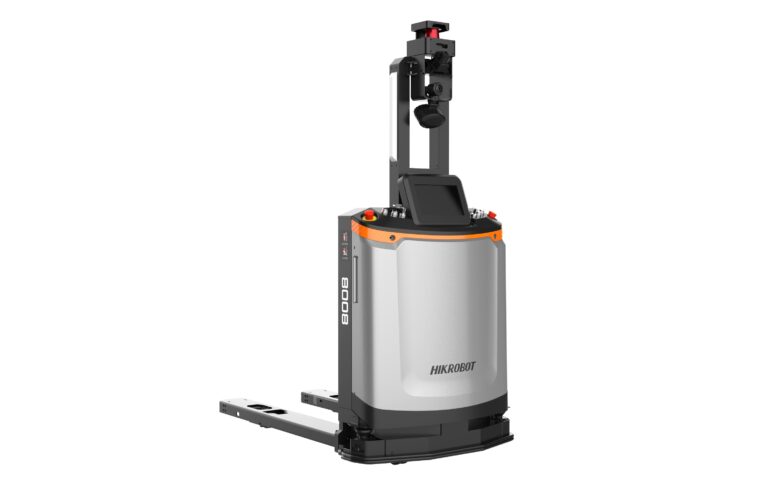
Wesar’s Forklift Mobile Robot line centers on the automatic moving of standard pallets. The F3-1500, F4-1000C,以及 F4-2000 handle various hauling, stacking, weight, and lifting needs.

What Is the F3-1500 Best For?
The F3-1500 is built for flat pallet moving and low-height lifting. It carries a 1,500 kg rated load. It offers a 200 mm fork lifting height and needs a 2,191 mm minimum aisle width. It uses L-SLAM or adaptable 3D L-SLAM navigation. The stated runtime is 6–8 hours. Charging takes two hours or less. It fits well for line-side delivery, pallet moving, and warehouse-to-factory hauling.
When Should Manufacturers Choose the F4-1000C?
The F4-1000C is a small stacking unit. It holds a 1,000 kg rated load and reaches a 2,031 mm lifting height. Its minimum aisle width is 2,062 mm. This makes it good for lower shelves and tight floor plans. It also features pallet-detection tools and adaptable L-SLAM or 3D L-SLAM navigation.
What Makes the F4-2000 Suitable for Higher Racking?
The F4-2000 (4.5m) carries weights up to 2,000 kg and raises items to 4,517 mm. It needs a minimum aisle width of 2,065 mm. It delivers a stated positioning accuracy of ±10 mm and ±1 degree. This unit is great for heavier pallet stacking, high shelf storage, and large-scale factory transport.
Why Is Wesar Intelligence Co., Ltd. a Reliable AGV Supplier?
A winning AGV plan needs more than just a machine. It also requires computer programs, system linking, setup, and technical help.
How Does Wesar Support Complete Automation Projects?
Wesar Intelligence Co., Ltd. is a complete smart factory provider. The business handles smart warehousing, logistics robots, software creation, equipment building, project rollout, and post-sale care. The firm notes nearly twenty years of background. It runs a 5,000-square-meter building site and employs over 100 experts. Its product range includes AGVs, WMS, ASRS, conveyors, and custom material-flow setups.
结论
Standard forklifts still handle flexible and changing jobs. However, AGV forklifts provide strong benefits in steady factory transport. They boost reliability, lessen the need for available drivers, and improve tracking. They also enable safer, computer-guided material movement. Wesar’s F3-1500 is good for low-level pallet moving. The F4-1000C handles small-space stacking. The F4-2000 manages heavier, high-reach tasks. The best outcomes happen by pairing the machine with the site’s pallet, aisle, shelf, volume, and system needs.
常见问题
Can an AGV Forklift Completely Replace Traditional Forklifts?
Not in every building. AGVs work best for steady, routine pallet moves. Standard forklifts might still be necessary for odd loads, outside jobs, fast-changing paths, and special issues. A mixed fleet is frequently the most useful method.
How Long Can Wesar Forklift AGVs Operate per Charge?
The F3-1500, F4-1000C, and F4-2000 details show 6–8 hours of runtime. Charging finishes in two hours or less. Real performance relies on weight, path distance, traffic, and working environment.
Which Wesar Model Should a Manufacturer Select?
Pick the F3-1500 for 1,500 kg flat moving. Choose the F4-1000C for small 1,000 kg stacking. Select the F4-2000 for weights up to 2,000 kg and lifting to 4,517 mm. A site review must check pallet dimensions, aisle width, shelf height, floor state, and system needs.