
If you are evaluating AGV applications in the pharmaceutical industry, you are probably not chasing “cool automation.” You are trying to move materials through controlled spaces without breaking chain-of-custody, without clogging aisles, and without creating the kind of deviation investigation that eats a week of everyone’s life. In pharma, internal logistics is part of product quality. That is why AGV-based intralogistics automation tends to win when it is treated as a risk-control tool first, and a labor-saving tool second.
Pharmaceutical sites have a specific mix of constraints: hygiene expectations, traceability pressure, temperature and humidity sensitivity, segregation rules, and a relentless demand for repeatable execution. People can do this work, but people also improvise. They take shortcuts, they get tired, and they make small decisions that are hard to audit later. Robots do not “care” about your SOP, but they are excellent at following it once you build the workflow correctly.
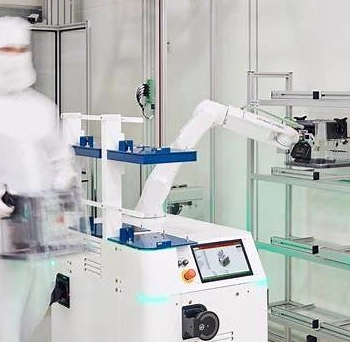
What makes pharma AGV projects different from “normal” warehouse automation
Controlled environments change the whole design brief
In a typical industrial warehouse, the biggest problems are often labor availability, travel time, and pallet flow. In pharmaceuticals, the bigger threat is usually a process failure that looks small on day one and becomes expensive on day thirty. A manual cart route that passes too close to a dusty dock area. A forklift driver cutting through a corridor during a cleaning window. A staging area that quietly becomes a mixed-batch zone because it was convenient in the moment.
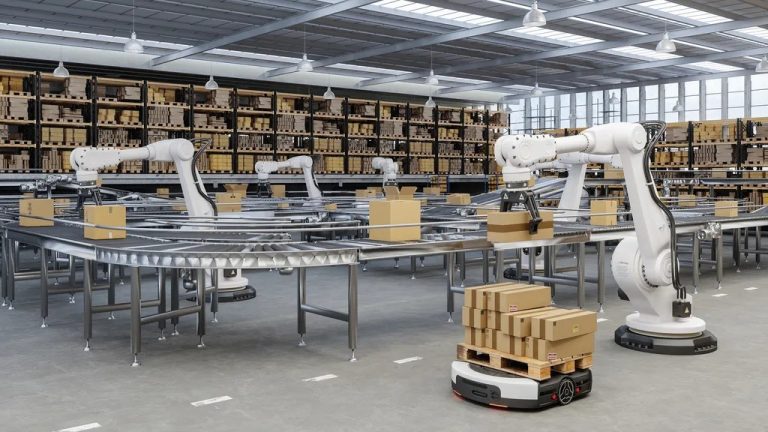
AGVs and AMRs are attractive in pharma because they create a predictable path of movement and a predictable record of movement. An AGV is commonly defined as a robot that navigates on its own and transports goods, using guidance methods such as magnetic strip or laser navigation. An AMR goes further by planning routes and avoiding obstacles without a pre-set path, which helps in dynamic environments. For many pharmaceutical operations, the technology choice matters less than the operational outcome: stable transport, fewer uncontrolled interactions, and cleaner data.
Traceability is not a “feature”; it is the point
Pharma logistics is full of moments where the question is not “Did we deliver it?” but “Can we prove where it was, when it was there, and who or what touched it?” In Wesar’s industry material, the pharmaceutical use case is described as operating in sterile environments, supporting accurate tracking, and improving safety in a way that aligns with GMP and related requirements. That positioning is correct: when AGVs are designed as part of the traceability system, they reduce gray areas in movement history.
Temperature and humidity expectations shape workflows
A lot of pharma inventory behaves fine—until it doesn’t. Cold-chain materials, humidity-sensitive packaging, and certain intermediates are unforgiving. Intelligent warehousing systems can monitor temperature and humidity in real time, so storage stays aligned with product needs.
The best AGV projects treat this as a routing problem, not just a storage problem: minimize dwell time outside controlled zones, avoid traffic jams near airlocks, and reduce “temporary staging” that turns into accidental exposure.
Where AGVs create measurable value in pharmaceutical operations
Sterile and cleanroom-adjacent material transfer
One of the most defensible use cases is moving sealed raw materials, consumables, and packaged components through controlled corridors where human traffic should be limited. In practice, the win is not just fewer footsteps; it is fewer unplanned stops. When a robot has a defined docking station interface—meaning a physical connection point between the robot and a production line, shelf, or conveyor—your transfers become more repeatable, and repeatability is the foundation of compliance.
Batch-safe internal distribution and segregation
Pharma warehouses frequently handle parallel batches, quarantined items, returned goods, and materials under investigation. Humans can manage this, but the system is fragile under pressure. AGVs make it easier to “force” segregation through route logic and task permissions. When the process is built around a warehouse management system and a dispatching layer, you reduce the chance that a pallet meant for quarantine ends up staged near released stock because it was the closest open space.
Packaging lines, kitting, and high-frequency replenishment
Packaging is where delays are visible and costly. A short stoppage can waste labor and create line imbalance that shows up in every KPI review. Wesar’s documentation describes intelligent systems monitoring inventory in real time and reducing human errors while improving operational efficiency.
The practical translation for a pharma buyer is straightforward: when the replenishment loop is automated, line-side shortages become rarer, and “emergency runs” become less common.
Cold-chain and humidity-controlled internal logistics
In temperature-controlled warehouses, manual handling introduces both contamination risk and stability risk. The same Wesar material that discusses food and pharma highlights strict requirements around temperature control, hygiene, safety, and traceability, with systems monitoring temperature and humidity in real time. An AGV-based workflow helps by reducing door-open time, tightening transfer timing, and limiting the number of handoffs where exposure can occur.
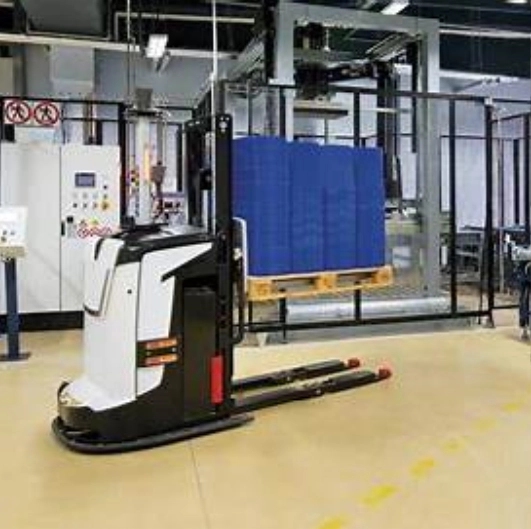
Selecting the right AGV types for pharma: match the robot to the compliance risk
Carton and tote handling for picking accuracy
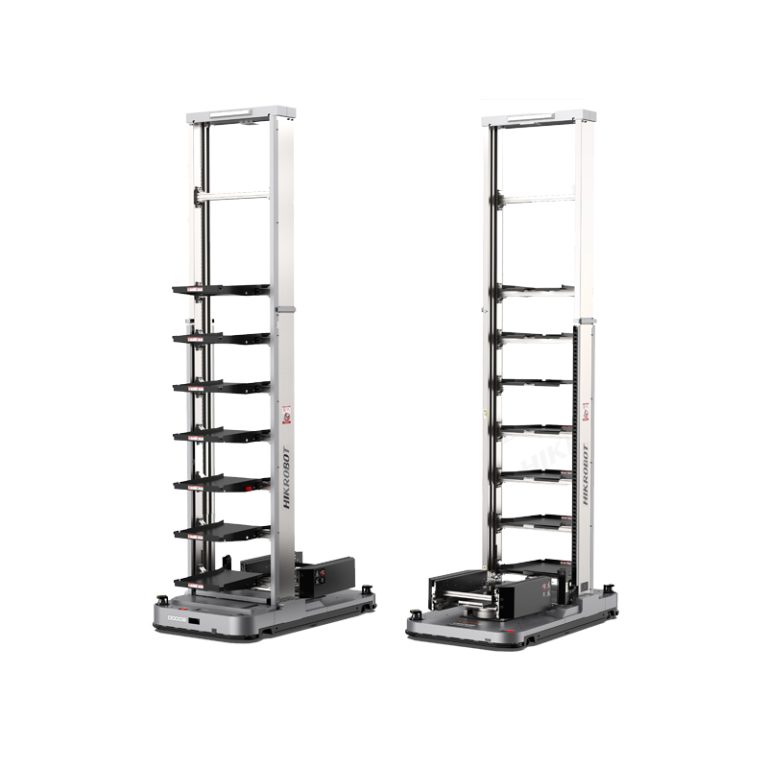
For pharma distribution and hospital-supply style operations, tote or carton movement is often more important than heavy pallet movement. Wesar’s knowledge base describes a Carton Transfer Unit (CTU) that can move under standard shelving and retrieve bins, and notes it is common in e-commerce, pharmaceutical, and retail scenarios. In a pharma context, the value is not just density; it is reduced walking, reduced mis-picks, and cleaner audit trails when the system can reconcile movements automatically.
Forklift-style AGVs for pallet storage and retrieval
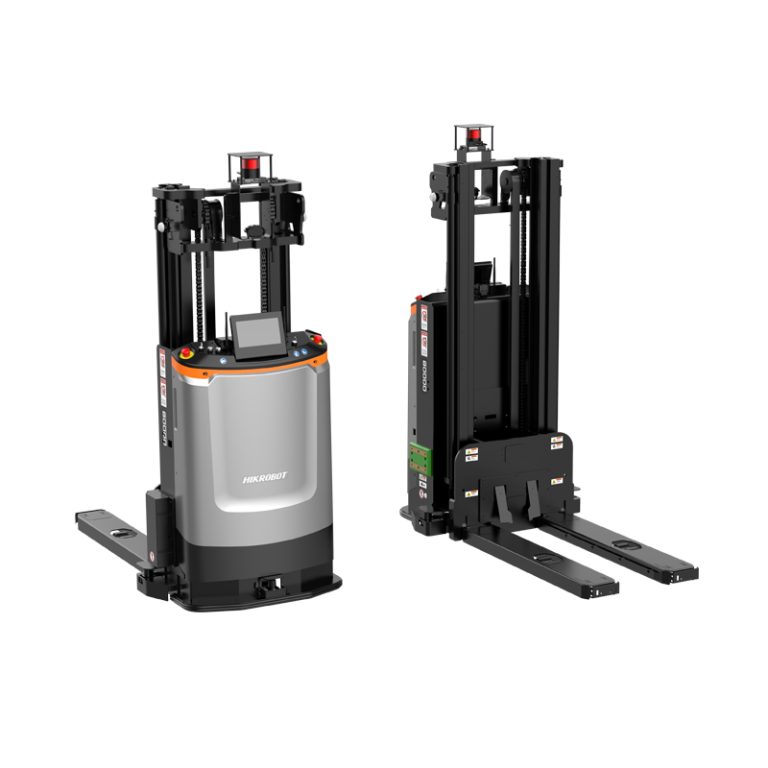
If you run tall racking, inbound pallets, and finished goods dispatch, forklift automation can eliminate the highest-risk manual moves. Wesar’s Forklift Mobile Robot (FMR) description includes laser SLAM navigation, rack operation heights from 1.6 to 4 meters, and payload up to 1500 kg, with linkage to WMS/WCS to connect inbound, transport, and outbound flows. For a pharma buyer, this matters because pallet handling incidents tend to be both safety events and quality events: damaged cartons, compromised seals, and unexplained shocks during transport.
Conveyor interfacing when you want minimal facility disruption
Many facilities are allergic to large retrofits, especially in validated spaces. Wesar’s Conveyor Mobile Robot (CMR) concept emphasizes material interfacing via rollers and adjustable docking heights, reducing the need for major modifications to existing equipment. In real projects, that “minimal disruption” angle is often the difference between a pilot that gets approved and a proposal that dies in committee.
The compliance conversation: how to make AGVs acceptable to QA, not just Operations
Think in terms of failure modes, not “automation benefits”
Pharma decision-makers tend to agree on the upside. The debate is about what can go wrong. Typical concerns include contamination pathways, incomplete movement records, incorrect batch delivery, and downtime that interrupts controlled processes. A strong AGV plan reads like a risk assessment: where the robot travels, how it interacts with people, what happens during exceptions, and how deviations will be investigated.
Validation and change control: the project plan has to acknowledge reality
You do not need to turn an AGV into a regulated “product,” but you do need to validate the workflows that touch quality outcomes. That usually means defining what the system must do, testing it under normal and abnormal conditions, and locking down change control so software tweaks do not silently create new behaviors. This is where integrated systems matter. An intelligent warehouse management system (iWMS) is defined in Wesar’s knowledge base as software supporting inventory management, path optimization, and equipment scheduling. In practice, that definition points to the real requirement: you need a single source of truth for tasks, inventory states, and movement logs.
Safety is still a board-level concern
Even in pharma, forklifts and heavy handling create risk. Wesar’s material explicitly calls out that heavy and high-altitude handling tasks can lead to accidents, often caused by fatigue or human error, and notes that AGVs with laser obstacle avoidance and auto-positioning can reduce injuries and improve safety.This is not just an HR topic. Safer material flow reduces shutdowns, investigations, and staffing volatility.
Implementation that actually works: a buyer’s sequence for evaluating vendors and scoping the system
Start with a tight pilot that proves the hard parts
In pharma, the “hard parts” are rarely the straight-line transport tasks. The hard parts are the interfaces: airlocks, elevators, handoff points, door logic, and exception handling during cleaning windows. A good pilot isolates a single flow that touches real constraints, then expands. If the pilot only runs in an open warehouse aisle with no controlled transitions, it will look great and teach you almost nothing.
Integration should be scoped as a deliverable, not an assumption
Many buyers underestimate integration. They assume the robot will “talk to” their MES or WMS. Then the project stalls. Wesar’s industry document addresses this concern directly: some businesses worry about maintenance complexity, downtime, and the ability to integrate with existing MES/WMS, while noting that a reliable provider can offer system integration services and long-term technical support. For procurement, the practical move is to require a clear integration boundary: what data is exchanged, how tasks are triggered, how inventory state is updated, and who owns troubleshooting.
Design for maintainability and uptime, because downtime is a compliance risk
Downtime in pharma is not simply “lost throughput.” It can create uncontrolled staging, rushed workarounds, and shortcuts that QA will later have to untangle. The best projects include spare strategy, maintenance windows, and a support model that matches your operational hours.
About Wesar Intelligence Co., Ltd.
威萨智能股份有限公司有限公司。 positions itself as a one-stop intelligent factory solutions provider focused on green intelligent logistics robots and intelligent factory system design and construction, delivering integrated services that include consulting, planning, software development, equipment manufacturing, project implementation, and after-sales support.Its product line covers AGV robots, WMS systems, ASRS with storage shelves, conveyors, and related logistics equipment.For buyers, that breadth is useful because pharmaceutical AGV projects rarely succeed as “robots only” purchases; they tend to succeed when the robot layer and the system layer are designed together.
On service, Wesar describes a one-stop smart warehousing offering from solution design through on-site installation and after-sales support, with a one-year warranty for non-human damage, response to inquiries within 12 hours, and the ability to mobilize on-site teams within 48 hours after visa approval for projects requiring surveys and measurements. In regulated environments, that responsiveness matters because long troubleshooting cycles are often what push teams into risky manual workarounds.
结论
AGVs in pharmaceutical operations are not a “nice upgrade.” They are a practical way to reduce variability in how materials move, how batches stay segregated, and how movement records are captured. When you treat the project as a controlled workflow—designed around sterile transport, traceability, and environmental discipline—you get more than speed. You get a logistics system that behaves the same way on a busy Monday as it does during a calm week, which is exactly what QA and Operations both want.
常见问题
The most common applications include sterile or controlled-area material transfer, batch-safe internal distribution with segregation controls, pallet putaway and retrieval, and tote or carton movement for high-accuracy picking. These use cases tend to perform well because they reduce unplanned human handling and produce cleaner movement records.
AGVs support GMP-oriented workflows by making routes, handoffs, and task logic repeatable, while reducing “informal” staging and ad-hoc transport. When paired with a warehouse system that logs tasks and inventory states, they strengthen traceability and make deviation investigations faster and more fact-based.
It depends on how stable your environment is and how much variability you expect in aisles, traffic, and layouts. AGVs are typically well-suited to structured routes and consistent processes, while AMRs can be advantageous in dynamic areas where obstacle avoidance and route planning need more flexibility.
You should be ready to describe your material types and load units, your controlled-area transitions, your peak-hour throughput needs, your traceability and segregation rules, and the systems you expect to integrate with. The clearer the exception handling requirements are—cleaning windows, blocked paths, priority deliveries—the more realistic the proposed design will be.
A strong safety approach combines the right navigation and obstacle avoidance capabilities with operational rules for shared spaces. AGVs equipped with laser-based obstacle avoidance and auto-positioning are specifically positioned to reduce workplace injuries and improve safety ,but you still need clear traffic design, signage, and training so humans and robots interact predictably.





 Chinese
  English
  Russian