
Procurement and operations professionals in warehousing and manufacturing routinely compare Automated Guided Vehicles (AGV) with Automated Storage and Retrieval Systems (AS/RS) when mapping out material handling improvements. One delivers mobile, floor-level transport with considerable autonomy in current configurations, the other concentrates on engineered vertical storage and automated access in permanent structures. Evaluations of AGV vs AS/RS surface repeatedly as teams review pathways to better cycle consistency, lower reliance on manual labor, or increased capacity while managing site disruption and investment thresholds.
The breakdown that follows details the technologies, observed behaviors in deployments, direct side-by-side metrics pulled from project records, application patterns seen in the field, and clear criteria for choosing one direction over the other. Consistent trends emerge across installations regarding rollout pace, capital layering, and long-run dependability.
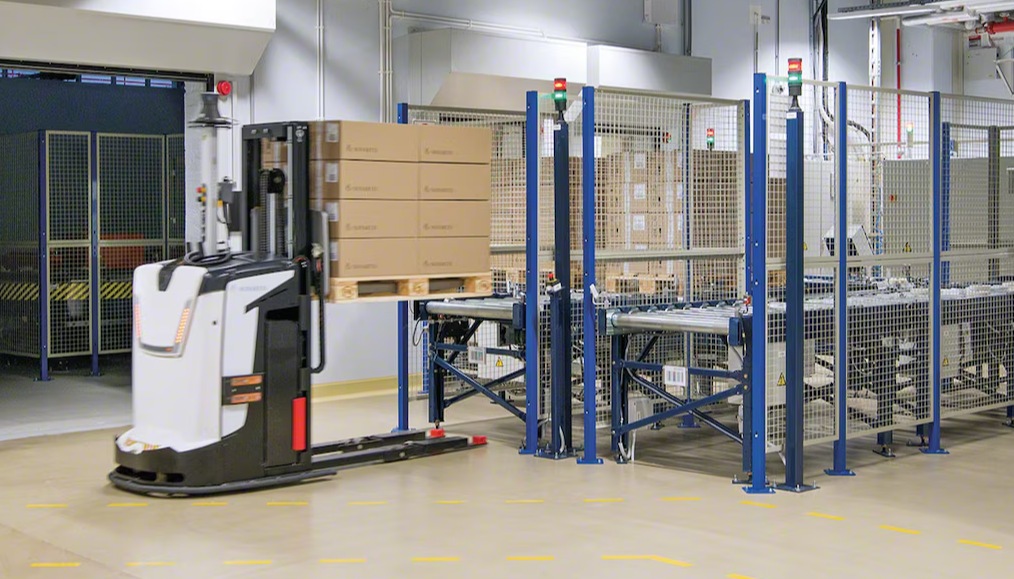
What Is a Traditional AS/RS? Overview, Pros, and Cons
Automated Storage and Retrieval Systems depend on purpose-built, stationary infrastructure to control inventory positioning and extraction. Core elements encompass high-rise racking—commonly 30 to 100 feet or taller—fitted with stacker cranes or aisle-specific shuttles, entry/exit conveyors, and supervisory software orchestrating exact movements.
Unit-load designs accommodate full pallets; mini-load variants process totes, cases, or smaller containers. The architecture emphasizes vertical compaction, enabling retrieval from tightly packed high arrays while confining the storage footprint to narrow aisles.
In large distribution operations and climate-regulated sites, AS/RS provides steady performance: predictable retrieval intervals, utilization often climbing to 80–90%, and marked decreases in storage-zone handling discrepancies under sustained volume. Output holds even during demand spikes.
Drawbacks tie directly to structural inflexibility. Foundations need strengthening, taller builds incorporate seismic provisions, and racking installation calls for tight tolerances. Alterations after go-live incur heavy costs and production stops. The system delivers best in settings with steady SKU characteristics and infrequent layout shifts but struggles when variability rises or workflows adapt.
Maintenance centers on mechanical drives, guide rails, and lifting assemblies; component fatigue leads to interruptions absent scheduled attention.
What Are AGV Solutions?
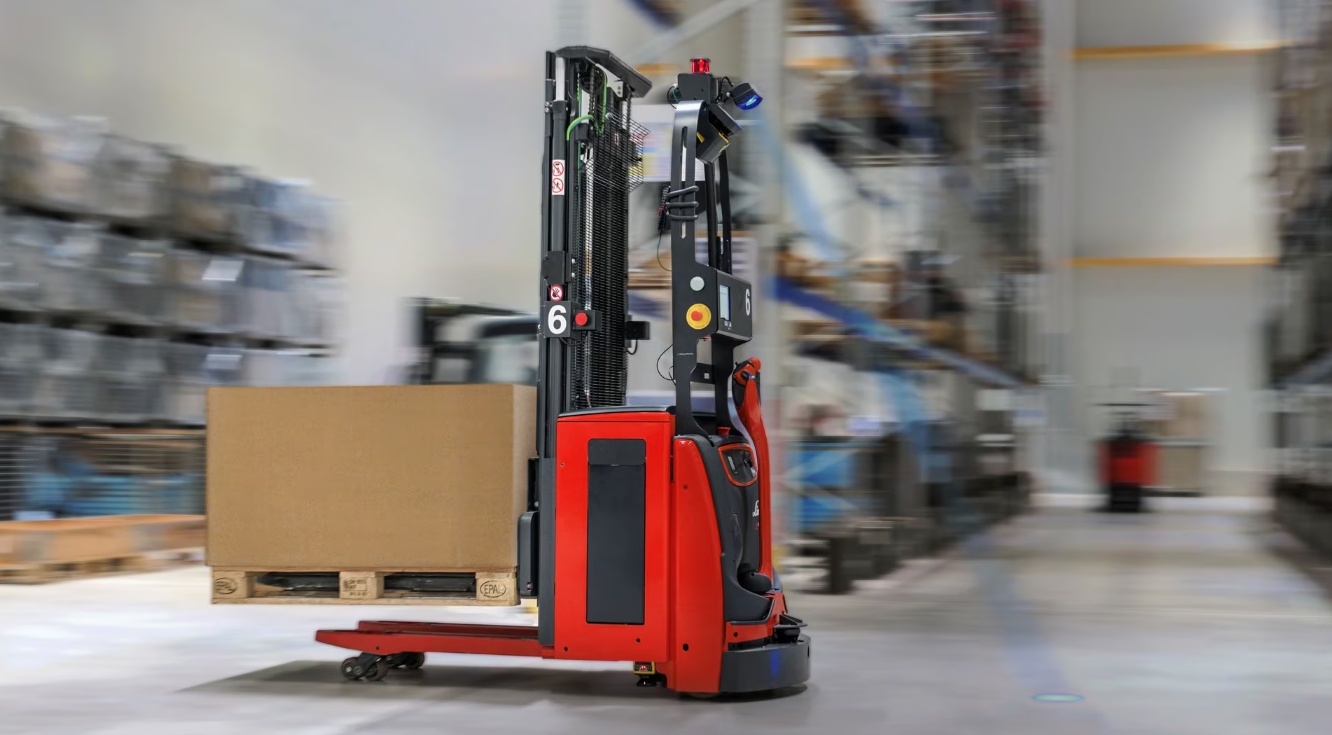
自动导引车 move materials across facility floors with independent control. Present-day units, often discussed in AGV/AMR contexts, feature navigation capable of handling route variations beyond predefined tracks.
Standard categories encompass:
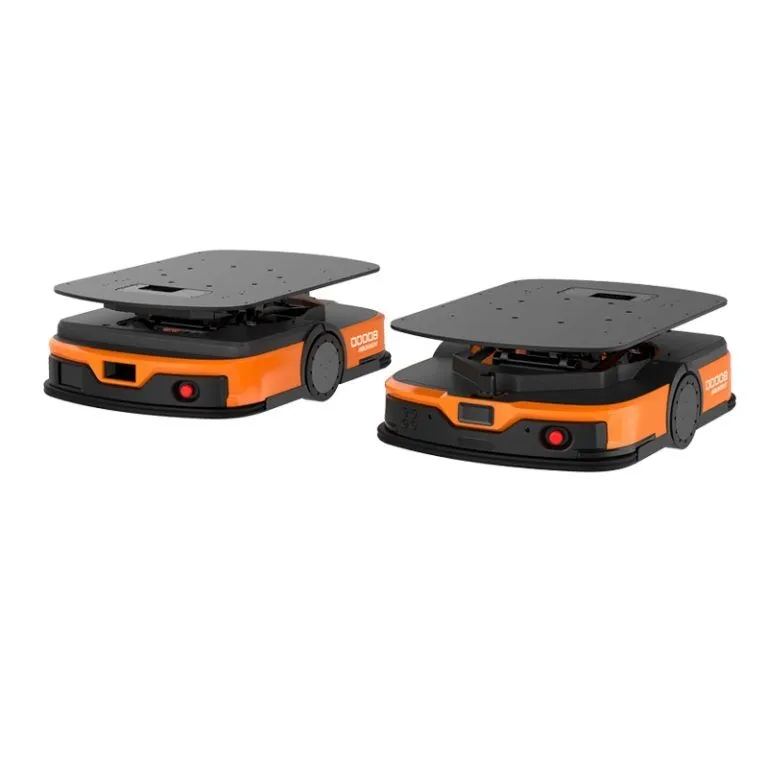
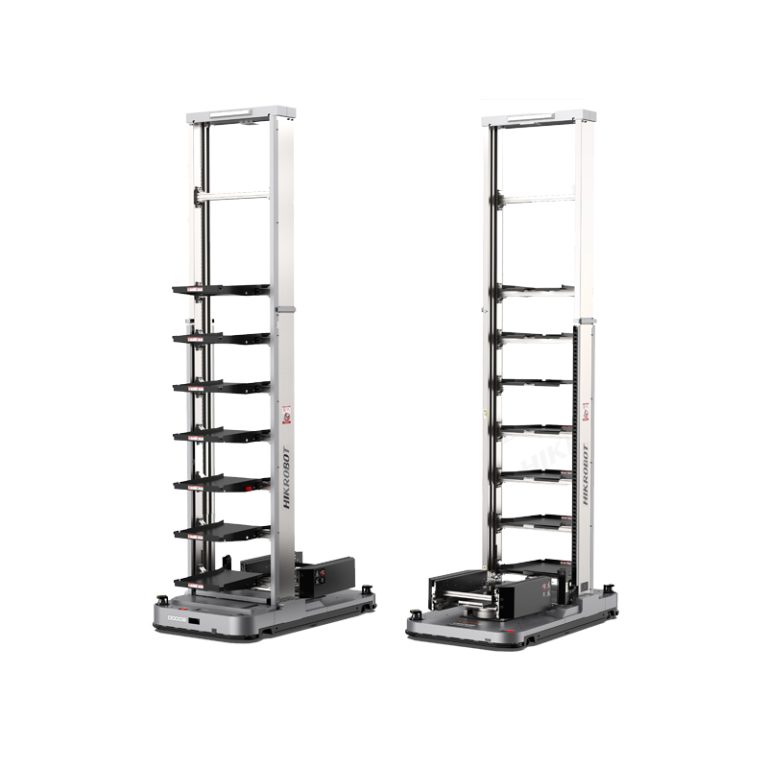
- Latent Mobile Robots that elevate and convey loads from underneath.
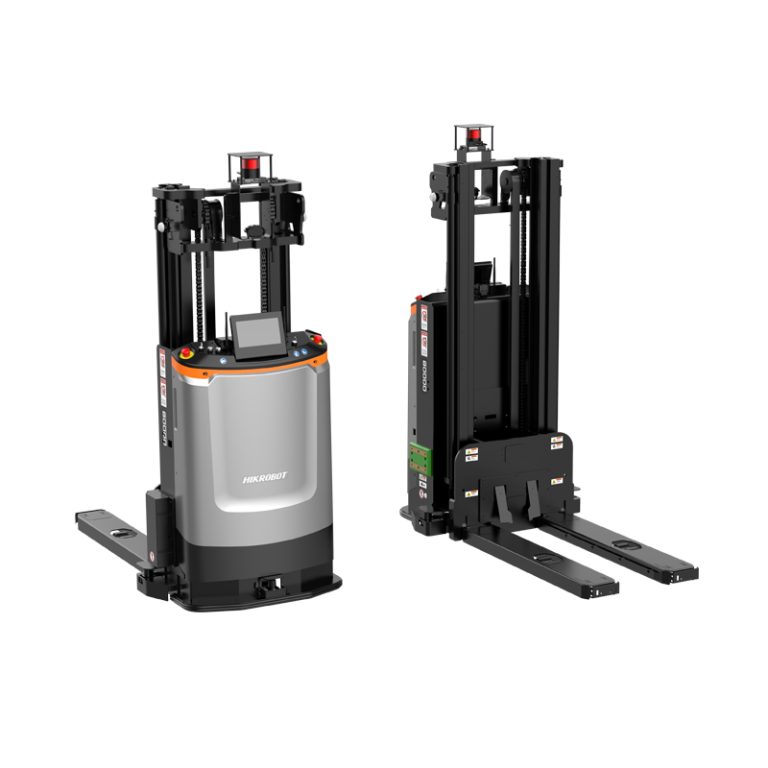
- Forklift Mobile Robots designed for direct pallet pickup and placement.
- Carton Transfer Units specialized in package movement.
- Conveyor Mobile Robots that link with fixed conveyor networks.
- Heavy-Duty Mobile Robots rated for substantial weights or dimensions.
- Mobile Collaborative Robots configured for proximity to personnel.
Laser SLAM navigation supports precise localization, immediate hazard detection, and adaptive pathing. Fleet management oversees assignment, avoidance logic, and flow coordination among multiple vehicles.
Primary duty lies in horizontal transfer—bridging docks, storage blocks, production zones, and dispatch—with supporting needs confined mostly to charging points and safety boundaries.
Head-to-Head Comparison: AGV vs. Traditional AS/RS
Deployment records from diverse facilities show steady contrasts. The table captures ranges documented in warehouse and production environments.
| Dimension | AGV/AMR Solutions | Traditional AS/RS | Typical Winner for Mid-to-Large Operations |
|---|---|---|---|
| Implementation Time | 1–4 months (software mapping, minimal civil work) | 6–18+ months (structural engineering, racking installation) | 自动导引车 |
| Initial Capital Cost | Medium (per vehicle $50,000–$150,000 range, scalable fleet) | High ($750,000–$3M+ for full system) | 自动导引车 |
| Scalability & Flexibility | High (add units, reprogram paths quickly) | Low (structural modifications costly) | 自动导引车 |
| Application Scenarios | Broad (manufacturing lines, retrofits, dynamic warehouses) | Narrow (fixed high-density storage needs) | 自动导引车 |
| Storage Density | Medium (integrates with selective racking) | Very high (vertical maximization) | AS/RS |
| Maintenance & Operating Costs | Lower (modular components, fewer fixed parts) | Higher (complex cranes, rails) | 自动导引车 |
| Adaptability & Safety | Strong (real-time routing, obstacle avoidance) | Limited (fixed paths) | 自动导引车 |
Timelines separate sharply. AGV projects advance quickly by overlaying virtual guidance on standing floors via software. AS/RS stretches from civil prep through structural build-out and thorough commissioning.
Capital follows parallel logic: AGV permits staged entry with initial vehicles, expanding on proven value. AS/RS locks in major funds early for the backbone, though per-unit storage improves at scale.
Adaptability marks a primary divide. AGV adjusts to layout or demand changes through code revisions. AS/RS rework involves structural changes and extended halts.
Density advantage stays with AS/RS where footprint limits dominate. AGV trades packing intensity for broader accessibility.
Safety tilts toward contemporary AGV setups with surrounding sensors and forward-looking behavior. AS/RS contains risks via enclosures but mandates rigid access discipline.
Real-World Case Studies: Where AGVs Outperform or Complement AS/RS
Facilities with continual production-line tuning rely on AGV fleets for sequenced delivery. An automotive parts site rolled out forklift-style units to feed stations from buffer zones. Completion came in under three months, cutting hazard exposure and allowing vehicle count to rise with volume.
Distribution centers modernizing dated buildings choose AGV for swift uplift. One electronics operation mapped aisles, added latent lifters for tote handling, and posted 30–40% internal transport gains. The path sidestepped the heavy structural work a full AS/RS conversion would impose, shortening payback.
Integrated arrangements combine benefits. AS/RS covers dense holding for slower items, AGV takes charge of movement to active areas or outbound. New energy plants use this setup to feed precise components to lines while allocating space for finished stock.
Which Should You Choose? Actionable Decision Guide
Selection tracks site realities.
AGV solutions correspond when:
- Budgets support measured startup with progressive buildup.
- Schedules press for operational status inside six months.
- Layouts see regular reconfiguration from process or demand variance.
- Focus centers on horizontal movement through moderate-scale footprints.
- Production calls for variable point delivery.
Traditional AS/RS corresponds when:
- Volumes climb to very high levels with uniform SKU behavior.
- Vertical maximization stands essential under space or cost pressures.
- Retrieval constancy at speed underpins throughput.
- Fixed setups match enduring strategy.
Hybrid models frequently balance best: AS/RS for concentrated storage, AGV for mobile linkage. Mapping flows, forecasting volumes, and running lifecycle calculations—including labor offsets, precision lifts, and downtime exposure—anchor sound decisions.
About Wesar Intelligence Co., Ltd.
威萨智能股份有限公司有限公司。 delivers integrated intelligent factory solutions headquartered in Suzhou, Jiangsu, China. The organization runs a 5,000-square-meter production facility and staffs over 100 professionals, among them 26 technical specialists in navigation, scheduling, and system integration, plus 35 in production roles.
Offerings include green intelligent logistics robots—such as latent, forklift, carton transfer, conveyor, heavy-duty, and collaborative mobile robots—together with warehouse management systems, storage shelving, conveyors, and custom material flow configurations. Sectors covered encompass precision sheet metal, automotive, electronics, and new energy.
Project execution runs from consulting and software tailoring through manufacturing, on-site deployment, and continued service, stressing real-time oversight, coordinated multi-robot operation, and adaptation to current setups for efficiency gains and variance reduction.
结论
AGV and AS/RS fulfill separate yet overlapping functions in warehouse automation. Mobile AGV platforms supply rapid rollout, layout versatility, and transport range appropriate to shifting conditions, while AS/RS secures outstanding density and steady execution in controlled, high-volume arrangements. Assessing both technologies—commonly in paired implementations—permits precise matching to present flows, projected expansion, and financial boundaries. Correct application supports ongoing expense management, elevated dependability, and preparedness for changing operational needs.
常见问题
What is the main difference between AGV and AS/RS in warehouse automation?
AGV systems stress adaptable horizontal transport with changeable routing, whereas AS/RS centers on fixed vertical storage and automated retrieval in structured high-bay builds. AGV manages varying material paths; AS/RS optimizes space in consistent layouts.
How long does it take to implement AGVs compared to AS/RS?
AGV deployments usually wrap in 1–4 months by mapping software over existing floors. AS/RS extends to 6–18 months or beyond, factoring in foundation prep, racking assembly, and full validation.
Is AGV cheaper than traditional AS/RS for most warehouses?
Across mid-range or retrofit cases, AGV brings lower starting capital via growable fleets and lighter structural needs. AS/RS demands greater upfront outlay for engineered components, though it yields better per-unit economics at massive scale.
What scenarios suit AGVs over AS/RS?
AGV stands out in manufacturing with frequent tweaks, warehouses with layout evolution, or sites pushing quick automation. AS/RS aligns with large fixed storage under stable demand.
Can AGVs replace AS/RS entirely in a warehouse?
Full substitution hinges on goals—AGV covers transport well in numerous situations but rarely rivals AS/RS extreme vertical density. Blended AGV and AS/RS setups generally produce the most workable comprehensive results.





 Chinese
  English
  Russian