
In the current era of logistics, the difference between the prosperity and development of one warehouse and the smooth operation of another often depends on a simple technical aspect: the software “brain”. Although traditional warehouse management systems (WMS) provide convenience for us by digitizing paper records and tracking inventory locations, they have never been designed to handle the high-speed, multi-threaded logical operations of robot fleets. As enterprises shift towards automation to cope with rising labor costs and increasingly shortened delivery time windows, choosing a standard warehouse management system over an intelligent warehouse management system (iWMS) becomes a crucial decision that determines the operational expansion capabilities.
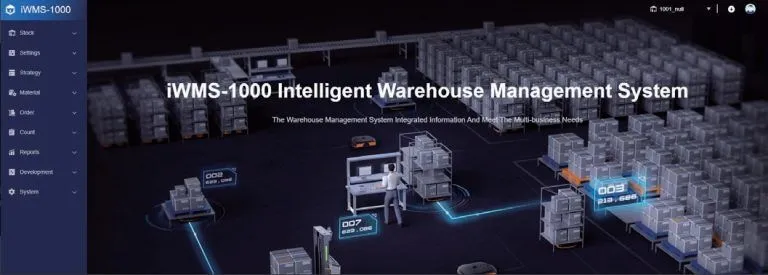
Answer: Standard WMS vs. iWMS: Which One to Choose for Robotic Warehouse Automation?
You should choose an Intelligent Warehouse Management System (iWMS) if your operation utilizes, or plans to utilize, Autonomous Mobile Robots (AMR), Carton Transfer Units (CTU), or other Goods-to-Person (GTP) technologies that require real-time, AI-driven task orchestration and seamless integration with a Robotic Control System (RCS). An iWMS like the iWMS-1000 is specifically engineered to handle the complexities of machine-human collaboration, dynamic slotting, and predictive maintenance. In contrast, you should stick with a Standard WMS only if your facility remains purely manual with low SKU complexity and static storage requirements, where basic inventory record-keeping is sufficient and the high-speed coordination of robotic assets is not a requirement. For any forward-looking facility aiming for high-density storage and automated out-and-in-bound functions, the iWMS is the only logical choice for maintaining a competitive throughput edge.
Beyond Data Entry: Why Intelligence Matters in Modern Warehousing
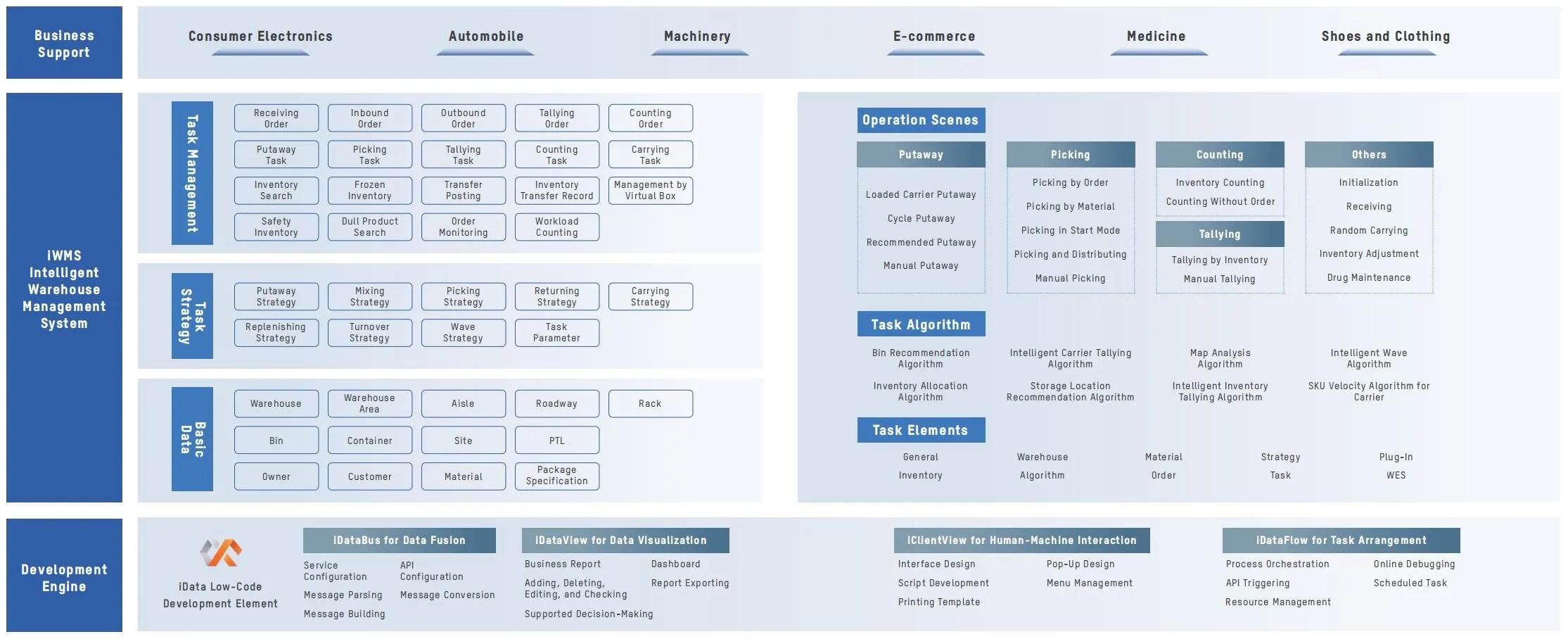
Traditional WMS software often acts as a digital ledger—it tells you what you have and where it is. But when you introduce a fleet of robots, you need a system that doesn’t just record data but actively predicts and schedules movements. The intelligence in an iWMS manifests through advanced algorithms that analyze order history to optimize “shelf coldness” and “shelf heat”. Instead of a static warehouse where popular items are always in the same spot, an iWMS dynamically suggests new storage locations based on real-time SKU velocity.
The real-world impact of this is massive. Imagine a scenario where a sudden surge in orders for a specific electronic component occurs. A standard WMS would simply generate pick lists. An iWMS, however, would identify this trend and task robots to move those specific totes closer to the picking stations during idle times. This predictive staging ensures that when the next wave of orders hits, the travel distance for the robots is minimized. This level of proactive management is what separates a truly “smart” warehouse from a merely “digitized” one, and it’s a core feature of the Wesar Intelligence home software ecosystem.
Furthermore, an iWMS manages the “chaos” of a high-volume facility by handling task interleaving. In a manual warehouse, a worker might walk to the back of the facility to pick one item and walk back empty-handed. In an iWMS-driven environment, the system ensures that every robotic movement is dual-purpose—perhaps carrying an inbound tote to a storage rack immediately after dropping off a pick-bin. This minimizes “empty travel” and maximizes the battery life and duty cycle of your robotic investments.
The Robotic “Handshake”: Seamless WMS and RCS Integration
The most significant hurdle in warehouse automation is the communication gap between high-level management software and low-level hardware control. This is where the iWMS-1000 shines. It acts as the critical bridge to the Robotic Control System (RCS), enabling a “handshake” that allows for cluster scheduling of hundreds of robots simultaneously. Without this tight integration, robots often end up “waiting” for instructions from a slow-moving WMS, leading to congestion and wasted battery cycles.
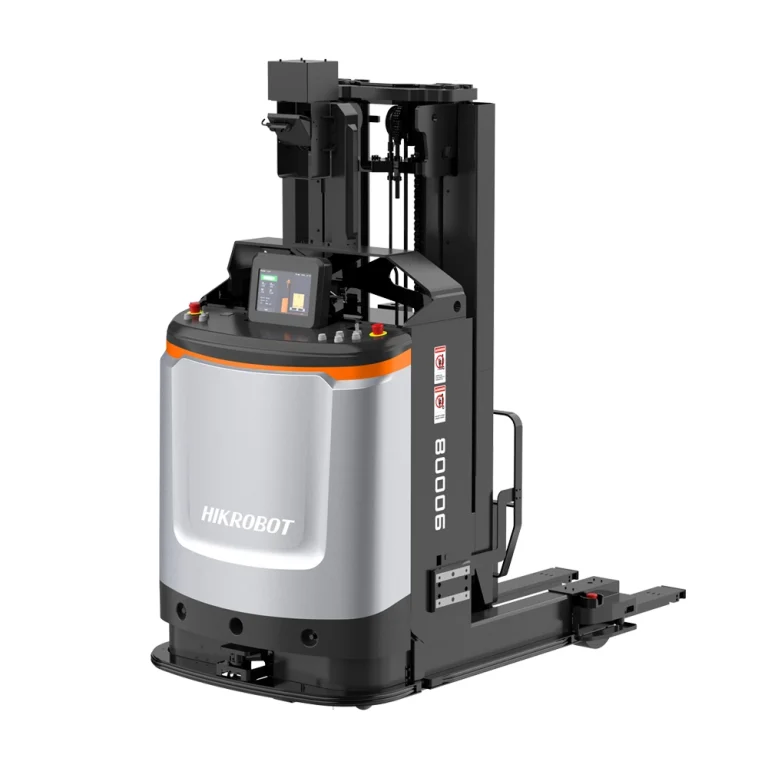
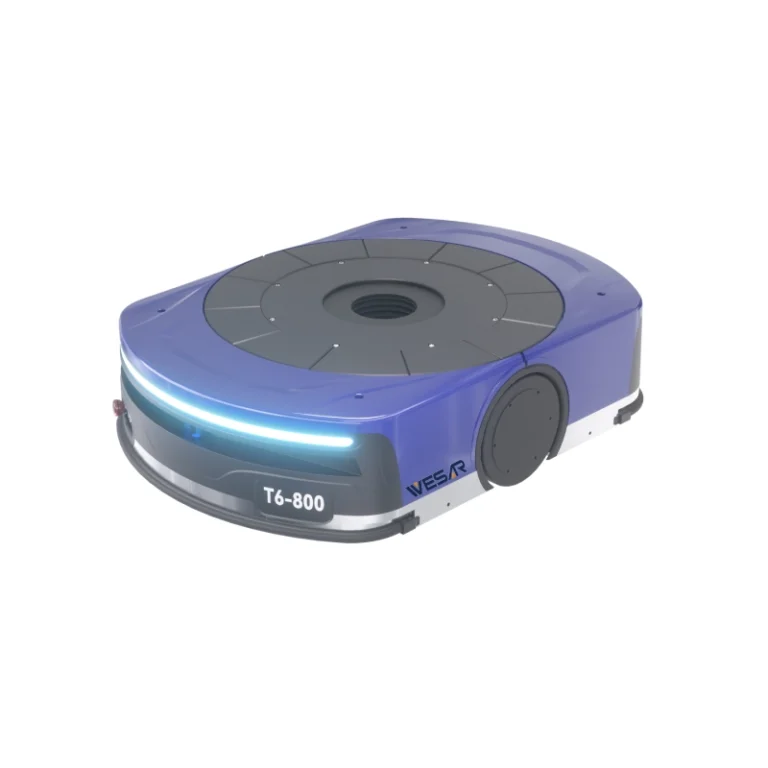
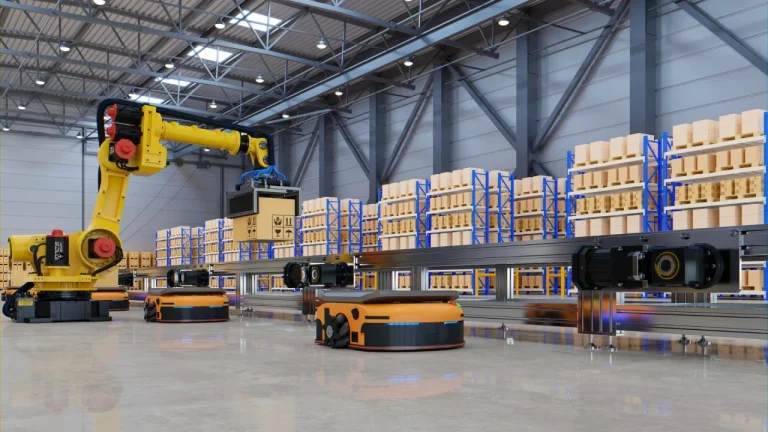
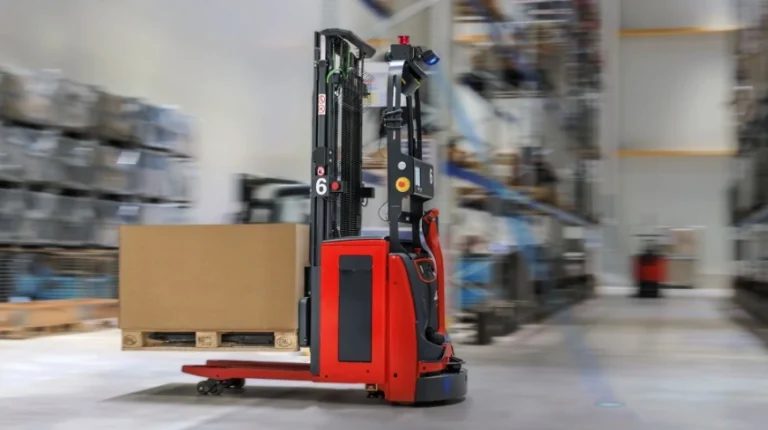
In a GTP (Goods-to-Person) environment, the iWMS doesn’t just send a command to “pick an item”. It calculates the optimal robot to send, the best path to take to avoid congestion, and the exact sequence of arrival at the workstation to keep the human picker at maximum efficiency. By integrating directly with the RCS, the iWMS-1000 ensures that different types of robots—such as CTUs for high-density shelving and AMRs for pallet transport—can share the same map and even the same charging stations without conflict.
This level of integration also extends to exception handling. In a standard setup, if a robot encounters an obstacle or a bin is missing, the system might grind to a halt. An iWMS detects these anomalies in real-time, re-routes the fleet, and alerts supervisors instantly, often solving the problem before the human operator even notices a dip in throughput. This unified resource scheduling is what allows for the 24/7 autonomous operations that modern manufacturing and e-commerce demand.
Precision Engineering and Multi-Scenario Adaptability
The versatility of an iWMS is best demonstrated in complex, multi-scenario environments. For instance, a facility that serves both retail store replenishment and direct-to-consumer e-commerce requires vastly different picking logics. A retail order might involve full-case picking, while e-commerce demands individual piece picking. An intelligent system like the iWMS-1000 can partition the warehouse logic dynamically, allowing robots to switch between these modes seamlessly without needing separate software silos.
Beyond just picking, the software handles complex inbound strategies. When new stock arrives, the iWMS doesn’t just look for an empty hole; it looks for the right hole. It considers factors like the weight of the items (keeping heavier bins lower for rack stability) and the “affinity” of products (storing items often bought together in adjacent bins). This deep-level logic reduces the total number of “robot trips” required to fulfill a multi-line order, directly impacting the bottom line.
Selection Matrix: Verifying the ROI of an iWMS Upgrade
When evaluating an upgrade, the decision often comes down to the Total Cost of Ownership (TCO). While the initial investment in an iWMS might be higher than a basic off-the-shelf WMS module, the long-term ROI is found in the “soft” savings. Standard systems often require heavy manual intervention when things go wrong—a misplaced bin can take hours to find. An iWMS provides full traceability, reducing pick errors by up to 90% through automated validation steps.
Furthermore, scalability is a major factor. A legacy WMS is often brittle; adding ten new robots might require a total system overhaul or expensive custom coding. A modular iWMS is built for “pay-as-you-grow” expansion. You can start with a small manual zone and gradually add automated CTU aisles, with the software adapting the logic on the fly. This flexibility prevents the dreaded “technology lock-in” and ensures your facility can respond to market fluctuations—like a 300% increase in volume during peak seasons—without a massive increase in headcount.
Introduction to Wesar Intelligence Co., Ltd.
Wesar Intelligence Co., Ltd. is a leading innovator in the field of intelligent warehouse and factory automation. With a focus on the deep integration of “Hardware + Software + AI,” Wesar provides end-to-end solutions that help enterprises transition to smart manufacturing and logistics. Their flagship iWMS-1000 platform is recognized for its high compatibility, allowing it to dock seamlessly with existing ERP, MES, and OMS systems while managing diverse robotic fleets. By prioritizing “Goods-to-Person” logic and agile deployment, Wesar enables businesses to achieve higher storage density and faster fulfillment cycles in even the most complex industrial environments. You can learn more about their mission and global reach by visiting the About Us page.
Conclusion
The transition from a standard WMS to an iWMS is not just a software update; it is a fundamental shift in how a warehouse operates. As the demand for speed and precision continues to escalate, relying on a static management system in a dynamic, robotic world is a recipe for inefficiency. By choosing a system like the iWMS-1000, you are investing in a “warehouse brain” that grows with your business, optimizes your robotic assets, and ensures that your facility is ready for the challenges of tomorrow’s supply chain.
FAQs: Common Queries on Intelligent Warehouse Software
How do I know if my current WMS is compatible with CTU robots?
Most traditional WMS platforms lack the real-time API connectivity required for high-speed robotic coordination. To check compatibility, you need to verify if your current system supports “Webhooks” or “RESTful APIs” that can handle millisecond-level task updates. If your system relies on batch-processing or overnight syncing, it will likely cause significant bottlenecks when paired with CTUs, and an upgrade to a dedicated iWMS like the iWMS-1000 would be necessary for optimal performance.
Does an iWMS replace my existing ERP system?
No, an iWMS is designed to complement your ERP, not replace it. Think of the ERP as the “Finance and Order Brain” and the iWMS as the “Physical Execution Brain”. The ERP tells the system what orders need to be shipped, and the iWMS figures out how to move the robots and bins to get those orders out the door as fast as possible. The two systems usually dock via a standard interface to share inventory and order status data in real-time.
What is the “AI-based Dispatching” feature in the iWMS-1000?
AI-based dispatching uses historical data mining to predict when and where tasks will be generated. For example, if the system learns that high volumes of “Part A” are usually requested at 8:00 AM, it will automatically schedule idle robots to wait near those storage locations in advance. This “pre-positioning” logic reduces the overall waiting time at workstations and balances the workload across the entire robot fleet.
Does upgrading to an iWMS require replacing my current racks?
No, a flexible system like the iWMS-1000 is designed to integrate with existing infrastructure while optimizing the flow of goods through those storage areas. You can often maintain your current racking setup while the iWMS manages the robotic fleet that retrieves items from those shelves, though some floor-level modifications might be needed for robot navigation.
Can the iWMS-1000 manage multiple types of robots at once?
Yes, one of the primary strengths of an intelligent system is its ability to orchestrate a “mixed fleet”. The iWMS-1000 can simultaneously dispatch CTUs for tote picking, AMRs for pallet moving, and even sorters or conveyors, ensuring all these separate mechanical elements work in harmony toward the same fulfillment goal.





 English
  Russian
  Chinese