
Электронная коммерция has always moved fast, but in the past few years, the pace has shifted from “fast” to “relentless.” Order volumes no longer follow stable weekly cycles. Promotions pop up overnight. Customer expectations keep climbing. And inside distribution centers, managers deal with the same headaches day after day: too many pallets sitting on the dock, not enough forklift drivers, and constant pressure to ship faster without making mistakes.
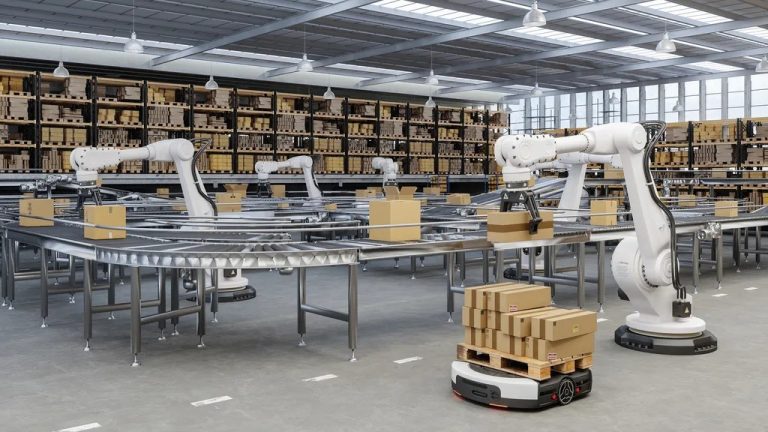
In the middle of all of this, a quiet transformation has been taking shape. More warehouses—especially those tied to e-commerce fulfillment—are adopting forklift mobile robots (FMRs) as part of their daily operations. These aren’t futuristic gadgets. They’re practical, reliable workhorses designed to handle the repetitive pallet moves that make or break warehouse flow.
What’s interesting is that once an FMR fleet starts running, most warehouses describe the same change: the operation simply “feels smoother.” Bottlenecks shrink. Safety incidents drop. And teams suddenly have the breathing room to focus on real problems instead of chasing pallets around all day.
So how exactly do FMRs reshape warehouse operations? Let’s break it down—not in theory, but through the lens of what happens in a busy fulfillment center every single day.
The Real Pressure Inside E-commerce Warehouses
Anyone who has spent time inside a fulfillment center knows the core challenge isn’t space—it’s movement. Pallets are always arriving, always shifting, always needed somewhere else.
Here are the patterns most e-commerce warehouses deal with:
- Morning inbound trucks stacking pallets faster than staff can store them
- Afternoon picking zones running out of high-turnover SKUs
- Night crews scrambling to stage outbound shipments
- Seasonal peaks where everything feels one step away from breaking
- A labor market where skilled forklift drivers are harder to find every yearAnd because e-commerce SKUs change fast, warehouse layouts change with them. What used to be “Aisle 9, Bay 3” last month may hold something completely different today.
This fast-moving, shape-shifting environment is exactly where forklift mobile robots matter.
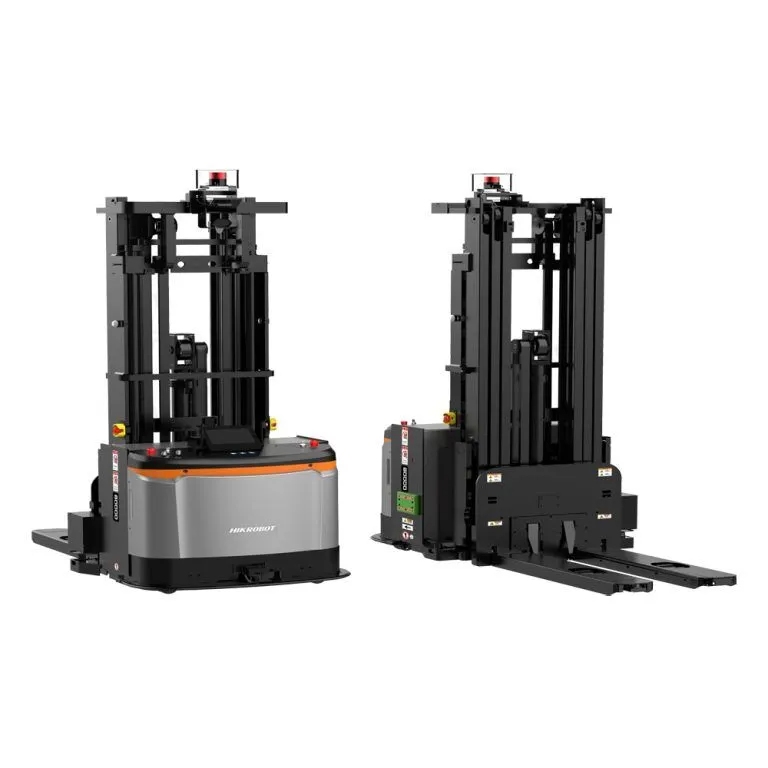
What Forklift Mobile Robots Actually Do All Day
A modern FMR works a lot like a human-operated forklift—minus the downtime, risk, and inconsistency. Using laser-based SLAM navigation, the robot understands the warehouse layout, detects obstacles, and positions pallets with an accuracy that stays consistent, shift after shift.
In a typical e-commerce warehouse, FMRs tend to handle these core tasks:
Inbound Pallet Putaway
- Picking up pallets directly from the inbound dock
- Placing them onto rack locations as high as 1.6–4 meters
- Keeping dock space clear, so unloading never slows down
Replenishment for Picking Zones
- Responding automatically when pick areas run low
- Pulling pallets from storage and delivering them to the right zone
- Eliminating the wait time that usually frustrates picking teams
Outbound Staging
- Moving completed orders to outbound lanes
- Sorting pallets by route or delivery priority
- Rolling through nighttime operations without staffing issues
Internal Transfers
Some fulfillment centers use FMRs to move pallets between different warehouse zones or connect the warehouse with small production or kitting areas.
The point is simple: FMRs handle the repetitive pallet movement that keeps the whole warehouse running smoothly.
What Changes When FMRs Enter the Workflow?
To understand the real impact, picture these three common scenes.
Scene 1: The Inbound Morning Rush
Trucks arrive nearly at the same time. Pallets stack up in minutes. When forklifts are short-staffed—which happens more often than anyone wants to admit—the docks become a waiting area.
With FMRs, the workflow changes completely.
Robots move to the dock in sequence, pick up the pallets, and head straight to the designated storage lanes. There’s no confusion about who does what next. The inbound area stays clear, and the rest of the building starts the day with a cleaner rhythm.
Scene 2: Afternoon SKU Replenishment
Fast-moving items—headphones, power banks, beauty products—get depleted quickly. If pickers are stuck waiting for replenishment, the whole packing area slows down.
But with FMRs integrated into the warehouse management system, replenishment becomes automatic. The moment inventory hits a threshold, the task is triggered. A robot pulls the pallet from storage and brings it to the pick zone. No radio calls. No “where’s the forklift driver?” Just a steady flow.
Scene 3: Late-Night Outbound
Outbound rarely ends when the day shift clocks out. Carriers arrive late. Orders keep coming in.
FMRs become the reliable night shift that never gets tired. They stage pallets based on delivery order, route, or carrier. Supervisors monitor progress on a dashboard instead of walking the floor. It’s calmer. And because the robots aren’t rushing, outbound errors tend to drop.
Why FMRs Fit E-commerce Better Than Traditional AGVs
Older AGV systems depend on fixed routes—magnetic strips, QR codes, or physical markers. Those work fine in slow-changing environments. E-commerce warehouses are the opposite. Every few weeks, something shifts:
- A new fast-selling SKU needs a closer pick location
- Aisles get reorganized
- Seasonal items arrive
- Overflow zones expand or shrink
FMRs shine in these environments because they rely on SLAM mapping. There’s no need to rip up floors or retrain the system when racks move. The robots simply update their map and keep going.
It’s flexibility without the usual installation pain.
The Advantages of FMRs—Grounded in Real Engineering
Based on the technical information in the uploaded documentation, several capabilities stand out—especially for fast, high-turnover warehouses.
Accurate and Stable Pallet Handling
The robot’s structure supports steady pallet lifting and placement, even in narrow aisles or high-bay positions. This reliability is key when thousands of pallets move weekly.
1.6–4 m Operating Height
This range covers nearly all rack heights commonly used in fulfillment centers.
1500 kg Load Capacity
Perfect for inbound containers, mixed pallets, and bulk replenishment shipments.
Multi-Robot Fleet Coordination
The system can dispatch multiple robots simultaneously, which is critical during peak events like holiday sales.
Smooth Integration with WMS/WCS
Real-time updates, clean task assignments, and consistent pallet tracking help operations maintain visibility.
Safety-Centered Navigation
With 360° obstacle detection and controlled driving behavior, the robots remove the most dangerous part of warehouse work: unpredictable forklift movement.
These aren’t conceptual benefits—they line up directly with what real e-commerce teams worry about every day.
How FMRs Solve Everyday Pain Points
Many of the pain points listed in the industry knowledge document appear in almost every e-commerce conversation:
- Shortage of skilled forklift drivers
- Rising labor costs
- Frequent errors in pallet handling
- Inconsistent forklift routes
- Safety risks during peak hours
- Difficulty maintaining real-time visibility
- Layout changes causing workflow disruptions
FMRs soften all of these issues by providing consistent pallet movement, reliable tracking, and an always-available “robot workforce” that helps stabilize the entire operation.
Once the backbone of pallet flow becomes predictable, everything else—from picking to packing to outbound—gets a boost.
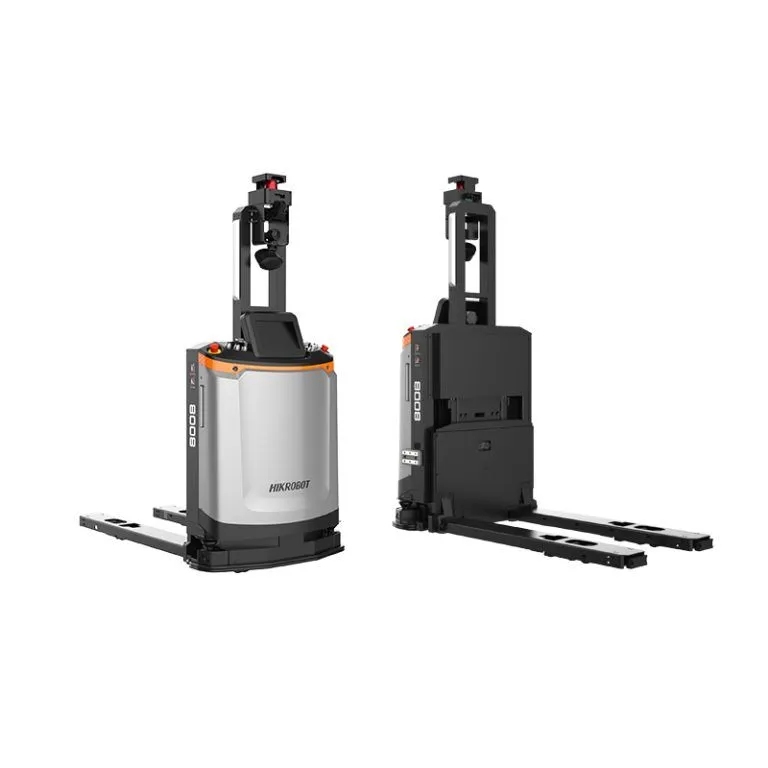
About Wesar Intelligence Co., Ltd.
Wesar Intelligence Co., Ltd. focuses on industrial robotics that solve real-world logistics challenges inside factories and warehouses. The company’s approach is grounded in field experience: engineers spend time inside customer facilities to understand actual workflows before designing solutions. This perspective is visible in their forklift mobile robots, which combine stable navigation, reliable pallet handling, and multi-vehicle coordination to support demanding fulfillment environments.
Wesar’s automation solutions link inbound receiving, storage, production logistics, and outbound processes into a connected system. From SLAM navigation to long-term fleet stability, the company builds systems that help businesses move closer to unmanned warehousing—one practical step at a time.
Заключение
E-commerce fulfillment doesn’t reward the fastest warehouse—it rewards the most consistent one. Forklift mobile robots bring that consistency by keeping pallet movement steady, safe, and predictable, even when order volumes spike or layouts shift.
For companies looking to modernize without shutting down operations for major reconstruction, FMRs offer one of the easiest on-ramps to automation. They remove the most repetitive tasks from human hands and help every part of the warehouse run with fewer interruptions.
Automation in e-commerce isn’t a future idea anymore. It’s happening now—and FMRs are becoming one of the core tools behind that shift.
FAQs: Forklift Mobile Robots in the E-commerce Fulfillment Industry
How do forklift mobile robots improve warehouse operations in e-commerce fulfillment?
They automate pallet movement across inbound, storage, replenishment, and outbound stages, helping warehouses keep a steady flow even during heavy demand peaks.
Can forklift mobile robots handle layout changes in fast-moving warehouses?
Yes. Since FMRs navigate using SLAM mapping, they adapt quickly when aisles, storage zones, or SKU areas shift—without the need for physical markers or floor reconstruction.
How do forklift mobile robots help reduce safety risks?
They drive at controlled speeds, detect obstacles in all directions, and avoid the risky shortcuts humans sometimes take during busy shifts, making high-traffic zones far safer.
What pallets or load sizes can FMRs handle?
Most standard pallets used in e-commerce operations, including Euro and U.S. sizes, with load capacities typically reaching 1500 kg.
Are FMRs suitable for nighttime or 24/7 operations?
Absolutely. They run without breaks, helping warehouses maintain stable throughput during late-night outbound or continuous replenishment cycles.






 Russian
  English
  Chinese