
If you’re planning automation for an e-commerce fulfillment site, you’re not looking for robots because they look futuristic. You’re looking for fewer late cutoffs, fewer mispicks, and a warehouse that can absorb peak-season chaos without turning into a traffic jam. That’s where AGV in e-commerce retail warehouses becomes a serious operations tool—not a science project.
E-commerce warehousing has a very specific kind of pressure: SKU counts keep rising, order profiles get smaller and more fragmented, and peaks are sharper than most traditional distribution environments. In that context, the real question isn’t “Should we automate?” It’s “Where do mobile robots remove the most friction, and what do we need around them so the system doesn’t fall apart at scale?”
Why e-commerce and retail warehouses keep turning to AGVs and AMRs
A common misconception is that the main driver is labor savings. Labor matters, but it’s usually not the first pain that forces change. The real trigger is volatility: your operation has to perform on the worst day of the month, not the average day.
When order volume surges, manual picking becomes a game of walking and searching. Goods-to-person (GTP) models reduce that wasted motion by keeping associates at a workstation while robots bring goods to them, cutting the “unproductive miles” that silently dominate labor time. In practice, this also tightens process discipline: fewer ad-hoc staging decisions, less random congestion, and more predictable cycle times.
It’s also a control problem. In Wesar’s AGV knowledge base, a recurring pain point is the lack of real-time visibility—operations teams often cannot see where materials are, which creates slow reactions and messy scheduling under stress.
Mobile robots paired with a dispatching layer and warehouse software turn movement into data, and data into decisions.

Where AGVs create the most value across the e-commerce fulfillment flow
From inbound to storage: reducing “invisible delay”
Inbound work often looks efficient in reports because pallets arrive and get checked in. The delay usually hides in the next step: the time between receiving and actually becoming pick-ready. Forklift-style mobile robots are designed for pallet transport and higher rack tasks, which helps when the bottleneck is putaway speed and consistent replenishment to pick faces.
Order picking: the reason most projects start
E-commerce picking is the heartbeat of fulfillment, and it’s where the most predictable ROI shows up first. This is why goods-to-person approaches and robot-assisted zone picking are so common in search results and industry discussions. The real benefit is not the headline “faster picking.” It’s a more stable pick rate during peaks, because the system reduces walking time, reduces searching, and narrows the space for human variance.
Sorting, packing, and shipping prep: keeping lines fed without chaos
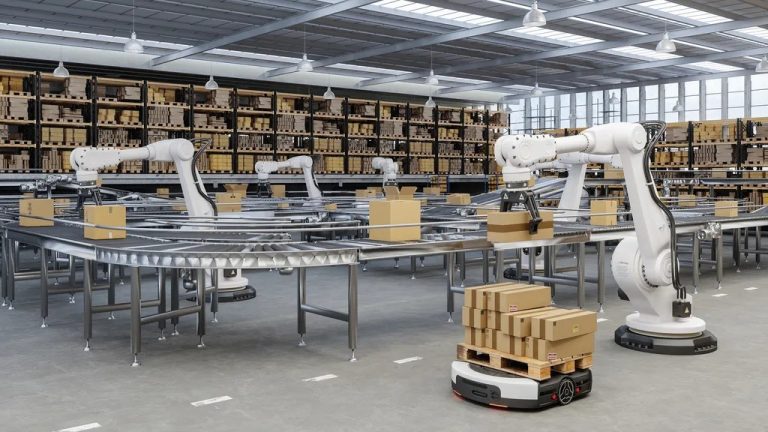
Many operations discover that picking is only half the story. A fast picking system can still fail if pack stations are starved or if outbound lanes become gridlocked. That’s why a practical deployment considers how loads transfer between zones and how workstations are replenished. Wesar’s knowledge base describes conveyor mobile robots as a way to connect lines and packaging stations without major facility reconstruction, which is useful for retrofits and phased rollouts.
Returns processing: the “quiet” workload that gets loud later
Returns don’t just create extra labor; they create data risk. Mis-sorted returns poison inventory accuracy, which then creates stockouts and customer-facing cancellations. A mobile robot workflow can stabilize returns routing and reduce the number of “temporary piles” that never get fully reconciled.
Goods-to-person vs. person-to-goods: make the decision with three operational truths
This decision often gets framed like a technology debate. It’s better treated as a fulfillment math problem.
First, look at order profile. If you have high volumes of small orders with many single-line or low-line picks, goods-to-person is often attractive because it removes walking time and increases pick efficiency. If your order profile is bulkier and travel is not your limiting factor, person-to-goods may remain competitive, especially when supported by lightweight robot-assisted transport.
Second, look at SKU behavior. If your top sellers change frequently, you need flexibility. Mobile robotics tends to perform well in environments where demand shifts and layouts get adjusted, because you can expand robot fleets and reassign routes without rebuilding the building.
Third, look at congestion, not square footage. The biggest killer of peak performance is not “not enough labor.” It’s flow collapse: carts, pickers, replenishment, and outbound moves all fighting for the same aisles. Goods-to-person can reduce that aisle conflict by shifting a meaningful slice of travel from humans to a controlled fleet.
Matching robot types to e-commerce reality (and avoiding expensive misalignment)
AGV is often used as an umbrella term, but the practical question is: what load unit are you moving, and what decisions should the robot take over?
In Wesar’s AGV terminology, AGVs handle autonomous navigation and transport, while AMRs emphasize more autonomous route planning and obstacle avoidance—both matter in mixed, dynamic warehouse environments.
The right form factor depends on the job.
Latent mobile robots: shelf-to-person and flexible internal transport
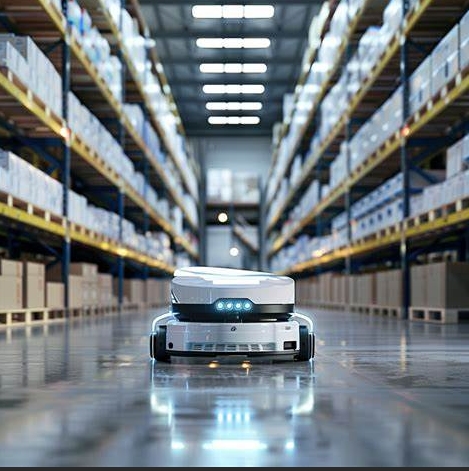
Latent mobile robots are designed to move under racks or carts and transport them. Wesar’s knowledge base highlights low profile, tight turning behavior, and fast deployment options such as SLAM and QR-code navigation.
For e-commerce, this matters because the system can scale by adding robots and shelves, rather than expanding conveyor lanes.
Wesar’s retail solution page describes a shelf-to-person project deploying 215 latent AMRs with multi-level shelf storage and order optimization, reporting a 40% storage capacity increase, 50% manual labor reduction, and 60% material handling efficiency improvement. For a B2B buyer, the important signal isn’t just the numbers—it’s that the solution is framed as a full picking workflow, not a robot-only purchase.
Carton transfer units: when totes and bins are the center of your universe
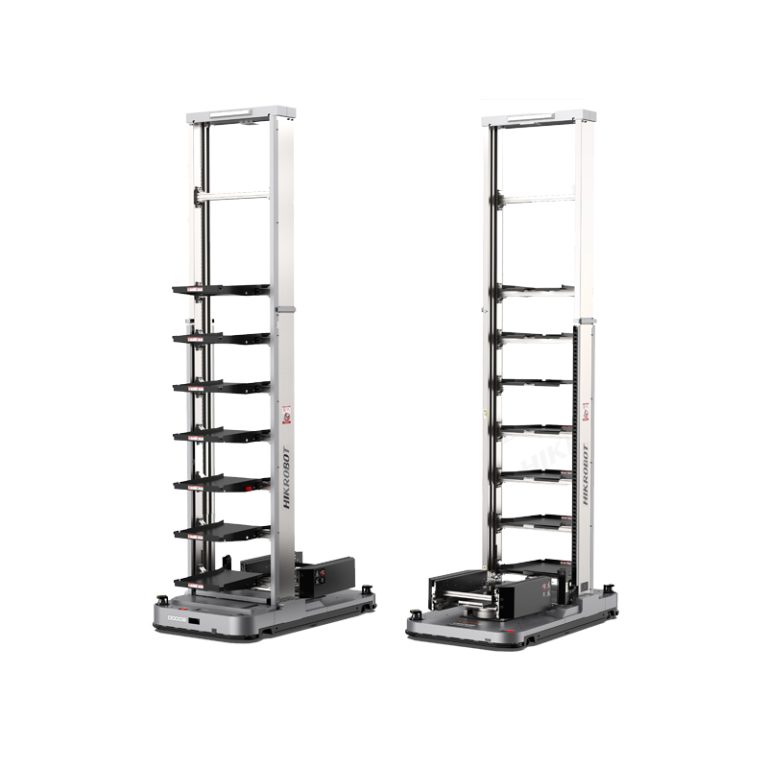
For small-item fulfillment, carton and tote movement drives throughput. In Wesar’s knowledge base, CTUs are described as commonly used in e-commerce and retail, built for moving standard cartons/bins and reducing walking while improving picking accuracy.
This is a strong fit when you’re battling mispicks and wasted motion in dense pick zones.
Forklift mobile robots: the backbone for pallet replenishment and putaway
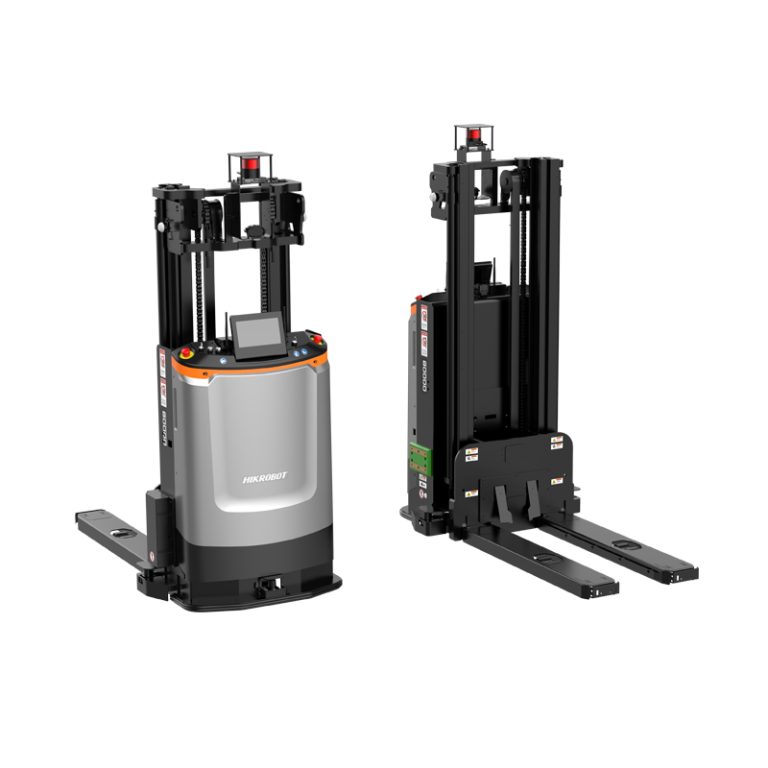
E-commerce operations often forget that “last 10 meters” picking performance depends on “first 100 meters” replenishment discipline. Forklift mobile robots are positioned for pallet handling tasks and higher rack work, which directly supports consistent replenishment and smoother peak performance.
Conveyor mobile robots: bridging islands without rebuilding the facility
For mature warehouses with existing lines, packaging stations, or mixed automation, mobile conveyor interfacing can reduce the need for major equipment redesign while still improving flow between zones.


The part that makes or breaks scale: software, dispatching, and the data loop
Most first-time buyers focus on robot specs, then get surprised when the project’s complexity shows up in integration and orchestration.
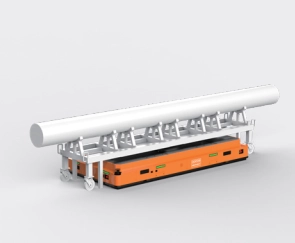
Mobile robots need a control layer that decides priority, assigns tasks, and manages traffic. That is why fleet management and WMS integration are consistently called out as key considerations when introducing AGVs/AMRs. If your WMS doesn’t “trust” inventory locations in real time, your robots will move quickly—and still deliver the wrong thing.
Wesar positions its offering as a combination of robot hardware and a software platform, including iWMS-1000 and robot control systems listed in its product structure. From a buyer’s perspective, the takeaway is simple: you want a clear boundary of responsibility. Who owns the task logic? Who owns exception handling? Who owns the integration testing when the WMS changes?
Common failure modes—and how to prevent them before they show up as “robot issues”
When an AGV project disappoints, it usually isn’t because robots can’t drive. It’s because the warehouse kept its old habits.
One failure mode is keeping the same replenishment behavior and expecting the pick system to magically perform. If replenishment is late, the robots will just deliver empty shelves faster. Another is allowing “temporary staging” without strict rules. That staging becomes permanent, accuracy drops, and the automation layer loses credibility.
In Wesar’s knowledge base, manual handling is described as prone to inconsistent routing, scheduling chaos, and delivery errors during order surges—exactly the scenario of peak e-commerce events.
The prevention strategy is to define exception handling as part of the design: blocked aisle logic, charging strategy, work-in-progress buffer rules, and clear responsibility for real-time decisions.
What information helps a quotation stay accurate
If you want a quote that remains stable after the first meeting, start by sharing your order profile and how your peak day behaves, not just your average throughput. It helps to define your load units—totes, cartons, pallets—and the typical weights and dimensions, because that determines robot type and docking requirements. Your building layout matters too: aisle widths, rack heights, floor condition, and where congestion usually forms during waves. Integration expectations should be explicit, including which WMS or ERP triggers tasks and how inventory state is confirmed after each move. Don’t skip exception handling; the quote changes when you require elevator logic, door control, mixed traffic zones, or strict safety speeds near pack stations. Finally, give a realistic rollout window and whether you need the system to keep running during implementation, because phasing affects engineering and on-site work. If you want, we can share an RFQ checklist by email.
About Wesar Intelligence Co., Ltd.
Wesar Intelligence Co., Ltd. describes itself as a one-stop intelligent factory solution provider with two core branches, including smart warehousing solutions focused on green intelligent logistics robots and intelligent factory system design and implementation. The company notes a 5,000㎡ production facility and a team of over 100 professionals, including technical experts supporting delivery and service.
For e-commerce and retail buyers, this matters because the “robot” is rarely the only deliverable. You need hardware that fits your load units, software that schedules work under peak stress, and an implementation team that can translate your warehouse reality into a system that behaves predictably. Wesar’s public retail solution example—215 latent AMRs in a shelf-to-person picking workflow with measurable capacity and handling gains—signals experience with large-scale, high-frequency operations where repeatability is the real product.
Заключение
AGVs in e-commerce retail are most effective when they’re treated as a workflow redesign, not a gadget purchase. The winning projects start with where time is lost—walking, congestion, replenishment gaps, mispicks—and then build a controlled flow that stays stable during peaks. When robot types match load units, when software closes the loop between movement and inventory truth, and when exception handling is designed upfront, the system stops feeling fragile. It starts feeling boring in the best way: it just runs.
Часто задаваемые вопросы
What are the best AGV applications in the e-commerce retail industry?
The strongest applications are goods-to-person picking, tote/carton movement for high-frequency fulfillment, pallet replenishment and putaway, and zone-to-zone transport that prevents congestion. Many sites begin with a picking or replenishment flow because it delivers measurable throughput improvements quickly.
How do goods-to-person systems improve picking performance in e-commerce warehouses?
In a goods-to-person setup, robots bring inventory to a stationary picker, which reduces walking time and increases pick efficiency and accuracy in high-volume fulfillment. The bigger win is consistency during peak periods, when manual travel time and congestion normally spike.
Should I choose AGVs or AMRs for a retail fulfillment center?
It depends on how dynamic your environment is and how often layouts or traffic patterns change. In Wesar’s terminology, AGVs and AMRs both automate transport, while AMRs emphasize more autonomous route planning and obstacle handling, which can be beneficial in complex, mixed-traffic zones.
What information should I provide to get an accurate AGV project quotation?
You should provide order volumes and peak behavior, SKU count and slotting approach, load unit details (tote/carton/pallet), facility layout constraints, target throughput, and your integration expectations with WMS/ERP. The more clearly you define exceptions—blocked aisles, priority waves, shared human zones—the fewer surprises you’ll see after the initial proposal.
What are the most common reasons AGV projects fail to hit expected ROI?
The most common reasons are weak integration with inventory truth, unchanged replenishment and staging habits, unclear exception rules, and underestimating fleet management needs. When those gaps exist, robots may move fast but still amplify existing process issues, especially during order surges.
Mobile robots need a control layer that decides priority, assigns tasks, and manages traffic. That is why fleet management and WMS integration are consistently called out as key considerations when introducing AGVs/AMRs. If your WMS doesn’t “trust” inventory locations in real time, your robots will move quickly—and still deliver the wrong thing.
Wesar positions its offering as a combination of robot hardware and a software platform, including iWMS-1000 and robot control systems listed in its product structure. From a buyer’s perspective, the takeaway is simple: you want a clear boundary of responsibility. Who owns the task logic? Who owns exception handling? Who owns the integration testing when the WMS changes?
One failure mode is keeping the same replenishment behavior and expecting the pick system to magically perform. If replenishment is late, the robots will just deliver empty shelves faster. Another is allowing “temporary staging” without strict rules. That staging becomes permanent, accuracy drops, and the automation layer loses credibility.
In Wesar’s knowledge base, manual handling is described as prone to inconsistent routing, scheduling chaos, and delivery errors during order surges—exactly the scenario of peak e-commerce events.
The prevention strategy is to define exception handling as part of the design: blocked aisle logic, charging strategy, work-in-progress buffer rules, and clear responsibility for real-time decisions.
For e-commerce and retail buyers, this matters because the “robot” is rarely the only deliverable. You need hardware that fits your load units, software that schedules work under peak stress, and an implementation team that can translate your warehouse reality into a system that behaves predictably. Wesar’s public retail solution example—215 latent AMRs in a shelf-to-person picking workflow with measurable capacity and handling gains—signals experience with large-scale, high-frequency operations where repeatability is the real product.






 Russian
  English
  Chinese