
Modern manufacturing moves fast now. Production lines that once ran at a steady pace must handle higher output, tighter delivery schedules, and growing competition from all directions. Because of this pressure, factories are looking at automated guided vehicles more seriously than ever before. These machines aren’t futuristic concepts anymore. They’re working on shop floors every day, taking on heavy transport tasks that used to drain time and energy from human workers.
This article breaks down how automated guided vehicles help inside real production lines, why manufacturers rely on them, and which parts of the workflow benefit the most. If you’re working in operations, automation planning, or anywhere close to internal logistics, the following sections will give you a clearer view of what AGVs can actually do on a busy line.
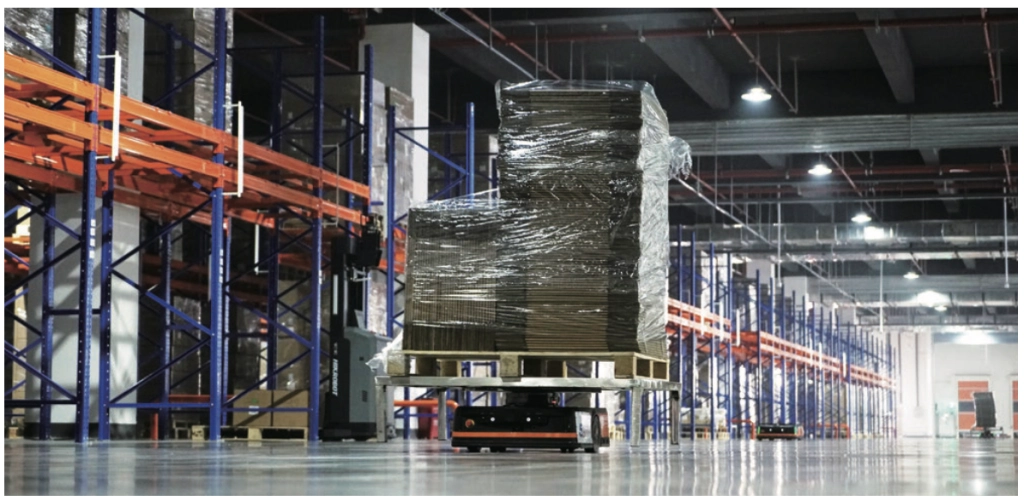
What Are Automated Guided Vehicles and Why Are They Important?
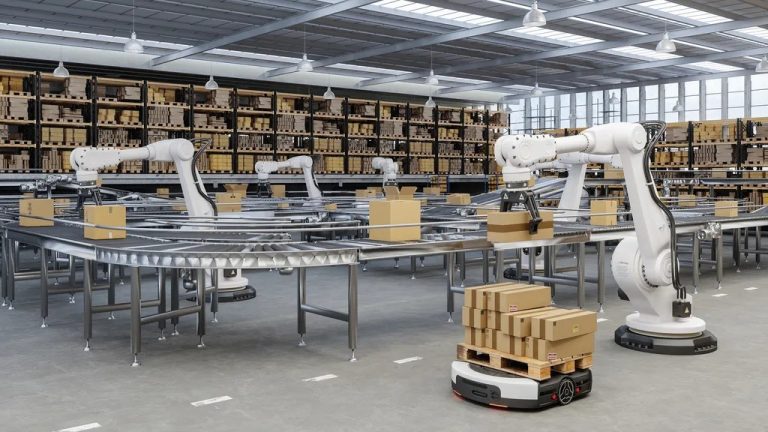
Automated guided vehicles are self-moving machines that carry materials from one place to another. They move along planned routes and follow programmed instructions instead of a human driver. You’ll see them in all kinds of facilities—electronics assembly, automotive parts, machinery production, metal shops, and many other environments that run on predictable movement of goods.
AGVs matter because the old way of moving materials—forklifts, hand carts, and workers hauling boxes—slows production when workloads increase. A worker may be pulled away from a station, or a forklift may be stuck helping one area while another area waits. When that happens, the whole line can fall behind.
AGVs help because they don’t get distracted, tired, or pulled into other work. They repeat the same task the same way, and this stability supports the larger system around them. Before jumping into applications, it helps to look at how the vehicle interacts with the layout, conveyors, shelves, and other automation in a plant. The closer these pieces work together, the stronger the final result.
How Automated Guided Vehicles Work on the Production Line
АГВ move through the facility using a mix of sensors, mapping tools, and scheduling software. This combination lets them travel safely through narrow aisles or crowded stations without creating interruptions.
The Core Technologies Behind AGV Navigation
Different AGVs rely on different navigation tools. The common ones include:
- Laser guidance: Reflective targets placed around the building allow the AGV to measure its exact position.
- Magnetic tape or QR marks: These offer a very stable route at a lower cost if your internal layout doesn’t shift often.
- SLAM navigation: Short for Simultaneous Localization and Mapping, this is the smartest option. It lets the AGV scan the factory and create a digital map while it moves.
The navigation type influences how easily the system adapts. For example, if your factory rearranges equipment often, SLAM helps because it doesn’t need fixed guide paths. A more stable environment may only need magnetic tape.
How AGVs Connect to the Production Workflow
AGVs plug into digital systems around the plant. In many factories, they communicate with:
- MES platforms
- Warehouse management systems
- Production planners
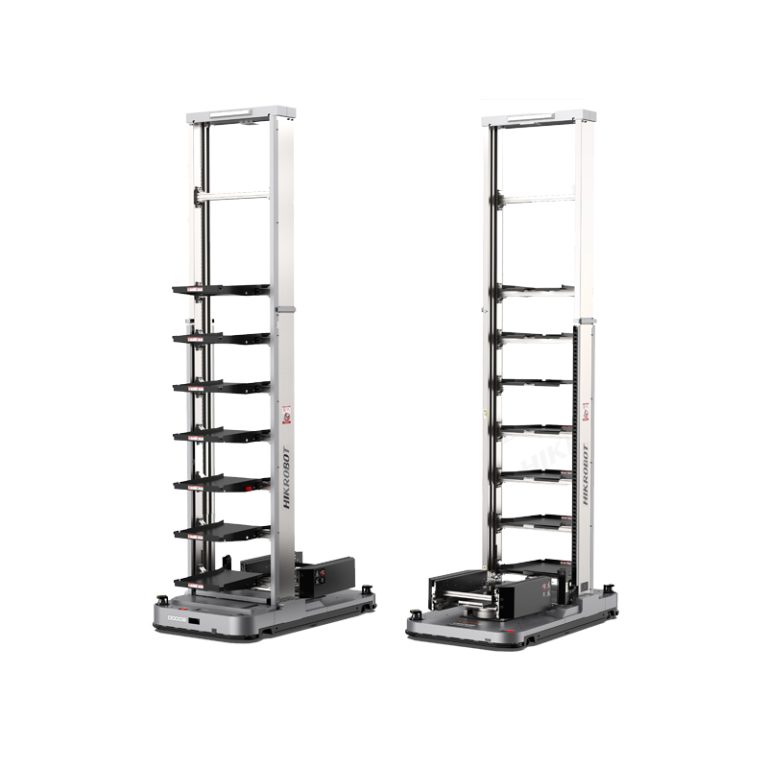
- Automated storage towers
- Robotic work cells
This connection lets an AGV pick up tasks automatically. It may receive an order to deliver raw parts to a station or move finished goods to testing. Once the job enters the system, the AGV completes it without needing manual instruction.
Application of AGVs in the Production Line of Manufacturing Industry
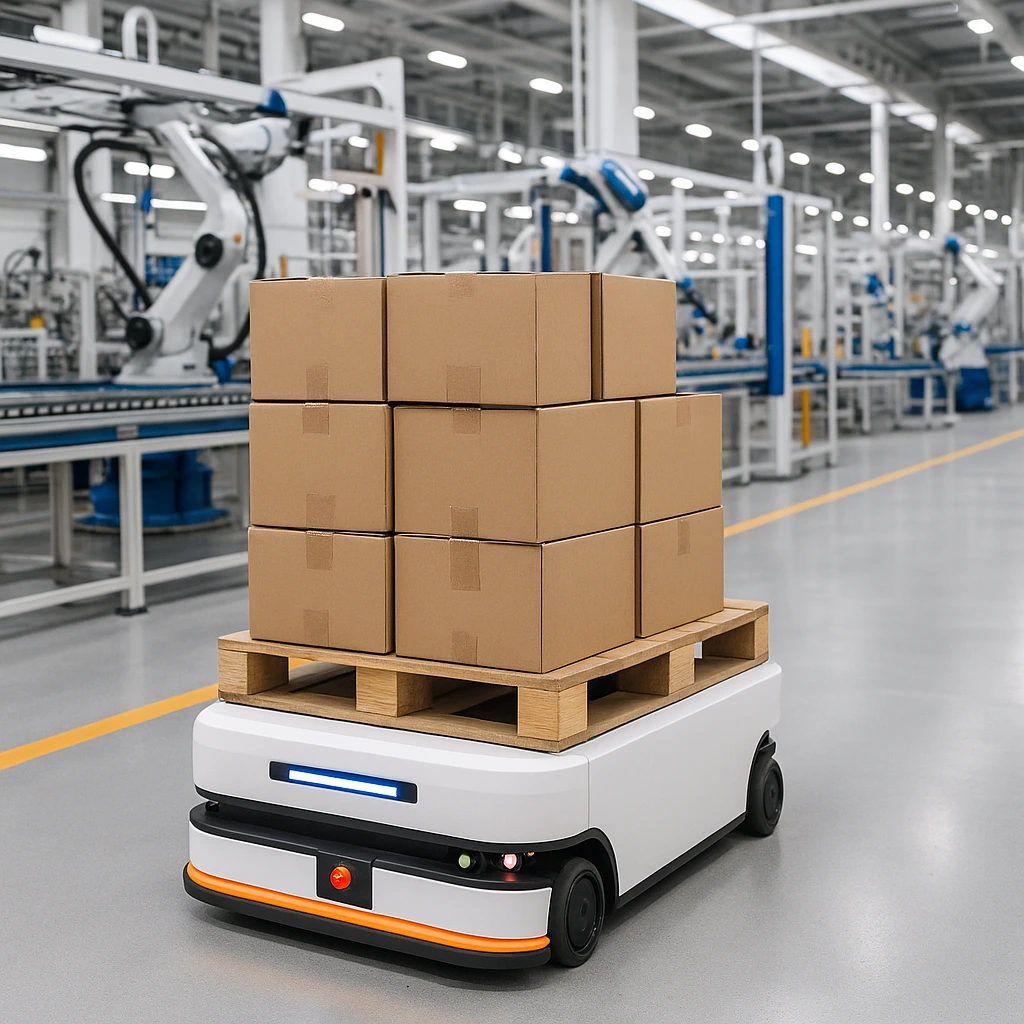
Automated guided vehicles help reduce pressure on almost every step of the line. Their strongest value appears in places where human transport work used to cause delays or uneven flow.
Raw Material Delivery to Production Stations
Factories often lose valuable minutes waiting for material carts. AGVs remove that gap because they bring materials precisely when needed. This avoids interruptions and keeps the first stage of production steady.
Work-In-Process Transfer Between Stations
As items move through assembly—electronics, household appliances, machinery—AGVs carry semi-finished pieces between steps. This reduces handling errors and helps each station receive items at a steady pace.
Finished Product Transport to Inspection or Packaging
Once production is complete, AGVs move units toward inspection machines or packaging lines. Smooth flow at this stage helps avoid buildup and maintains output speed.
Tooling and Parts Replenishment
Some factories rely on AGVs to bring replacement tools or parts. Operators don’t have to walk away from their stations, which improves overall uptime.
Waste and Scrap Removal
AGVs can also take filled scrap bins or containers away from work zones. This keeps the floor cleaner and lowers the chance of blocked walkways.
Benefits of Automated Guided Vehicles in Modern Manufacturing
Here’s a closer look at the main gains AGVs bring to a production environment today.
Higher Production Efficiency
AGVs run continuously. They don’t pause for breaks, get tired, or slow down halfway through a shift. This leads to:
- A steadier cycle time
- More predictable material flow
- Better consistency throughout the day
A few saved minutes per hour can mean thousands more finished units every month.
Reduced Labor Burden
Material transport is repetitive and can strain workers. AGVs take on the heavy load so employees can stay focused on detail-oriented tasks like precision assembly or inspection.
Lower Error Rates
Incorrect material delivery—wrong parts, wrong shelves—causes stoppages. AGVs follow exact instructions, which keeps accuracy high.
Stronger Safety Conditions
AGVs detect obstacles instantly. When something appears in their path, they stop. This avoids many accidents linked to forklifts or manual pushing of heavy carts.
Easy to Scale and Upgrade
AGVs can grow with your plant. Many systems allow you to:
- Add more vehicles
- Update paths
- Connect new equipment
- Adjust timing and load rules
This makes them a long-term tool rather than a temporary patch.
Real-World Example: AGVs on a Modern Production Line
Picture a machinery manufacturing plant:
- Raw components enter the receiving area.
- AGVs bring them to the storage racks.
- Another AGV delivers the necessary items to Assembly Station 1.
- Semi-finished pieces move to Assembly Station 2.
- Completed units go straight to testing and packaging.
At no point does a worker have to leave a station to move items manually. This keeps teams focused and helps the line run with fewer slowdowns.
Where AGVs Deliver the Strongest Value
Application Area | Problem Before AGVs | Result After AGVs
Raw material delivery | Unpredictable timing | Smooth and steady supply
WIP transfer | Bottlenecks between stations | More balanced workflow
Finished goods movement | Manual delays | Faster flow to packaging
Tooling replenishment | Operators leaving stations | Higher station uptime
Waste removal | Clutter or late disposal | Cleaner, safer workspace
Introducing Wesar Intelligence Co., Ltd.
Before wrapping up, it’s useful to mention a company working deeply in this field. Wesar Intelligence Co., Ltd. focuses on intelligent mobile robots for factories that want stronger automation and smoother logistics. Their engineering team develops automated guided vehicles used in electronics, machinery, automotive parts, and other demanding production environments.
Wesar’s product lineup includes various AGV models and complete automation systems for moving materials, assisting assembly, inspecting products, and coordinating tasks across different processes. With strong navigation technology, stable load capacity, and software designed for industrial workflows, their solutions fit factories aiming to build efficient, predictable, and scalable production lines. The company also supports planning, deployment, and maintenance, which helps manufacturers move toward long-term automation goals rather than one-time upgrades.
Заключение
Automated guided vehicles are changing the way production lines function. They solve common issues—material delays, safety concerns, labor shortages, and workflow inconsistency. The application of AGVs in the production line of manufacturing industry brings measurable gains that many factories now view as essential, not optional.
As more manufacturers update their operations, AGVs will continue to play a key role in keeping production stable, efficient, and ready for higher demands.
FAQ
Q1: How do automated guided vehicles help improve workflow on a production line?
AGVs reduce delays, keep materials moving on time, and cut mistakes from manual transport. This results in smoother and more predictable production.
Q2: Can AGVs be installed in a factory that already has equipment?
Yes. Many AGVs work with existing layouts, whether the factory uses reflectors, magnetic routes, or SLAM mapping.
Q3: Which industries from the manufacturing sector use AGVs most often?
Electronics, machinery, automotive parts, and consumer goods factories use AGVs frequently, especially where repetitive movement of goods is required.
Q4: Do AGVs replace workers on the line?
AGVs handle transport work, not skilled tasks. Operators can stay focused on assembly, testing, or quality-control duties.
Q5: How do AGVs support factory safety?
AGVs use sensors to detect people and equipment. They stop immediately when something enters their path, reducing the risk of accidents.






 Russian
  English
  Chinese