
The landscape of modern warehousing has shifted from simple storage to a high-stakes game of vertical density and rapid-fire throughput. For operations handling thousands of individual cartons or totes, the decision often boils down to two heavy hitters in the automation world. On one side, you have the venerable Mini-Load Automated Storage and Retrieval System (AS/RS), a powerhouse of fixed infrastructure that has dominated large-scale distribution centers for decades. On the other, the agile, decentralized Autonomous Case-handling Robot (CTU) has emerged as a disruptive force, promising the same density without the rigid constraints of steel rails and permanent cranes. Choosing between them isn’t just about picking a machine; it is about matching your facility’s structural DNA with the right logic of movement.
Answer: CTU vs. Mini-Load AS/RS: Which One to Choose for High-Density Warehouse Storage?
Deciding between a CTU and a Mini-Load AS/RS hinges primarily on your facility’s ceiling height, your tolerance for installation downtime, and the required flexibility of your workflow. You should choose a CTU system if your warehouse clear height is under 12 meters and you need a modular solution that can be deployed in stages without stopping current operations. This path is ideal for e-commerce or electronics manufacturing where SKU profiles change rapidly and the ability to scale by simply adding more robots is a massive operational win. Conversely, you should opt for a Mini-Load AS/RS if you are building a greenfield facility with heights exceeding 15 to 20 meters and require extremely high, consistent throughput that justifies a massive, permanent capital expenditure. While the Mini-Load offers unmatched speed at extreme heights, the CTU solutions provide a superior balance of density and adaptability for the majority of modern brownfield conversions.
Spatial Utilization and Structural Constraints
When we talk about dense storage, we are essentially talking about how much “air” we can turn into “revenue-generating inventory.” The Mini-Load system is the king of the vertical dimension, often reaching heights that would make a standard forklift operator dizzy. Because it runs on dedicated rails and is stabilized by a mast, it can safely store goods at heights of 25 meters or more. However, this comes with a catch: the floor must be perfectly engineered to handle the concentrated loads of the racking and the crane’s weight, and once those rails are bolted down, that space is locked into that configuration forever.
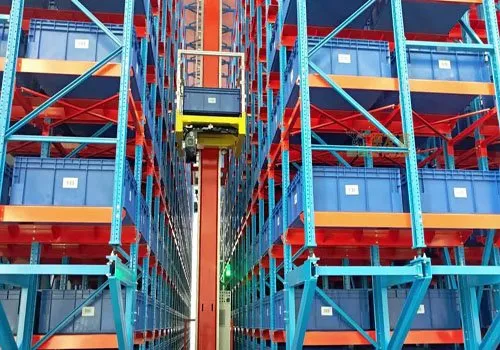
The CTU takes a different approach to the same problem. Instead of one massive crane, a fleet of robots moves through standard, high-density shelving. Modern CTUs can now reach heights of up to 10 or 12 meters, which covers the vast majority of standard logistics parks and industrial units. The real magic of the CTU is its footprint. Because these robots are autonomous and don’t require the wide turning radiuses of a human-driven reach truck or the heavy rail infrastructure of a Mini-Load, you can pack aisles tighter than ever before. You aren’t just storing high; you are storing deep and narrow, maximizing every square inch of the Wesar Intelligence website offerings.
Throughput Efficiency and the Bottleneck Problem
In a traditional Mini-Load setup, your throughput is dictated by the number of cranes. If you have five aisles and five cranes, and one crane goes down for maintenance, 20% of your inventory is effectively “dark” until the repair is finished. Furthermore, a crane can only be in one place at one time. If there is a sudden surge in demand for items located in Aisle 3, that single crane becomes a massive bottleneck, regardless of how fast it travels.
CTUs solve this through the power of a decentralized fleet. Since the robots are not tethered to a specific aisle, multiple units can converge on high-demand areas. If one robot needs a battery swap or a software update, the rest of the fleet simply works around it. This “swarm” intelligence means that your system’s picking capacity is elastic. During a peak season like Black Friday, you can bring in additional rental units to boost your “carton-to-person” picking speed without changing a single piece of racking. This is a game-changer for businesses that face volatile demand cycles and cannot afford the rigid throughput ceilings of fixed-path automation.
The Reality of Implementation and Lead Times
One of the most overlooked aspects of warehouse automation is the “time to value.” A Mini-Load AS/RS is a civil engineering project as much as it is a logistics one. From the moment the contract is signed, you are likely looking at 12 to 18 months of design, fabrication, rail installation, and rigorous commissioning. During much of this time, the specific area of your warehouse is a construction zone, often requiring a total shutdown of that zone.
In contrast, a CTU deployment is remarkably non-invasive. Since the robots navigate using QR codes or SLAM (Simultaneous Localization and Mapping) technology, they don’t require floor tracks or overhead power lines. You can install the racking, map the floor, and have robots running in a matter of weeks, not years. For an operational manager, the ability to implement automation in “chunks”—automating one zone while the rest of the warehouse continues manual picking—is the difference between a successful transition and an operational nightmare. If you want to see how this looks in practice, checking out the О нас section of a specialized provider can give you insight into their deployment philosophy.
Cost Analysis: CapEx vs. OpEx
The financial profile of these two systems couldn’t be more different. The Mini-Load is a classic “front-loaded” investment. You pay a massive amount of Capital Expenditure (CapEx) upfront for the steel, the cranes, and the software integration. While the cost per storage slot can be lower at massive scales, the “entry price” is high.
CTUs allow for a more balanced Operational Expenditure (OpEx) model. You can start with a small fleet and a few rows of shelving, then add more as your business grows. This “pay-as-you-grow” strategy is much friendlier to the balance sheet of a mid-sized enterprise or a fast-growing startup. Additionally, the maintenance of a CTU is significantly simpler. Most repairs involve swapping out a modular component or a wheel, whereas a Mini-Load crane often requires specialized technicians to climb the mast or work on high-voltage electrical components.
Precision and Material Handling Capabilities
A core feature of the CTU is its ability to handle “automatic in-and-out” tasks with extreme precision. While a Mini-Load uses a shuttle or fork to pull a tote, a CTU like those found in the product-category often utilizes telescopic forks that can reach two or even three positions deep into the shelving. This allows for “double-deep” storage of cartons, further increasing density without sacrificing the ability to grab a specific SKU.
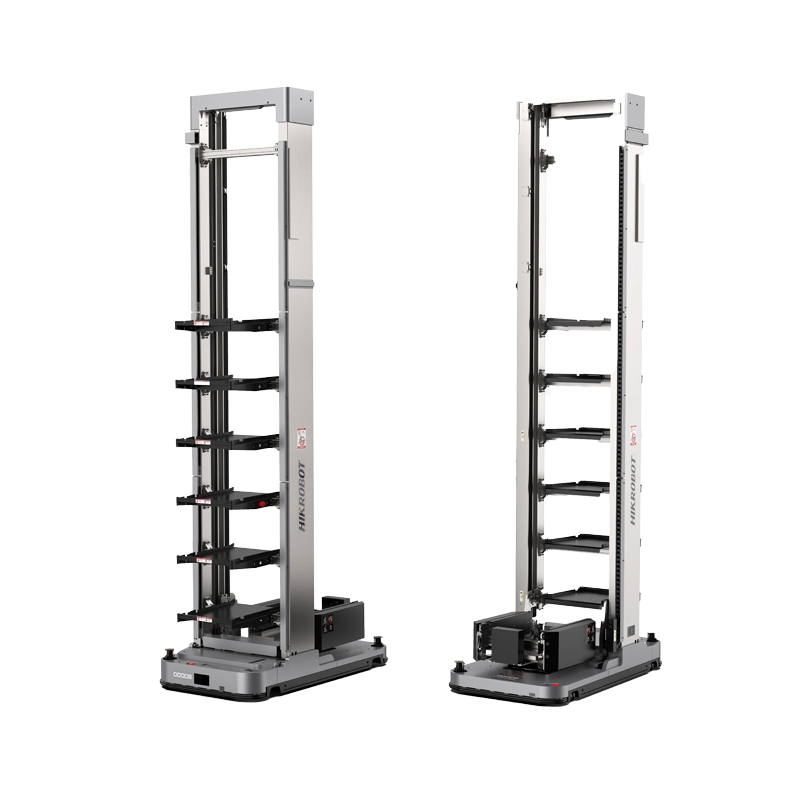
The way these machines interact with the actual material—the cartons or totes—is where the engineering shines. A high-quality CTU uses sensors to detect if a carton is slightly askew and can adjust its grip in real-time. This level of “micro-adjustment” reduces product damage and prevents the dreaded “stuck bin” errors that can plague older AS/RS systems. For industries like pharmaceuticals or high-value electronics, this gentle but precise handling is a non-negotiable requirement.
Integration with Downstream Processes
No automation system exists in a vacuum. Whether you choose CTU or Mini-Load, the system must talk to your Warehouse Management System (WMS) and hand off goods to conveyors, AMR transport robots, or human picking stations. The advantage of the CTU here is its mobility. A CTU can fetch a bin from the back of the warehouse and drive it directly to a picking station or a packing line, eliminating the need for hundreds of meters of expensive, noisy, and maintenance-heavy conveyors.
By reducing the amount of fixed peripheral equipment needed, the CTU keeps the warehouse floor open and flexible. This is particularly useful for facilities that might need to reconfigure their packing area or add new shipping docks in the future. The robot is the conveyor, and the floor is its highway.
Verifying the Fit for Your Facility
Before pulling the trigger on either system, there are a few “ground truths” you need to verify. First, check your floor levelness. While CTUs are more forgiving than AGVs, they still require a relatively flat surface to operate their telescopic lifts at full extension. Second, look at your SKU velocity. If 80% of your picks come from 20% of your SKUs, the ability of a CTU fleet to “concentrate” on those high-velocity items will outperform a single-crane Mini-Load every time.
Finally, consider your exit strategy. If you are in a leased building, a Mini-Load system is almost impossible to move. It essentially becomes part of the landlord’s property. A CTU system, however, is an asset you can take with you. You can disassemble the racking, pack the robots into a truck, and be up and running in a new facility within a month. This mobility is a powerful hedge against rising real estate costs or the need to move closer to a new customer base.
Introduction to Wesar Intelligence Co., Ltd.
Wesar Intelligence Co., Ltd. is a specialized innovator in the field of industrial robotics and intelligent warehouse solutions. Based on a foundation of deep technical expertise and a commitment to practical, scalable automation, Wesar focuses on delivering systems that bridge the gap between human labor and full-scale industrial automation. Their product lineup, particularly the BEAST series of Carton Transfer Units (CTU), is designed to tackle the specific challenges of high-density storage and rapid “tote-to-person” fulfillment. By prioritizing modularity, ease of deployment, and precision engineering, Wesar Intelligence helps businesses transform their logistics operations from a cost center into a competitive advantage.
Заключение
The battle for warehouse efficiency isn’t about which machine is “better” in a vacuum; it’s about which one fits the constraints of your specific building and the rhythm of your orders. While the Mini-Load AS/RS remains a formidable choice for massive, high-rise hubs, the CTU has redefined what is possible for the average warehouse. Its ability to combine the vertical density of an AS/RS with the flexibility of a mobile robot makes it the most logical choice for companies that need to automate now but stay ready for whatever the market throws at them tomorrow. By focusing on “automatic in-and-out” precision and minimizing the need for fixed infrastructure, the CTU offers a path to automation that is both ambitious and incredibly grounded in reality.
Часто задаваемые вопросы
How do I know if my floor is flat enough for CTU robots?
Most CTU systems require a floor that meets specific flatness and levelness standards, often referred to as “Superflat” or meeting specific FM2/FF/FL requirements. During the site survey, engineers will use a digital floor profiler to map the surface. If there are minor dips or bumps, these can often be ground down or filled, but a general rule is that the more vertical the robot reaches, the more critical a level floor becomes to prevent “mast sway.”
Can a CTU handle different sizes of cartons in the same aisle?
Yes, one of the primary advantages of a CTU over traditional systems is its adaptability. Modern CTUs are equipped with adjustable telescopic forks that can widen or narrow based on the specific dimensions of the tote or carton being retrieved. This allows you to mix different SKU sizes within the same racking system, as long as the weight stays within the robot’s rated capacity.
What happens to the CTU system if the warehouse Wi-Fi goes down?
Reliable communication is the backbone of any robotic fleet. Most CTU systems operate on a robust industrial Wi-Fi or 5G private network. In the event of a signal drop, the robots are programmed with “fail-safe” protocols. They will typically complete their current movement to a safe stop and wait for the connection to be restored. Advanced systems use edge computing to ensure that local safety sensors (like LiDAR) remain active regardless of network status, preventing collisions.
How does the throughput of a CTU fleet compare to manual picking?
In a typical manual setup, a picker spends 60% to 70% of their time just walking between aisles. A CTU system eliminates this “travel waste” by bringing the goods directly to the person. On average, a well-optimized CTU system can increase picking productivity by 3 to 4 times compared to a person with a cart, while simultaneously doubling or tripling your storage density in the same footprint.





 Russian
  English
  Chinese