
A pallet may need to move only 30 metres from receiving to a storage buffer, yet that short trip can involve repeated forklift calls, shared traffic lanes and an uncertain handoff at the destination. A forklift automated guided vehicle (AGV), also described as a forklift mobile robot, can take on repeatable pallet movements when the load carrier, route and transfer stations are suitable.
For warehouse buyers, the practical question is not simply whether an AGV can lift a pallet. It is which material flow can be automated reliably, and whether the chosen vehicle is intended for floor-level transport or elevated stacking. Wesar’s forklift mobile robot range includes both kinds of equipment.
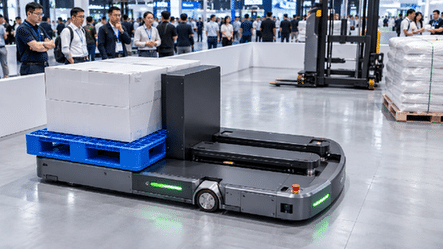
Inbound pallets usually move through receiving, identification and inspection before entering a storage area. A forklift AGV can serve the repeatable transport leg, but the transfer point has to be designed around the actual pallets and the way they arrive. Fork entry, load overhang, placement accuracy and available approach distance all matter.
Consider a site where one operator receives pallets and several warehouse aisles share the same destination buffer. A useful AGV plan identifies a pickup position that stays clear, confirms that the load is ready and specifies where it may wait if the destination is occupied. Those rules prevent one delayed pallet from disrupting other tasks.
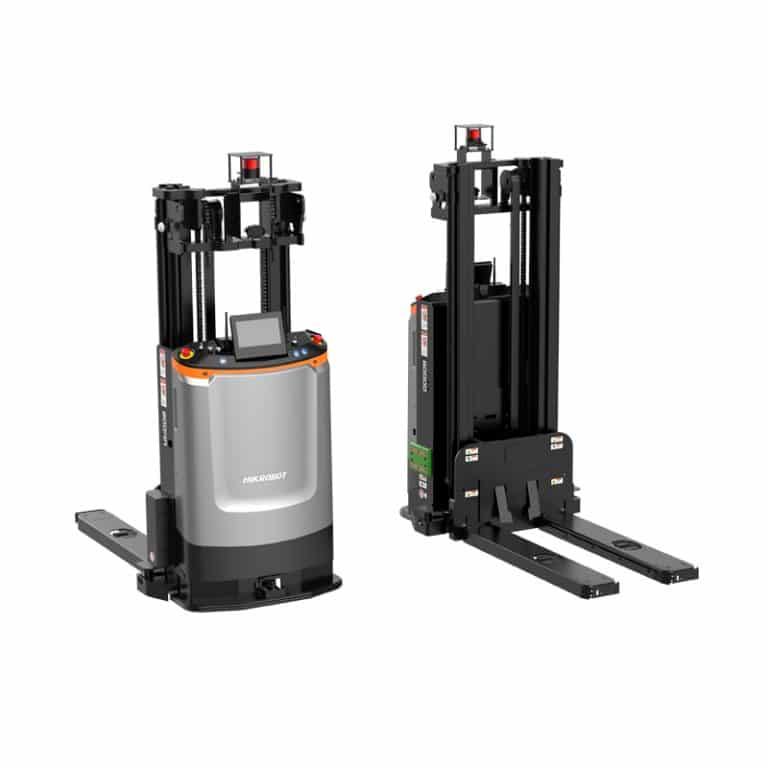
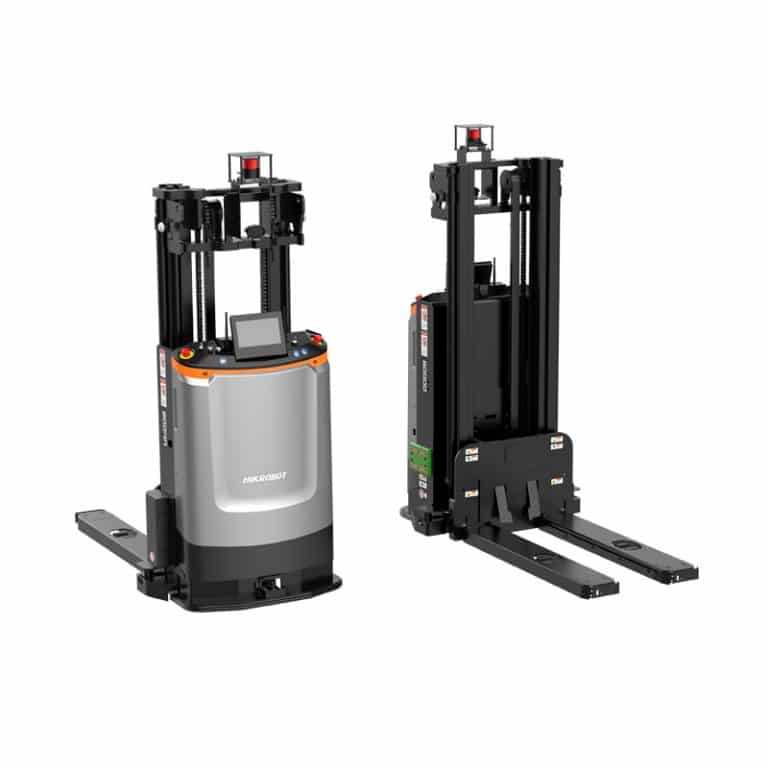
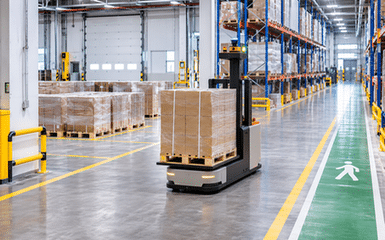
For floor-level transport, Wesar’s Мобильный робот-погрузчик F3-1500 is a relevant product example. Its published configuration lists a 1,500 kg rated load and 200 mm fork lifting height. That short lift is designed for compatible pallet pickup and movement; it is not a high-rack stacking lift. Buyers should review the current specification for their exact pallet and operating environment.
In manufacturing facilities, pallet transport is often driven by production needs rather than by the warehouse’s outbound schedule. Raw materials may leave storage for an assembly line, return to a buffer after inspection, or move between workstations several times during a shift. These routes are well suited to evaluation when their pickup and drop-off locations can be standardized.
The handoff deserves more attention than the distance travelled. If a workstation cannot receive another pallet, the robot needs an agreed waiting or exception rule. If the load changes between batches, the team should check whether the new pallet footprint or centre of gravity remains within the validated handling arrangement.
Warehouse and production staff should agree on the transport trigger, destination confirmation and return of empty pallets. That gives the supplier a defined workflow to implement rather than a list of unrelated moves.
Forklift AGVs do not all perform the same lift task. A low-lift carrying vehicle moves a pallet clear of the floor and places it at another compatible low-level position. A stacking vehicle has a mast designed for an elevated target, such as a rack or raised transfer station.
For comparison, the public page for Wesar’s F4-2000 (4.5 m) stacking forklift robot lists a 2,000 kg rated load and 4,517 mm fork lifting height for its stated configuration. That is a different handling requirement from the F3-1500’s 200 mm lift. The rated load, load-centre distance, pallet entry and high-level clearance must all match the proposed application.
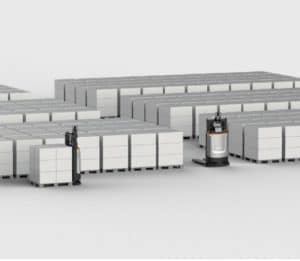
A warehouse with floor buffers and elevated racks may therefore need different vehicle configurations, rather than one general-purpose model chosen from payload alone. The supplier can verify this from a site layout and representative carrier samples.
Many suitability problems become visible only when a real pallet is used. Nominal dimensions do not reveal a damaged runner, loose wrapping underneath or a blocked fork entry. Provide a sample from the actual operation and describe how it is placed at the pickup point.
The route needs the same practical check. Measure turning and approach areas near the stations, not only the straight aisle. Mark pedestrian crossings, doors, temporary storage areas and any floor conditions that change during busy periods.
Four items to check before shortlisting an AGV:
Load and carrier: actual loaded weight, centre of gravity, pallet underside and fork-entry direction.
Transfer points: pickup position, placement height, rack or conveyor clearance and destination readiness.
Route: turns, shared crossings, uneven areas, doorways and temporary obstructions.
Duty cycle: busiest shift periods, buffer capacity, charging windows and interruption tolerance.
The listed minimum aisle width for a product is a specification under defined conditions, not automatic approval of every turning or transfer manoeuvre. A site-specific route review and test remain important.
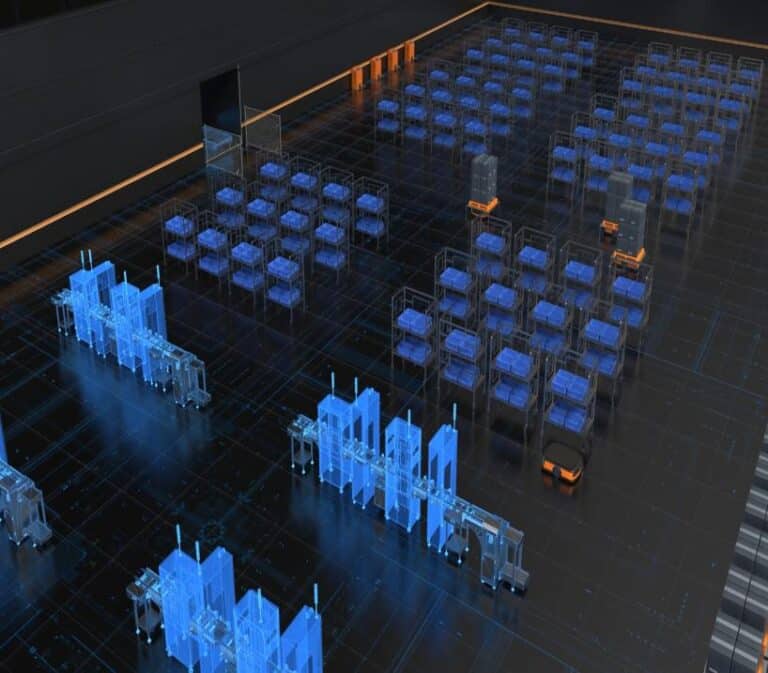
The forklift does the physical moving; a broader control arrangement determines which task it receives and what happens when a station is unavailable. For multi-robot operations, Wesar describes the Система управления роботом RCS-2000 as a centralized platform for robot task assignment, scheduling and route planning.
A typical workflow may start when warehouse software releases a transport request. The vehicle collects the load, travels to the destination and reports the outcome. The actual signal path, safety interlocks and device interfaces depend on the agreed system design. Automated doors, elevators and conveyors should not be treated as plug-and-play without a project-level interface review.
The operational team also needs a response for a blocked destination, a pallet that cannot be picked up and a vehicle awaiting charge. A practical demonstration should include at least one of these conditions, not only a smooth transport cycle.
A pilot should use representative loads and typical operators rather than a perfect demonstration pallet. Start with one inbound movement, one line-replenishment movement and one recovery case. Record the time taken, any manual intervention and whether both the task system and the receiving station show the expected result.
If the warehouse has more than one pallet type, repeat the pickup test with each carrier. Ask for the model-specific configuration and test limits in writing. A proposal should identify both the tasks that are supported and those that require a different vehicle, fork arrangement or station design.
The strongest forklift AGV applications are defined by repeatable pallet movements and predictable handoffs: inbound transfer, storage replenishment and production-line material delivery. Selecting equipment starts with the real load and destination. The next steps are to confirm vehicle configuration, route clearance, task interfaces and the operating cases that must be demonstrated at the customer’s site.
Can one forklift AGV handle both floor-level pallets and high racks?
Not by assumption. Carrying and stacking vehicles have different lifting structures and application limits. Match the lift height, rated load and station geometry to the specific task.
Does a published pallet size guarantee compatibility?
No. The underside structure, fork-entry openings, load condition and pickup orientation also need checking against the selected configuration.
What information is most useful for an initial AGV proposal?
Provide the current pallet sample or drawings, loaded weight, pickup and destination positions, route layout, shift demand and a list of systems or devices that must exchange task information.






 Russian
 English
 Chinese
 Japanese
 Italian
 Korean
 Spanish
 Arabic
 French
 German