
‘AGV for plastics’ sounds like a starting point, until you try to choose a vehicle from that description. Resin, molds, and packed cartons could all be involved. Even the carrier is undecided. Auto parts and printing enquiries run into much the same problem. It is worth spending a little time with the person who handles the load now. They may be waiting for a machine, shifting the carrier into position, or making an adjustment that never appears on the layout. An AGV or AMR brief needs those details. The route between machines is the easy part to put on a drawing; the work at either end takes a closer look.
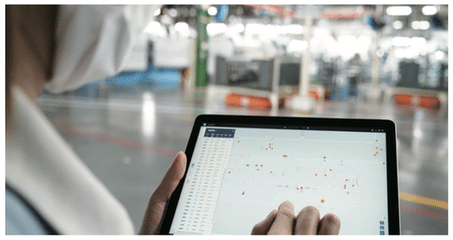
What does the plastics load actually require?
A photograph of the resin collection point shows the bags or bin. It tells the supplier much less about permission to collect. Does a production request release the delivery? Is the carrier already in place? These are gaps for the brief to close. A drawing and a few notes about the current arrangement give the conversation a useful focus. Include the receiving position on that drawing, rather than leaving the supplier to guess how the delivery ends.
The mold enquiry deserves another sheet. Its weight belongs on it, of course, together with the way it will be supported and held in place. If a crane is involved at the press, draw the boundary between its work and the proposed vehicle’s work. Otherwise two people reading the same quotation may picture different handovers. Finished cartons call for a check of packaging and stability instead. All of this can sit in one RFQ, without pretending that one carrier arrangement has already been agreed for every job.
Conditions along the route belong in the brief, with observations made while work is going on. There may be heat or residue to account for, or airborne material. There may not. A site visit is needed to establish what is there and how it affects the proposed job. Collection and set-down then need trying with the intended carrier. There is little value in proving that a vehicle can drive the aisle if it cannot take the load from the position where production leaves it.
What can hold up an auto parts delivery?
At a parts line, watch the empty container for a while. Perhaps its removal is already a defined task; perhaps somebody deals with it when space runs out. Either way, the proposed full-container delivery depends on it happening. The sequence therefore needs to name the person responsible. Carrier information comes next. A tote is not a rack, and neither can be substituted for a wheeled unit without checking the interface. Give the supplier the loaded measurements and mass, along with the method for identifying the part family and delivery position.
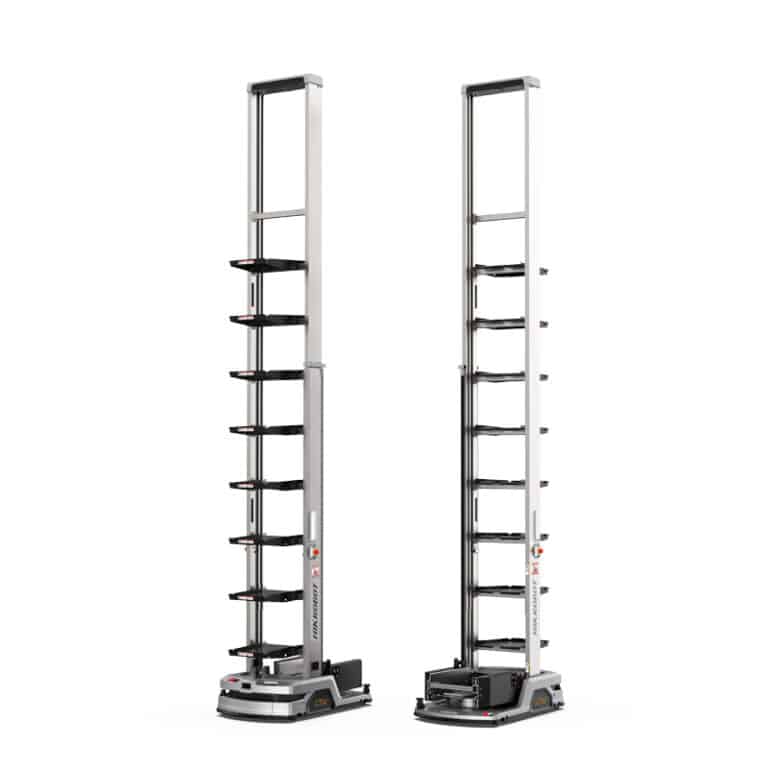
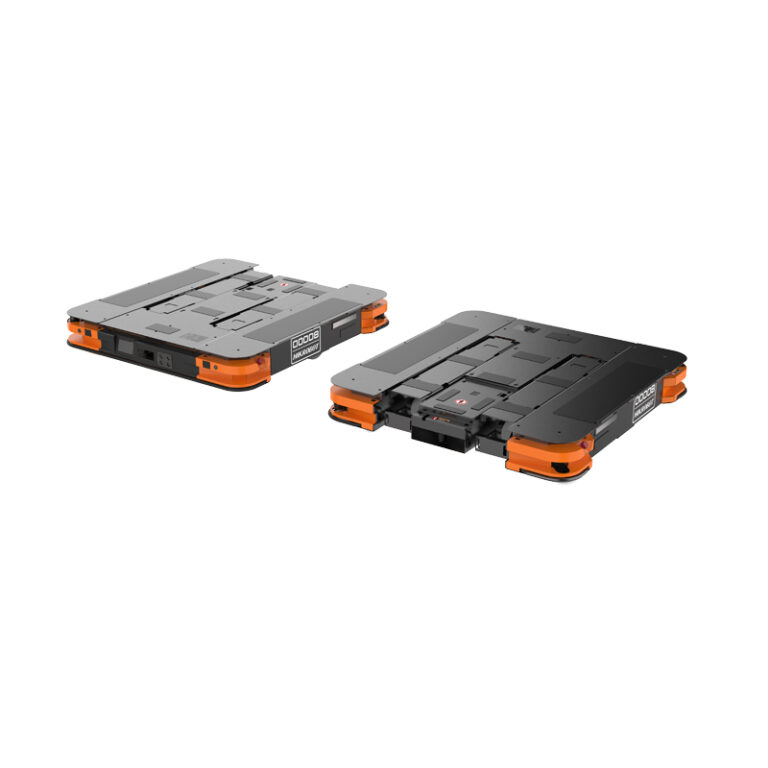
A quiet-shift route survey has its limits. The same crossing can look different once production is running, and somebody else may be using the proposed waiting space. Watching those interactions helps establish where a robot could pause. When reviewing a supplier’s portfolio di robot mobili, keep the actual layout beside the catalogue. There is still a vehicle-to-carrier interface to check, however convincing the route looks on paper.
Who releases a trip? A scan, an operator, or a message from production could do it, but ‘could’ is not enough for the installation plan. Until the method and its owner are agreed, this part of the workflow remains open. Receipt needs a definition too. A missing carrier or an incorrect destination should have a defined response. Otherwise the proposal describes the normal trip while leaving the interrupted one for the production team to sort out later.
How will printing loads stay supported?
Ask a printer about the load before talking about the robot. ‘Paper’ may mean a roll, sheets, printed work, or packed pallets. For the move being discussed, the useful details are the wrapping, the surfaces that may be touched, and the orientation that must be maintained. A cradle or restraint might be considered, depending on the load. For now, those are options for evaluation. They say nothing about a completed installation or approval of a specific vehicle.
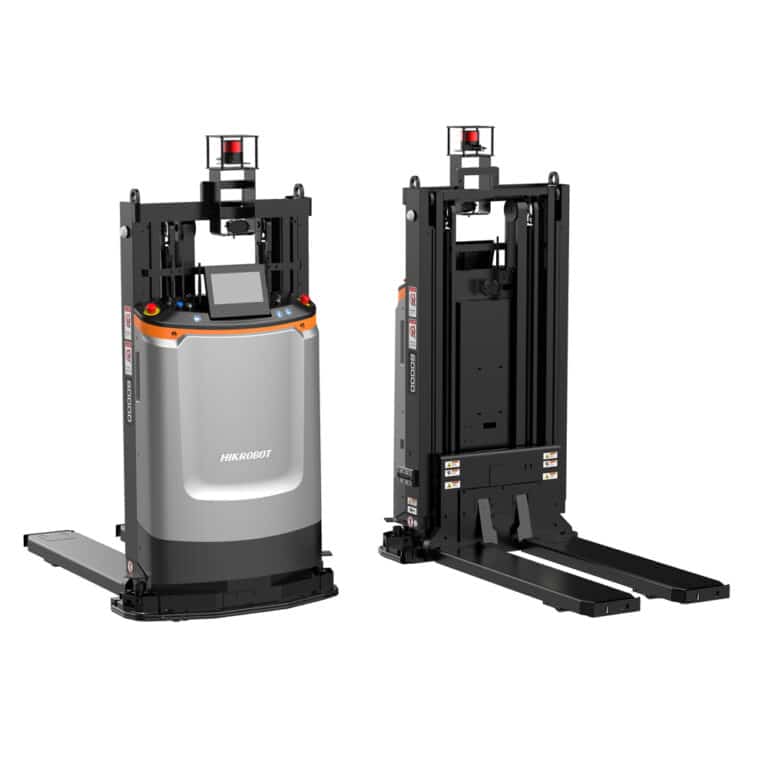
A delivery drawing should not simply copy the pickup dimensions. The height and required positioning may differ at the receiving end. There is also the question of what happens between the two: will the support hold the material during turns and stops, and could anything scuff it? Beyond delivery, describe only the plant’s actual next operation. For standard pallets, Wesar’s robot mobili per carrelli elevatori provide a relevant product category to investigate. That does not establish suitability for a roll or a stack of sheets.
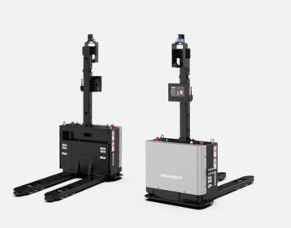
Photographs help, though they will not establish clearance around a press or finishing machine. Dimensions are needed there, alongside observations about the floor, pedestrian crossings, and dust-control routines. These are site questions. A photograph of a vehicle in another printing-related setting is not an answer to them.
What should go into the RFQ and pilot?
For the RFQ, a sheet devoted to each movement avoids a lot of ambiguity. Put the carrier photograph or drawing beside the loaded measurements and mass. Add where and how it is collected and set down, then the route dimensions and narrowest clearance. How many trips are required in an hour or a shift? What traffic shares the route? Notes about site conditions and the intended software interface belong with those answers. A reader ought to be able to follow the mold job through the quotation without confusing its requirements with those of the tote delivery.
The price can be quite clear while the scope is not. For example, a proposal may rely on a rack alteration, a conveyor change, or a software signal outside the robot supply. Who is providing that part? An unassigned task is still a task that somebody will have to complete. It also helps to separate what a vendor has checked against a named vehicle from what remains an assumption pending a trial. Two quotations with different outstanding checks are not yet describing the same commitment.
For a pilot, let the test start at the request, not at the first wheel movement. Was the carrier ready? Did collection work? Was the load accepted at delivery? Travel time belongs in the record, alongside any failed transfer or help needed from an operator. A second part of the pilot can look at interruption: the aisle is blocked, or the receiving space is still occupied. How is the move resumed? Without those checks, ‘it reached point B’ leaves a good deal untested.
Where can Wesar help with the assessment?
Intelligence occidentale lists smart warehousing and logistics robots within its intelligent factory scope. The movement sheet is a useful way to turn that broad scope into a discussion about the buyer’s job. There will probably still be points to resolve. Which equipment is proposed? What meets the carrier? What still needs a trial? The answer for one load cannot be taken as approval for a mold, parts rack, or printing load with different requirements.
Conclusione
There is nothing wrong with naming the industry in an AGV enquiry. Just leave enough room after it to explain the job. Measured transfer points and a described load make AGV and AMR proposals easier to question and compare. To take the job further, contact Wesar with the movement sheet and site drawings. The discussion should identify whether the proposed vehicle fits, and which conditions still need checking on site.
FAQ
Can the same AGV model work in plastics, auto parts, and printing?
Possibly, for selected jobs. Check each movement on its own: carrier, loaded dimensions and weight, transfer interface, route, and operating cycle. An industry label cannot establish compatibility.
Does reaching the destination mean an AGV trial has passed?
No. The journey might work while collection or delivery does not. Follow the whole job from the initial request to receipt, and leave time in the pilot to try an interruption rather than testing only an unobstructed route.
What should we send with an AGV enquiry?
Pictures help, especially of the carrier and the two transfer points. Include the loaded size and weight with them. The supplier will also need a measured route, trip demand, control interfaces, and the relevant site conditions. Explain how you intend to judge the trial; where a measurement or requirement is still undecided, say so.






 Italian
 English
 Russian
 Chinese
 Japanese
 Korean
 Spanish
 Arabic
 French
 German