
Automation of industrial processes is driving the demand for increased volume of material handling using high capacity equipment able to operate efficiently in tough production and logistics environments. The evolution towards fully digitalized and robotized factories requires transport systems that go beyond the use of traditional forklifts and manual handling. A new level of efficiency, of safety and of precision is needed in order to handle increased production volumes in optimal conditions.
Heavy-duty AGVs (Automated Guided Vehicles) for smart factories. The systems are designed to transport extremely heavy loads and large industrial components. Due to their reinforced mechanical structures and intelligent navigation systems they are able to operate in a stable, continuous and exact manner. In the context of Industry 4.0 Heavy-duty AGVs are key to the change of the logistics in manufacturing, warehouses and in heavy industry. The integration in warehouse management systems and in production lines is ensured.
The following section goes into more detail about the heavy-duty AGVs, their applications and the current role they play in the industrial automation worldwide.
What Are Heavy-Duty AGVs and How Do They Differ from Conventional AGVs?
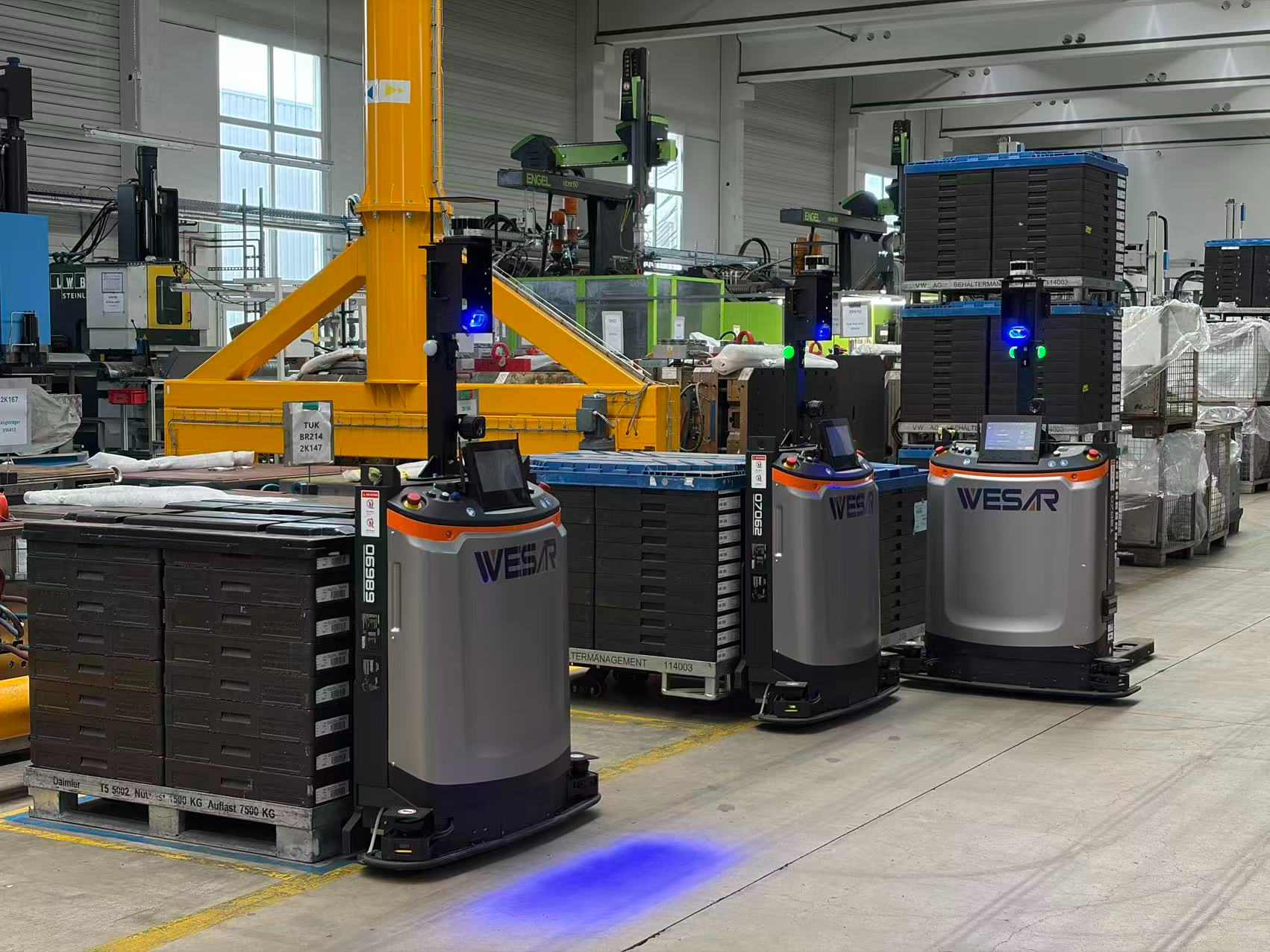
Heavy-duty AGVs are advanced automated guided vehicles designed to handle large-scale industrial loads and operate efficiently in complex environments. These vehicles are engineered with reinforced mechanical structures, intelligent navigation, and robust safety systems that distinguish them from conventional AGVs used for lighter material handling.
Core Characteristics of Heavy-Duty AGVs
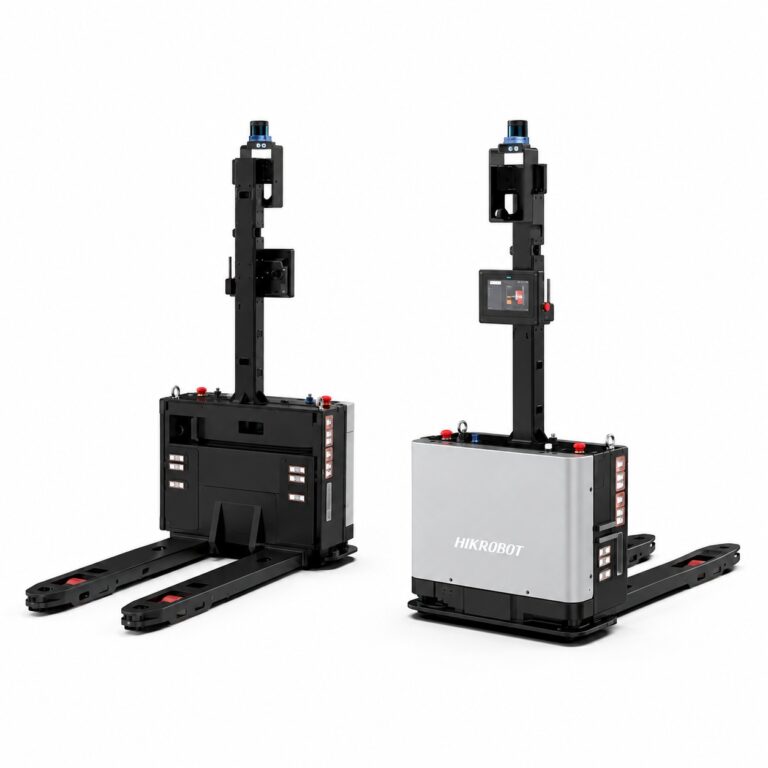
Heavy-duty AGVs are purpose-built for transporting materials that exceed several tons in weight. They feature reinforced chassis and high-torque drive systems capable of maintaining stability even under extreme loads. Heavy-duty Mobile Robots (HMR) support 3–5-ton load capacities and are equipped with automatic obstacle avoidance systems. Their design ensures precision movement within tight warehouse layouts, enabling seamless integration into automated production lines where accuracy is critical.
Key Differences Between Heavy-Duty and Standard AGVs
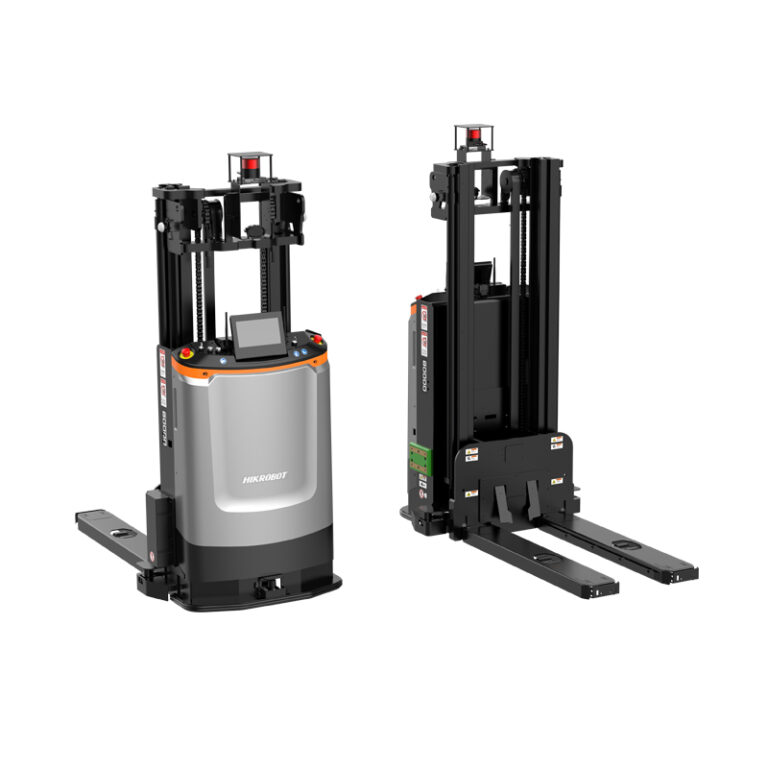
Compared to standard AGVs, heavy-duty models have a much larger payload capacity. Forklift Mobile Robots (FMR) are able to lift up to 3 tons and reach heights of 200 mm up to 5,500 mm. This enables stacking as well as counterbalance applications. Their navigation is accurate even under heavy loads. In addition to sensors such as lidar, vision-based SLAM as well as hybrid guidance are used. In terms of integration, the forklifts are able to be synchronized with other automation systems, such as conveyors, or even with robotic arms. In this way, a complete logistics system is created in a facility, which functions perfectly together.
How Do Heavy-Duty AGVs Contribute to Warehouse Automation?
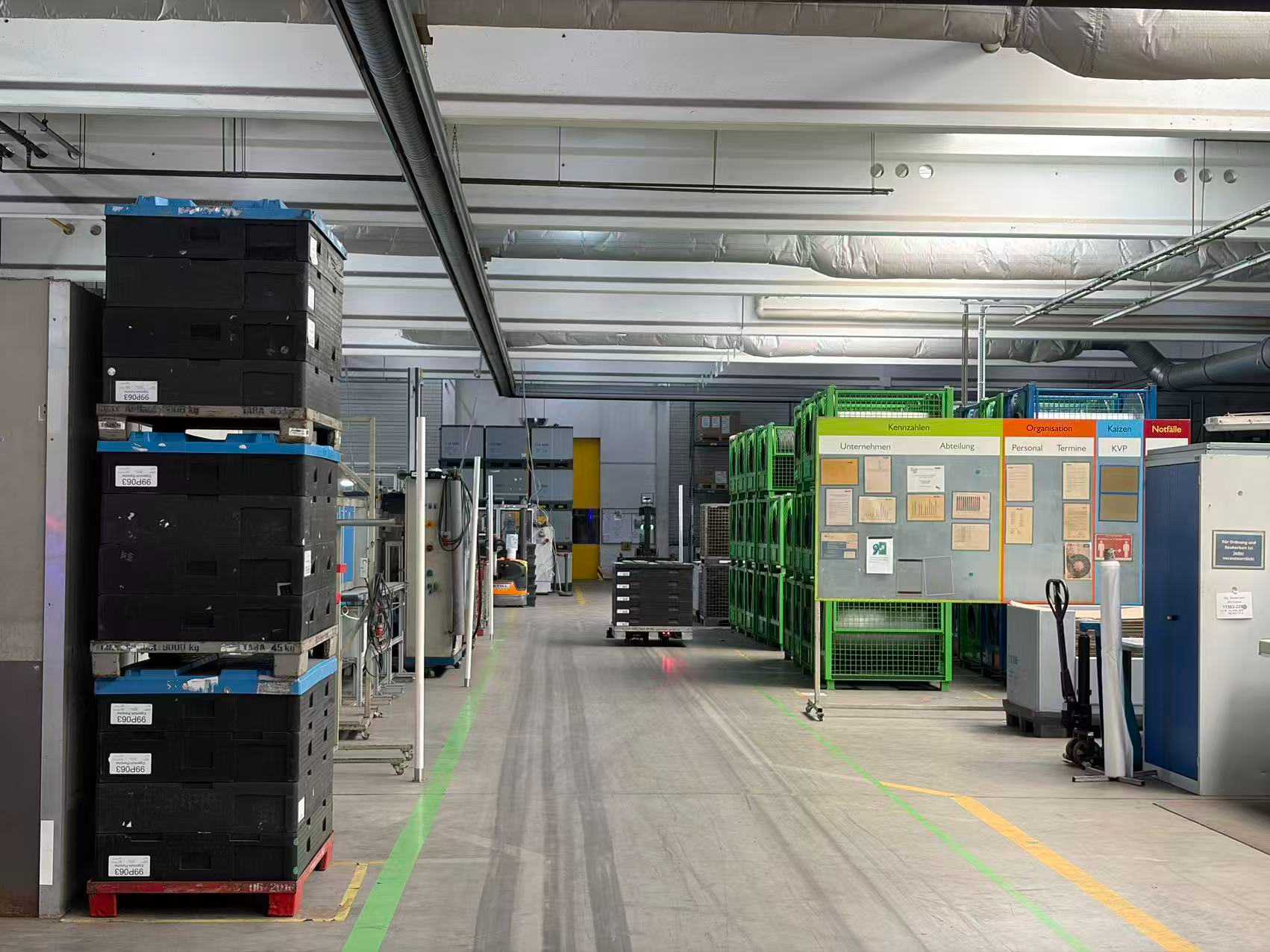
Heavy-duty AGVs are a cornerstone in modern warehouse automation. The key task of these vehicles is to increase the efficiency of the processes, to reduce labor and to make the material flow in production plants as continuous as possible.
Enhancing Material Handling Efficiency
Our heavy-duty AGVs are designed for long distance transport in warehouses and factories. By automating the transport, the AGVs remove the need for manual forklift operation and resulting downtime due to human error or fatigue. AGV systems are able to automatically plan the best route, schedule the required tasks and even avoid any obstacles along the way. This means that the AGVs can ensure that production lines are always fed without any human intervention.
Improving Safety and Reducing Operational Risks
Heavy-duty AGVs are characterized by their safety features. In addition to sensors for collision prevention with persons and objects, automated routing prevents bottlenecks in the company. With laser-based obstacle avoidance and auto-positioning, injuries in the workplace are prevented and safety optimized. Consistent handling also prevents damage to goods, and thus protects products during transport through the logistics chain.
What Are the Main Applications of Heavy-Duty AGVs Across Industries?
Many heavy-duty AGVs are in use in industries where large amounts of goods of considerable dimensions are processed. In the automotive, aerospace, logistics, as well as in the metal processing industry vehicles are used to a great extent that transport all kinds of goods.
Automotive Industry Applications
Heavy-duty vehicles in the automotive industry transport car bodies or engine assemblies from one production stage to the next. They move in sync with painting or welding stations that are equipped with robots. AGV systems are used in internal logistics of manufacturing industries. Above all, they are very popular in automotive factories, where they support workflows from the receipt of raw materials to warehousing of finished goods. AGV systems facilitate just-in-time (JIT) production, thereby enabling the most efficient possible use of production lines. This is because components are delivered exactly when they are required.
Aerospace and Defense Manufacturing
Oversized components, such as fuselage sections or wings, are transported within the cleanroom by heavy-duty AGVs from the aerospace industry. In combination with the digital twin, the assembly process is monitored and optimized in real time and also for purposes of predictive maintenance.
Logistics and Distribution Centers
Heavy-duty AGVs are used in logistics hubs to transport pallets or containers in between the different docks and storage areas within the warehouse. They are able to support cross-docking functions to increase the speed of delivery by sorting and delivering fast in the warehouse. For this they work together with the warehouse management system (WMS) to optimize the routes. Wesar’s intelligent warehousing systems include WMS that assigns tasks to RCS and WCS to dispatch the robots accordingly.
How Is Technology Advancing the Performance of Heavy-Duty AGVs?
Heavy-duty AGVs have developed with technological innovations. Not only operating with new control software but also with more efficient power supply and connectivity within Industry 4.0 applications.
Intelligent Navigation and Control Systems
Modern heavy-duty AGVs use path planning on the basis of AI which can change on the fly in real time. Multi-sensor fusion makes the exact position of a mobile robot available also in cases of interference with radio signals. The Robot Control System RCS-2000 controls tasks, scheduling of vehicles, route planning as well as coordination of several robots in a factory on company-wide level. Cloud-based fleet management software allows for monitoring of several AGVs at the same time in detail.
Energy Efficiency and Sustainability Enhancements
Energy-efficient designs are becoming standard among heavy-duty models. The adoption of lithium-ion batteries extends operational hours per charge cycle while regenerative braking recovers energy during deceleration phases. Modular power units simplify maintenance procedures while contributing to sustainability goals by reducing overall environmental footprint. AGV systems reduce carbon emissions and enhance energy efficiency, contributing to green factories and ESG strategies.
Why Choose Wesar as a Reliable Supplier of Heavy-Duty AGVs?
Wesar is a global market leader for intelligent factory solutions. We supply heavy-duty AGV systems for demanding environments and support our customers reliably with corresponding factory solutions.
Wesar’s Core Strengths in Heavy-Duty AGV Solutions
Wesar (Suzhou) Intelligence Technology Co., Ltd., as a one-stop intelligent factory solutions provider, specializes in core services such as green intelligent logistics robots, intelligent factory system design and construction. The company provides expert-level customized integrated solutions including consulting, software development, equipment manufacturing, project implementation, after-sales support, and advanced technology integration. Its team comprises over 110 employees—including engineers and software developers—operating from a 7,000-square-meter facility in Nantong. Wesar’s product line includes: AGV robots, WMS systems, ASRS with storage shelves, factory equipment, logistics equipment, conveyors and mobile yard ramps.
Wesar has extensive experience in integrating systems for clients in different industries, such as automotive manufacturing and home appliance logistics. With projects implemented in over 10 countries worldwide including Shanghai and Germany, Wesar is able to provide a scalable automation solution to meet the growing demands of its clients. We are also committed to quality assurance and provide excellent after-sales service to our clients. Our after-sales service team is available within 48 hours worldwide.
What Future Trends Will Shape the Development of Heavy-Duty AGVs?
Heavy-duty AGVs for future production environments will be equipped to self-coordinate a mixed fleet of AMRs and traditional guided vehicles within an interoperation capable automation environment that is becoming increasingly autonomous.
Emerging Innovations on the Horizon
Next-gen systems will feature smarter algorithms capable of managing hundreds of AGVs collaboratively within complex environments. Predictive maintenance powered by IoT analytics will minimize unplanned downtime through early fault detection using sensor-driven diagnostics. Integration into digital ecosystems will enable real-time visualization via augmented reality interfaces for enhanced situational awareness among operators managing large fleets remotely.
Conclusion: The Strategic Role of Heavy-Duty AGVs in Modern Industry
Heavy-duty automated guided vehicles represent a cornerstone technology driving industrial transformation by merging mechanical strength with advanced control intelligence. Their adaptability across manufacturing plants, logistics centers, aerospace facilities, and energy sectors underscores their strategic value as enablers of smart factories focused on productivity optimization through automation-driven precision.
FAQs
What load capacities can heavy-duty AGVs typically handle?
Heavy-duty models can manage loads ranging from several tons up to more than 100 tons depending on design specifications—HMRs support 3–5-ton levels while specialized forklift mobile robots reach up to 3 tons lifting capacity at various heights.
How do heavy-duty AGVs navigate complex environments safely?
By means of lidar sensors, cameras or magnetic guidance lines, hybrid navigation algorithms are used that guide the AGV on the basis of the actual course while avoiding obstacles in a fully autonomous manner. The technical features of AGV’s are realized by means of laser SLAM navigation. The navigation method offers the highest possible accuracy of positioning under all circumstances.
Can heavy-duty AGVs be integrated into existing warehouse management systems?
Yes. Modern platforms are designed for seamless integration in a very straightforward manner using standard communication protocols such as OPC UA or MQTT. Work packages are assigned in WMS to RCS/WCS for synchronized processing in the automation environment. Interconnectivity to ERP and MES systems is also supported.






 English
  Russian
  Chinese
  Japanese
  Italian
  Korean
  Spanish
  Arabic
  French
  German