
In warehousing and logistics operations today, automatic forklift stacking and lifting functions continue to represent one of the most stubborn constraints in achieving comprehensive warehouse automation. Distribution centers and manufacturing warehouses face constant pressure to increase handling volumes, strengthen safety protocols, and reduce dependency on variable labor resources, particularly as SKU diversity grows and delivery expectations tighten. Conventional manned forklifts reveal clear operational limits in high-level pallet handling: accumulated operator fatigue, degraded visibility at extended heights, and frequent small-scale positioning inaccuracies that lead to rack impacts, unstable loads, or repeated corrective maneuvers. These difficulties grow substantially more pronounced in multi-layer racking arrangements that exceed typical reach truck parameters.
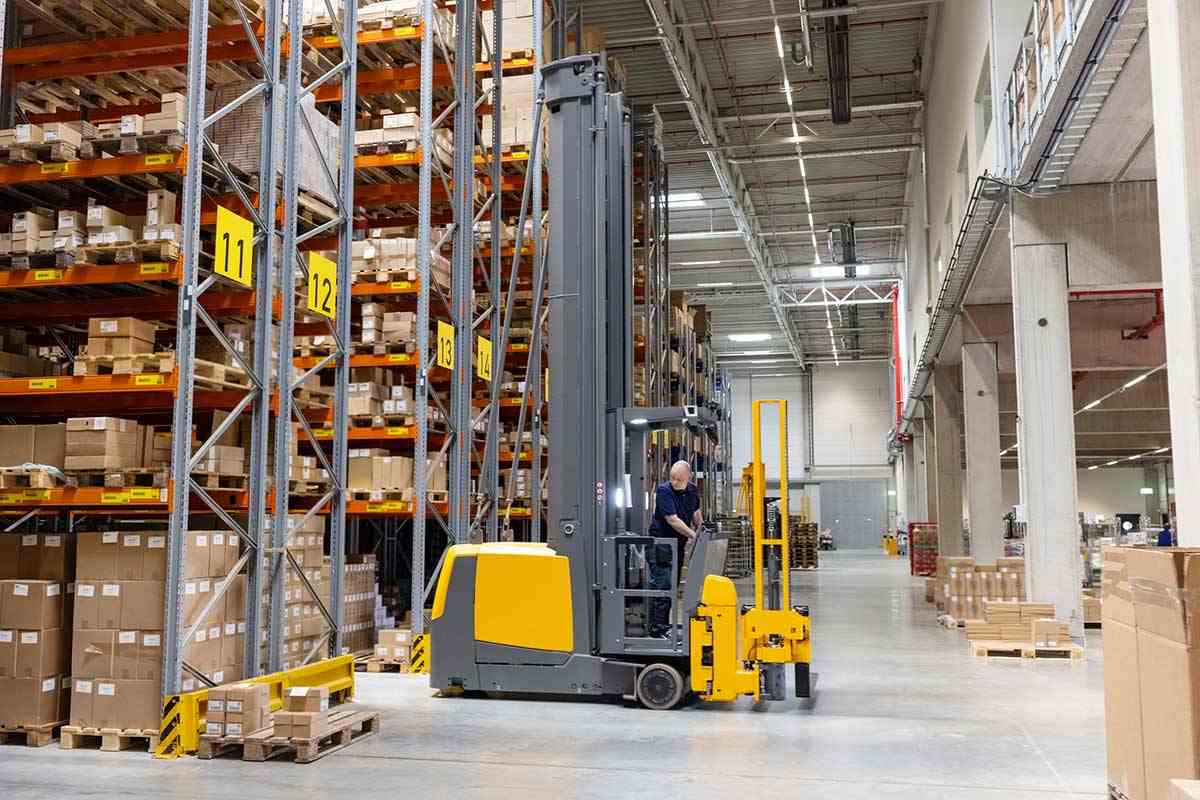
Autonomous forklift robots mitigate many of these inherent limitations. They maintain steady output over prolonged duty cycles, deliver reliable fork alignment even at significant elevations, and substantially reduce the inconsistency stemming from human variables that accounts for the bulk of handling-related disruptions.
Why Stacking and Lifting Tasks Form the Central Challenge in Warehouse Automation
High-density vertical storage has established itself as standard practice for efficient use of available cubic volume. Fulfillment operations and third-party logistics providers routinely configure racking systems to 8–12 meters in height, occasionally beyond, in order to house expanding product assortments within existing building envelopes. The practical consequence of pursuing such density manifests directly in daily execution: increased elevation height directly correlates with heightened operational risk and diminished cycle productivity under traditional handling methods.
Manual reach trucks place considerable demands on operators, who must gauge distances from floor level while coordinating mast reach, fork leveling, and side-shift adjustments. At heights exceeding 10 meters, minor floor deviations or inherent mast flexibility significantly amplify alignment challenges. Operators respond by deliberately lowering speeds to retain control, which proportionally decreases pallet throughput per hour. Persistent safety reporting indicates that forklift-associated events remain a noteworthy portion of overall warehouse incidents, even after years of emphasis on certification, procedural controls, and ergonomic refinements.
Beyond direct safety and pace considerations, cumulative inaccuracies degrade system-level performance. A pallet positioned with slight overhang or offset on an upper beam frequently impedes adjacent placements or triggers subsequent manual recovery actions. In facilities with elevated movement volumes, these recurring interruptions translate into meaningful aggregate time losses each shift.
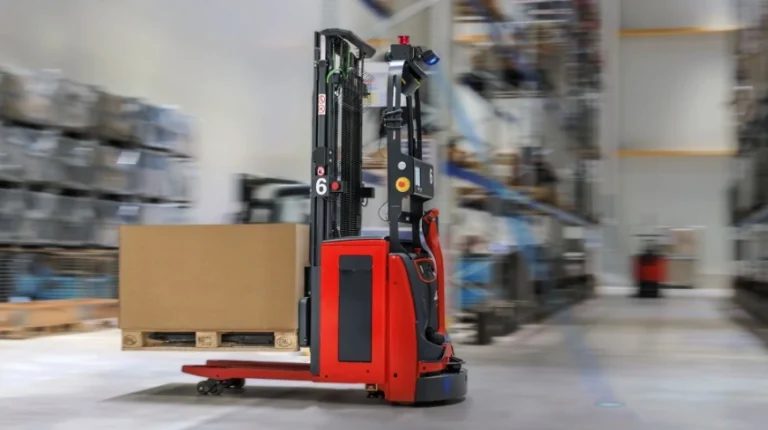
Autonomous forklifts—referred to interchangeably as forklift AGVs, AMR forklifts, or forklift robots—eliminate a large share of this performance fluctuation. They execute stacking and lifting sequences with consistent precision, operate free from fatigue-induced slowdowns, and function effectively in environments shared with personnel or other equipment, positioning them as a practical choice for operations pursuing dependable approaches to multi-layer rack storage and retrieval.
Essential Features of Autonomous Forklift Robots in Stacking and Lifting Applications
An autonomous forklift integrates autonomous guidance, perception, and motion control into a standard counterbalance or reach-truck form factor. Navigation technologies vary by design: reflector-assisted laser guidance offers high predictability on fixed routes, while natural-feature-based SLAM—whether contour mapping or vision-centric—provides greater tolerance for layout evolution, with hybrid configurations increasingly common to balance reliability and adaptability.
Competent stacking performance extends well past mere load raising. The system identifies pallet openings, inserts forks with exactitude, compensates for dynamic load-center changes during elevation, and deposits the unit squarely on the receiving beam without collision or displacement. Contemporary models support lifting heights in the 8-to-12-meter range, typically retaining residual capacities of 1,000–1,600 kg according to mast type and load profile. These specifications correspond closely to the geometry of prevalent high-bay racking installations.
Relative to standard reach trucks or rail-guided stacker cranes, autonomous variants excel by uniting considerable vertical capability with unrestricted lateral freedom throughout the facility. Elimination of fixed infrastructure requirements allows seamless coverage of both bulk reserve zones and point-to-point transport duties within the same operational footprint.
Specific Difficulties Encountered in Multi-Layer Rack Handling
Racks configured for three or more tiers expose fundamental shortcomings in legacy handling approaches. At moderate elevations of 6–8 meters, operators already contend with restricted visual cues and increasing mast deflection. Beyond 10 meters, permissible tolerances narrow sharply—fluctuations in ambient temperature, progressive structural settling, or localized air currents introduce additional variability.
Accuracy in final placement takes on heightened criticality. Upper-level pallet pockets permit minimal deviation; discrepancies measured in centimeters can produce beam distortion, cargo instability, or necessitate rework cycles. Manual processes routinely incorporate pauses for refinement, additional personnel for guidance, or reduced operating speeds, all contributing to lower effective throughput. Repeated inquiries into methods for more reliable and secure goods placement on multi-layer racks generally arise from these persistent issues: the ongoing need for improved cycle rates without parallel escalation in risk or non-value-added labor.
Underlying Technologies Supporting Consistent Stacking and Lifting Outcomes
Present-generation autonomous forklifts utilize integrated sensor suites to secure dependable high-elevation functionality.
Navigation relies on combinations of 2D/3D LiDAR, stereo cameras, and inertial sensors, commonly running real-time simultaneous localization and mapping processes that generate and maintain current environmental representations. Such architectures adapt effectively to transient changes—temporary aisle blockages, minor rack realignments, or periodic facility modifications—outperforming systems dependent solely on static references.
Safety implementation incorporates full-perimeter monitoring with overlapping detection fields. Load elevation activates automatic speed derating, while any irregularity initiates immediate halt and orderly descent. Collision prevention logic specifically addresses mast-tip clearance, averting contact risks during approach to elevated positions.
Productivity enhancements arise from several aligned mechanisms: continuous availability across shifts, drastic reduction in corrective repositioning, uniform velocity profiles for travel and lift, and decreased idle intervals. In properly commissioned systems, narrow-aisle pallet cycles frequently achieve 50–70 movements per hour, markedly surpassing conventional manual rates of 25–35.
Objective Performance Differentiation Among Handling Equipment Types
Informed selection benefits from direct comparative data.
In characteristic high-bay configurations, autonomous forklifts generate 50–70 pallet cycles hourly in constrained aisles, against manual operator averages of 25–35. Incidence of handling damage typically declines by 80–90 percent through standardized precision. Elevation-linked safety events approach negligible levels, with investment recovery periods ordinarily ranging from 18 to 36 months—shortening considerably under multi-shift conditions where labor cost displacement multiplies.
Capability profiles diverge by elevation demand. Heights below 6 meters accommodate wider AMR selections. From 8 meters onward, specialized very-narrow-aisle platforms featuring stiffened masts and enhanced stability management prove necessary to sustain capacity ratings and accuracy.
Application alignment varies with facility characteristics: concentrated reserve storage benefits from autonomous units’ capacity for sustained high-frequency execution, whereas hybrid manufacturing settings leverage their flexibility for combined storage and intra-facility movement roles.
Documented Implementations and Measured Results Across Sectors
Widespread early adoption took place in major e-commerce distribution operations, where autonomous forklifts oversee reserve placement for vast inventories, feeding downstream picking areas with limited manual involvement.
Third-party logistics environments employ fleets to isolate and direct client-specific pallet flows within consolidated high-bay structures, ensuring traceability across automated transfers.
Manufacturing applications integrate these units for sequenced delivery of major assemblies—automotive subcomponents, industrial machinery elements, battery systems—maintaining alignment with production cadence.
Cold-storage deployments realize amplified advantages: autonomous equipment maintains output in sub-zero conditions where human operators confront physiological restrictions and required protective protocols. Recurring deployment outcomes include 40–80 percent improvement in volumetric utilization, significant curtailment of forklift-related manpower hours, and near-complete removal of high-level handling incidents.
Systematic Approach to Equipment Selection and Rollout
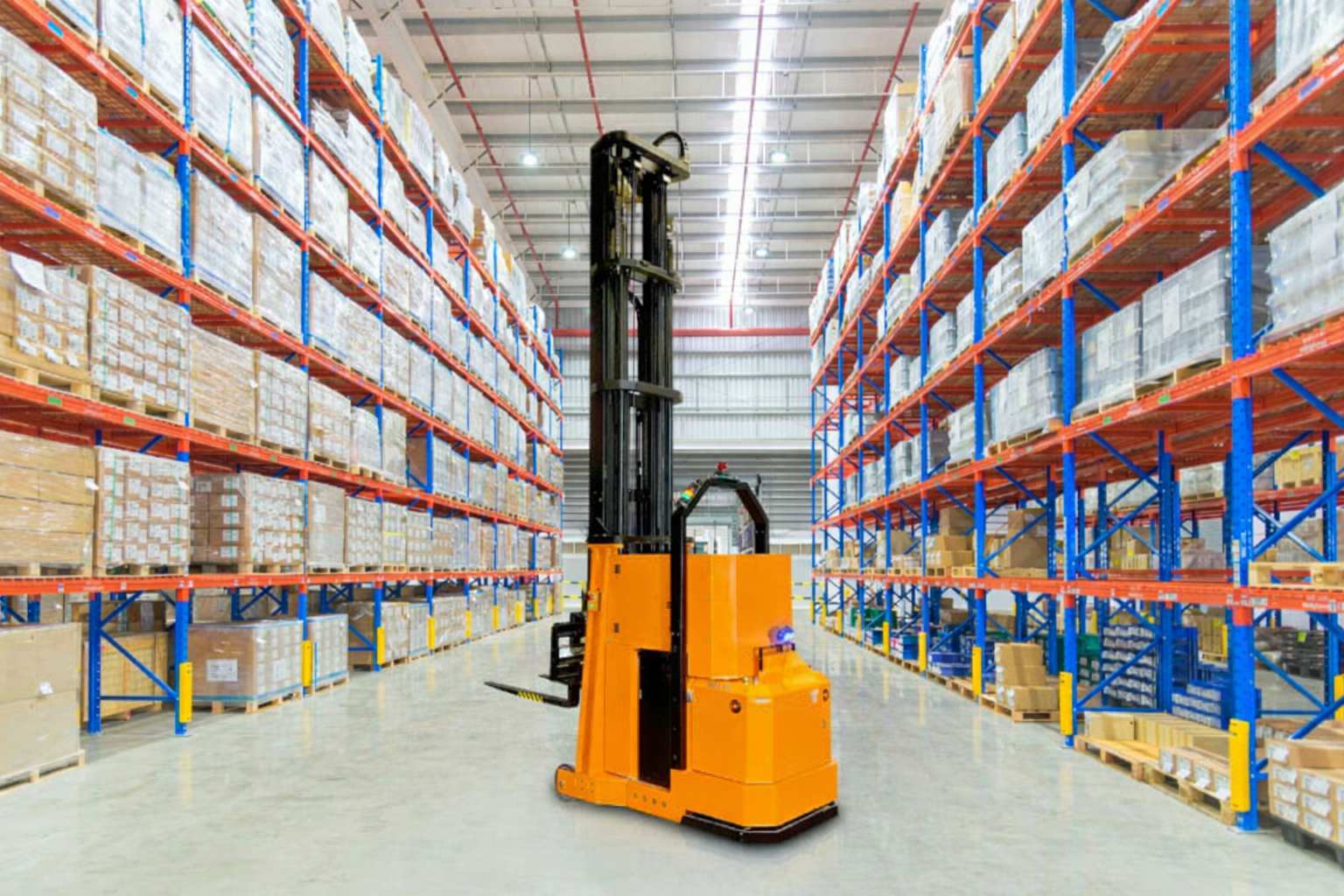
Appropriate specification commences with precise delineation of functional necessities.
Principal evaluation dimensions include maximum lift height with corresponding residual capacity, aisle-width compatibility, navigation robustness relative to floor condition, depth of interface with warehouse or material control systems, and battery strategy (opportunity charging generally preferred for continuous-duty scenarios).
Site characterization should catalog existing flow sequences, assess floor evenness and rack verticality, quantify exception frequency, and model anticipated vehicle density.
Rollout adheres to phased progression: upfront advisory review paired with simulation-based validation of financial projections, controlled pilot in a bounded segment (commonly 2–4 units), actual-versus-planned performance verification, and subsequent staged expansion. This structured sequence constrains risk exposure while establishing early evidence of benefit.
About Wesar Intelligence Co., Ltd.
Wesar Intelligence Co., Ltd. operates as a dedicated provider of intelligent factory and smart warehousing solutions, supported by nearly two decades of domain experience. The organization maintains a 5,000㎡ production facility and employs over 100 staff members, including more than 35 production personnel and 26 technical specialists. Its offerings center on autonomous mobile robots—most notably the Forklift Mobile Robot (FMR) series—alongside complementary platforms such as the Intelligent Warehouse Management System (iWMS-1000) and Robot Control System (RCS-2000). Solutions target precision-driven industries including electronics, automotive, new energy, machinery, and precision sheet metal processing. Core technical capabilities emphasize high-accuracy navigation and positioning to achieve precise material transport, alongside integrated systems that improve inventory visibility, streamline flows, elevate throughput, and enhance overall space efficiency. Wesar supplies full-cycle project delivery, encompassing initial consulting, tailored software development, equipment fabrication, field implementation, and ongoing service support.
Conclusion
Warehouse automation effectiveness ultimately rests on resolving the most demanding aspects of pallet movement, with high-level stacking and lifting among the most critical. Autonomous forklifts have advanced to mature, operationally validated status, delivering denser storage layouts, substantially elevated safety outcomes, reduced variable expenses, and scalable response to demand shifts. Facilities that position these systems at the core of pallet-handling workflows establish distinct operational superiority. The enabling technology stands available; decisive implementation timing and methodology now define relative standing.
Frequently Asked Questions
How high can autonomous forklifts operate reliably in standard warehouse settings?
Field-proven models sustain performance at 8–12 meter heights while retaining load stability and rated capacity; extensive installations confirm consistent behavior within these parameters.
What protective action does an autonomous forklift take upon detecting interference during elevated lifting?
Layered sensor coverage activates immediate stoppage, with controlled load descent applied as needed. Detection draws from LiDAR, depth-sensing cameras, and supplementary physical safeguards for timely response.
Is existing multi-layer racking compatible with autonomous forklifts without alterations?
Natural-navigation designs typically interface directly with conventional rack configurations, contingent on floor flatness meeting minimum thresholds and aisle dimensions accommodating the vehicle.
What placement accuracy do autonomous forklifts maintain on high rack positions?
Positioning tolerances generally hold to ±10 mm horizontally and ±15 mm vertically at full extension, effectively eliminating the offset errors characteristic of manual high-bay handling.
Will autonomous forklifts replace every manual forklift operator within a warehouse?
They assume the preponderance of repetitive, height-intensive stacking, lifting, and transport duties—frequently encompassing 70–90 percent of pallet cycles—while retaining human roles for exception processing, intricate inbound/outbound operations, and supervisory functions in integrated environments.





 English
  Russian
  Chinese