

Rising SKU complexity, tighter production schedules, and persistent pressure to cut manual handling errors continue to push facilities toward Carton Transfer Unit systems paired with intelligent racks for goods-to-person storage and retrieval. Carton Transfer Unit setups with intelligent racks enable automated inbound and outbound handling, precise bin location tracking through warehouse management system integration, and higher density in light-part environments typical of manufacturing operations.
Observations from electronics kitting lines, automotive small-component supply, precision machining shops, and similar settings shape the following review. Coverage includes the practical build of Carton Transfer Unit vehicles and matching racks, inbound and outbound cycle details, warehouse management system integration mechanics for bin location control, real deployment patterns in manufacturing, recurring field issues with proven fixes, and phased rollout sequences that match capital constraints and operational maturity.

Functional Makeup of Carton Transfer Unit Systems with Intelligent Racks
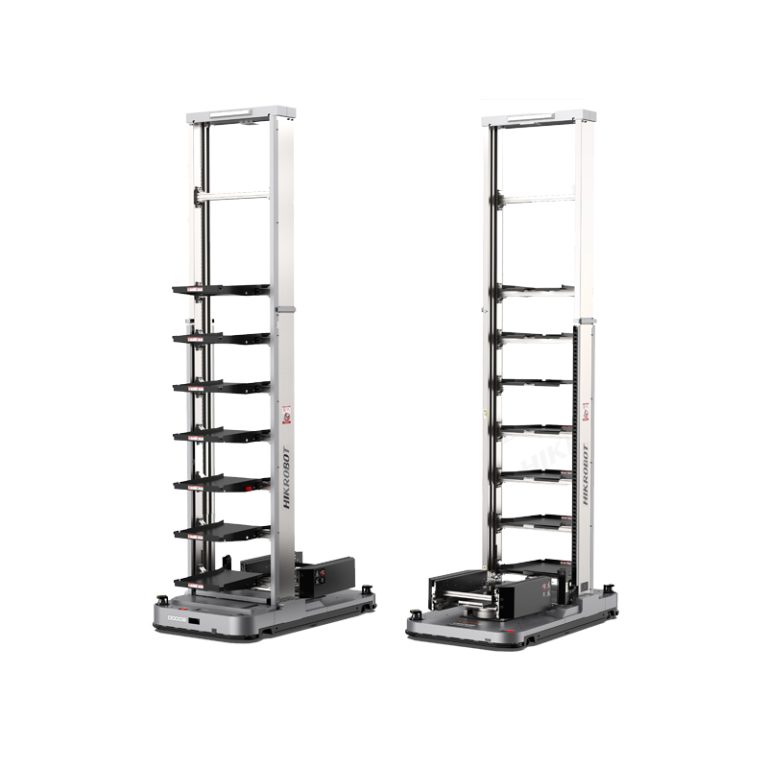
Carton Transfer Unit vehicles feature an autonomous chassis fitted with a conveyor deck or extendable lift that manages cartons, totes, or bins. Navigation draws from laser SLAM, visual targets, or blended methods. The unit approaches rack faces, extends to engage shelves at multiple levels, places or retrieves loads, and returns to workstations or staging points. Capability to carry several items—commonly 2 to 6 per cycle—drives efficiency in high-turnover zones.
Intelligent racks support the system with modular frames, variable shelf heights, and built-in aids such as barcodes, RFID patches, or reflective markers. Per-level loads stay modest—around 50 kg or below—to suit small-part applications. Adjustable base feet or sensors compensate for floor irregularities, preserving docking alignment over time.
Manufacturing settings favor these configurations for circuit boards and connectors in electronics, fasteners or seals in automotive parts, or gauges and inserts in machining. The arrangement shortens operator travel while packing more storage into existing floor space.
Compared with conventional static shelving, the difference shows in daily cycles. Manual retrieval from fixed racks demands repeated aisle walks, introducing fatigue and inconsistent pacing. Carton Transfer Unit systems deliver items to pick faces, trimming travel distances by 60–80% in field measurements and sustaining steady output across long shifts.
Automated Inbound and Outbound Operations
Inbound handling begins at receiving. Scanned cartons move to staging or direct conveyor feed. Warehouse management system logic assigns shelf positions according to turnover rate, dimensions, or grouping rules. A Carton Transfer Unit collects the load, travels to the rack aisle, raises to the target level, and sets the carton with controlled precision. Single-cycle durations frequently stay below 60 seconds in tuned layouts.
Outbound responds to order releases. The system dispatches vehicles to fetch required bins, delivers them to assembly stations or packing zones, and handles empty tote returns where applicable. Multi-item transport cuts round trips, accelerating fulfillment for mixed-SKU demands.
Docking precision remains critical. Baseline accuracy reaches ±5–10 mm for standard cartons or totes. Vision modules or laser final guidance narrow the window in cleanroom-adjacent areas or dust-sensitive lines.
Observed throughput in mid-scale plants averages 400–700 cartons per hour per workstation when dedicated pick stations support the flow. These numbers reflect mixed-SKU environments with frequent replenishment needs.
Warehouse Management System Integration for Bin Location Management
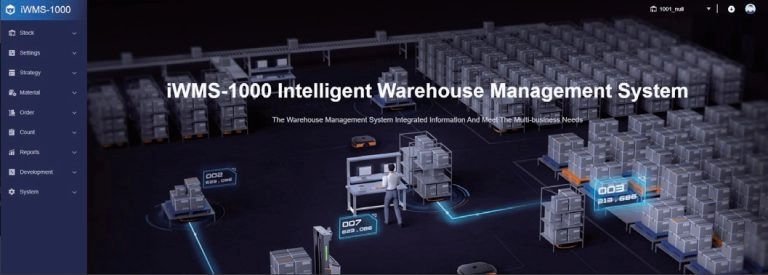
Warehouse management system integration shifts storage from passive to actively managed inventory. Platforms pull continuous updates from vehicle-mounted sensors and rack identifiers, logging exact bin status, quantities, and transaction history.
Core capabilities cover dynamic re-slotting based on observed demand, strict first-in-first-out for time-sensitive components, and automatic low-stock notifications that feed back into replenishment workflows. Data exchange occurs through APIs, holding latency below one second in stable networks.
Bin location reliability rises sharply. Manual tracking invites transcription mistakes or physical misplacement, driving error rates to 1–5%. Automated feedback loops from Carton Transfer Unit operations reduce discrepancies below 0.1% in established systems, delivering dependable data for production forecasting.
Legacy warehouse management system connections present hurdles. Closed interfaces necessitate middleware or field mappings. Current platforms support REST or OPC UA natively, streamlining setup.
A practical pre-launch checklist verifies field mapping between vehicle data and warehouse records, tests exception recovery for read failures or blockages, confirms dashboard refresh rates, and simulates high-volume periods to uncover hidden constraints.
Manufacturing Application Examples
Electronics kitting operations deploy Carton Transfer Unit systems for tray management. Resistors, capacitors, and connectors travel from intake to rack storage, then to line-side on request. Installations show 50–70% faster material access, inventory accuracy approaching 99.9%, and fewer production halts from shortages.
Automotive suppliers manage small fasteners, gaskets, and sub-components. Lot traceability gains from warehouse management system timestamps—each transfer links to batch identifiers, aiding quality investigations. Storage density climbs 60–80% via narrower aisles and taller racking.
Precision machining facilities apply similar flows to tools and fixtures. Light-load design fits the payload envelope, while automated outbound supports just-in-time CNC feeding.
Light industrial extensions—auxiliary items in assembly—benefit from anti-static coatings or sealed bins on racks, although heavier textile rolls or yarn packages typically require different handling methods.
ROI projections balance upfront expenses—vehicles, racks, software—against ongoing savings in labor, damage avoidance, and footprint efficiency. Returns commonly fall between 18 and 30 months in plants shifting from multi-shift manual storage.
Common Deployment Challenges and Field-Tested Countermeasures
Alignment drift surfaces frequently. Gradual floor settlement or rack deflection shifts positions over months. Scheduled recalibration—monthly or post-heavy cycles—paired with dual RFID verification keeps tolerances in check.
Fleet congestion develops in dense areas. Fixed routing creates backups during concurrent calls. Edge scheduling anticipates overlaps and redirects paths, lowering wait times by 20–35% in multi-vehicle zones.
Synchronization gaps interrupt inventory views. Brief network drops or protocol mismatches leave stale data. Vehicle-side caching and prioritized update queues limit exposure.
Rack fit issues catch some projects. Mismatched shelf depths or uneven loading demand modifications. Modular beams and standardized interfaces cut adaptation effort.
Starting small—one or two rack rows with limited vehicles—validates processes before scaling, reducing exposure to unforeseen problems.
Practical Rollout Paths for Mid-Sized Facilities in 2026
Immediate full deployment risks capital lock-in for plants building automated storage maturity. Stepwise progression fits budget cycles and hands-on experience.
Warehouse management system basics come first. Core tracking and reporting modules integrate with current manual flows, establishing data reliability.
Racks follow in high-velocity zones. Modular construction permits gradual addition without halting operations.
Carton Transfer Unit vehicles enter next. Controlled pilots—receiving to storage or line replenishment—prove cycles before fleet expansion.
Criteria focus on payload alignment with carton weights, lift range suited to rack heights, navigation tolerance for site floors, safety compliance in mixed traffic, and software design open to incremental growth.
About Wesar Intelligence Co., Ltd.
Wesar Intelligence Co., Ltd., based in Suzhou, Jiangsu, China, runs a 5,000-square-meter manufacturing site dedicated to intelligent logistics and smart warehousing equipment. Full-cycle services cover application consulting, software platform development, hardware fabrication, field deployment, and sustained technical support. A team exceeding 100 members, including engineering and production specialists with nearly two decades of accumulated experience, addresses precision manufacturing sectors such as electronics, automotive components, and new energy.
Principal products encompass autonomous mobile robots, including the Carton Transfer Unit for carton and tote movement, together with latent, forklift, conveyor, heavy-duty, and mobile collaborative variants. Associated software platforms support intelligent warehouse management, robot fleet control, and material coordination in Industry 4.0 settings. Emphasis stays on customized, market-responsive solutions that raise throughput, cut handling discrepancies, and lower ongoing operational costs in complex production and logistics environments.
Conclusion
Carton Transfer Unit configurations with intelligent racks advance dependable light-part storage and delivery in manufacturing through automated inbound and outbound cycles and accurate bin location oversight via warehouse management system integration. These features meet requirements for reduced manual intervention and elevated inventory control, though sustained performance demands focus on alignment stability, fleet coordination, and measured rollout. Facilities secure the most reliable gains by laying warehouse management foundations early, then adding racks and vehicles where tracked results confirm value. Ongoing refinements in sensing, guidance, and software through 2026 and further position incremental implementation as the most consistent path to automated material handling maturity.
FAQs
How does a Carton Transfer Unit manage multiple cartons in manufacturing storage?
Carton Transfer Unit vehicles commonly transport 2 to 6 cartons or totes per cycle using onboard conveyor or lift mechanisms, boosting throughput in electronics or automotive lines where small components predominate.
What docking accuracy is realistic for Carton Transfer Unit at intelligent racks?
Typical installations deliver ±5–10 mm positioning for consistent shelf placement, with vision or laser assistance narrowing tolerances in precision or clean environments.
How does warehouse management system integration support bin location tracking with Carton Transfer Unit?
Warehouse management system platforms capture live updates from vehicle sensors and rack tags, enabling dynamic slotting, batch traceability, and low-stock triggers with synchronization delays generally under one second.
Can existing racks be retrofitted for Carton Transfer Unit operations?
Frequently yes—modular intelligent racks featuring adjustable beams and alignment aids facilitate adaptations, though success depends on shelf dimensions, load distribution, and positioning compatibility.
What payback timeframe is common for Carton Transfer Unit and intelligent rack projects in manufacturing?
Deployments in mid-sized plants often recover costs within 18–30 months, primarily from labor savings, reduced errors, and improved storage density when supplanting manual small-part management.






 English
  Russian
  Chinese