
Labor shortages drag on, SKUs multiply, and end-of-line operations need to flex without tearing up the floor layout—drivers that keep drawing attention to composite robots that pair AGV or AMR mobility with robotic arm functionality for palletizing and depalletizing. These setups let one machine shift between lines, manage inconsistent box dimensions, and operate without long fixed conveyors or permanent stations. Deployment choices in 2026 still come down to measured realities: observed cycle times under load, positioning consistency during motion, full lifecycle expenses, and whether the flexibility offsets the engineering overhead compared with established fixed palletizers.
Patterns from electronics assembly, automotive tier suppliers, daily chemical filling, and food secondary packaging inform this review. Coverage includes the core build of АГВ with robotic arm composite robot palletizing configurations, practical throughput and capability contrasts, documented strengths balanced against ongoing limitations, breakdowns from recent installations, common on-site troubles with proven fixes, and phased introduction approaches that limit exposure while progressing toward connected Industry 4.0 material handling.
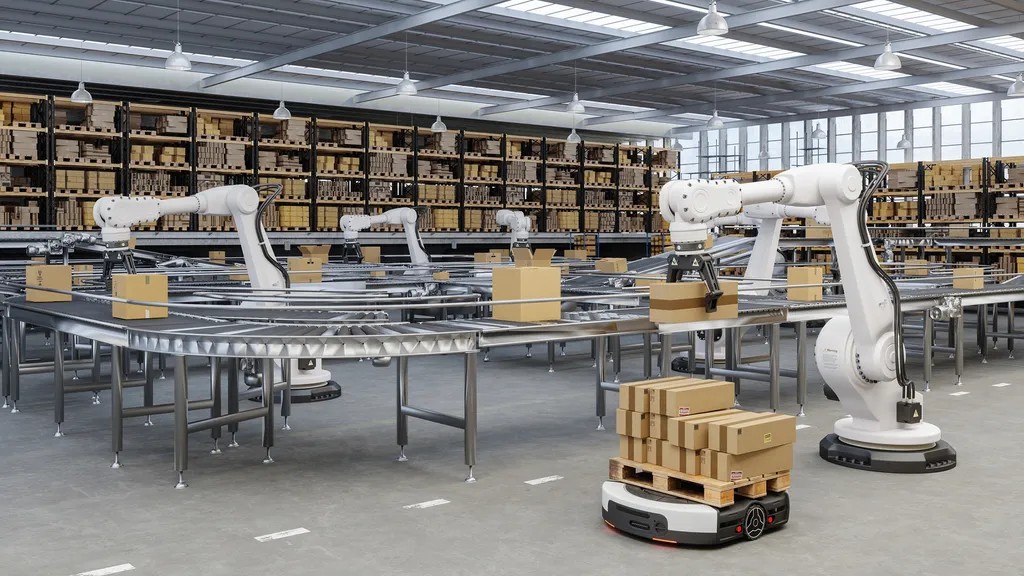
Core Build of AGV + Robotic Arm Composite Systems for Palletizing
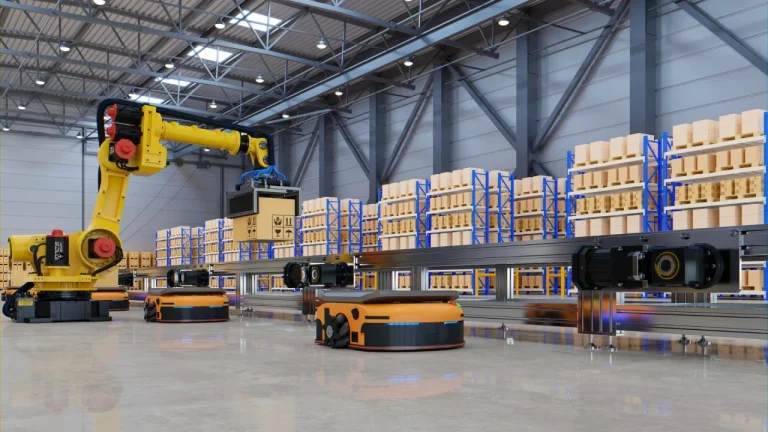
The architecture mounts an industrial or collaborative arm on a mobile base—typically an autonomous mobile robot or automated guided vehicle. Navigation draws from laser-based SLAM, vision-enhanced SLAM, or combined methods. The arm handles grasping, layer building, and unstacking through vacuum cups, clamps, or adaptive fingers. Sensing—3D cameras, structured light, or force-torque units—corrects for carton warp, pallet offset, and slight drift after transit.
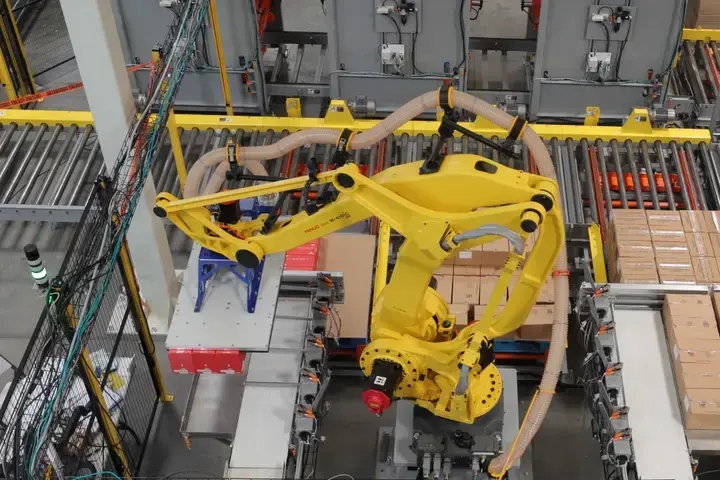
Fixed palletizing cells stay rooted at one spot and rely on consistent infeed from conveyors. Composite mobile units bypass that requirement, traveling to various pickup zones and forming loads at line tails or buffer areas.
Field measurements highlight steady differences:
Throughput on dedicated runs sees stationary arms holding 800–1,500 cases per hour with uniform product. Mobile composites settle at 400–900 cases per hour, where transit, alignment, and arm settling after stops claim significant cycle portions.
Capital investment places fixed cells (arm, guarding, short feed) in the $30,000–$80,000 range per position. Mobile composite configurations run $40,000 to $150,000 and upward, driven by base payload rating, arm specifications, reach, and perception package.
Footprint advantages favor composites during retrofits—no heavy foundations, extended conveyors, or large exclusion zones—especially valuable in plants with crowded existing space.
Fit diverges by workload: high-volume, single-variant lines favor fixed setups for speed and reduced upkeep. Variable-SKU, multi-station, or reconfigurable flows—prevalent in 3C electronics, automotive subcomponents, daily chemicals, and food packaging—extract greater benefit from the mobility and quick task switching.
Observed Strengths and Enduring Constraints in 2026 Palletizing Applications
These systems fit Industry 4.0 goals through distributed control, adaptive assignment, and limited structural disruption to current facilities.
Task flexibility stands out. A unit services multiple lines, absorbs seasonal volume spikes, or switches palletizing to depalletizing modes without mechanical changes. Narrow-aisle plants, multi-level flows, or sites with ongoing rearrangements gain from navigation on shared pathways.
Connectivity yields further gains. Real-time stack status and inventory signals passed to MES or WMS platforms sharpen downstream planning—supporting just-in-time pallet dispatch and trimmed buffer holdings.
Utilization of space often rises. Units reach deeper storage positions or transient staging spots unreachable by fixed arms without added infrastructure.
Constraints still shape outcomes in running plants.
Motion adds factors fixed installations sidestep. Uneven floors, minor wheel slip, or braking forces produce small base shifts or vibrations. High-grade stabilization notwithstanding, end-of-arm repeatability typically lands between ±0.5 mm and ±2 mm—sufficient for standard cases but tight for precision trays or delicate primary packs.
Cycle breakdown disappoints some expectations. Positioning and movement segments frequently take 40–60% of takt time, holding effective output below stationary levels.
Energy demands complicate full-shift runs. Arm-heavy cycles deplete batteries quicker than transport-only duties; opportunity charging paths, swap bays, or larger packs become necessary, each requiring deliberate layout and scheduling.
Scaling to fleets raises coordination issues. Absent forward-looking traffic logic and edge arbitration, units interfere during peaks or transitions, creating queues.
These elements account for the measured pace at which many mid-scale sites adopt composites—preferring gradual layering over abrupt swaps of manual or fixed systems.
Patterns from 2025–2026 Installations
Results differ across payload classes and sectors.
Secondary packaging in 3C electronics deals with frequent SKU turnover and smaller runs. Lightweight composites with 3D vision and force-sensitive grippers manage mixed-case stacking. Installations show 25–30% direct labor drop per shift, with stacks stable enough for automated wrapping and shipping, though premium components sometimes get a final visual check.
Daily chemical and food operations stress speed alongside careful handling. Dual-drive bases for fast transit and multi-suction tools reach 500–700 cases per hour on varied loads. Payback tightens to 18–24 months displacing double-shift manual teams, particularly where staffing remains tight.
Automotive and heavier parts call for robust payloads. Heavy-duty bases with industrial arms process 50–100 kg castings, housings, or assemblies. Gains include lower forklift density in tight zones and better traceability via onboard scans, although tuning arm rigidity post-movement adds commissioning weeks.
Common thread across examples: strongest performance ties palletizing tightly to production signals upstream and transport demands downstream, rather than isolating it as a standalone station.
Frequent On-Site Problems and Field-Tested Fixes
Deployment records point to repeatable trouble spots.
Sensing shortfalls lead. Standard 2D cameras falter under variable light, reflective surfaces, or irregular cartons—causing misses or unstable builds. Routine now specifies 3D RGB-D or structured-light sensors at outset, with shift-tied recalibration.
Control separation breeds timing lags. Disjointed mobile and arm controllers insert delays that disrupt coordinated paths. Single-loop robot control systems that plan base routes and arm moves together cut communication errors and boost reliability.
Tooling and programming drag changeovers. Point-by-point manual teaching for new families eats hours. Quick-swap effectors plus hand-guiding or demonstration teach methods drop switches below fifteen minutes once dialed in.
Fleet interference surfaces with growth. Fixed routing creates standoffs during concurrent demands. Edge schedulers forecasting jams, prioritizing critical moves, and rerouting cut wait times by 20–35% in denser areas.
Cost creep hits budgets later. Annual line items cover battery wear, base joint service, sensor upkeep, and licensing. Full TCO projections spanning five to seven years, stocked spares, and remote support prevent surprises mid-rollout.
Early focus on these during scoping and trials distinguishes smooth projects from problematic ones.
Phased Introduction Approaches for Mid-Sized Sites in 2026
Jumping straight to full composite palletizing exposes plants to outsized risk while smart factory maturity builds. Stepwise progression matches capital controls and learning curves.
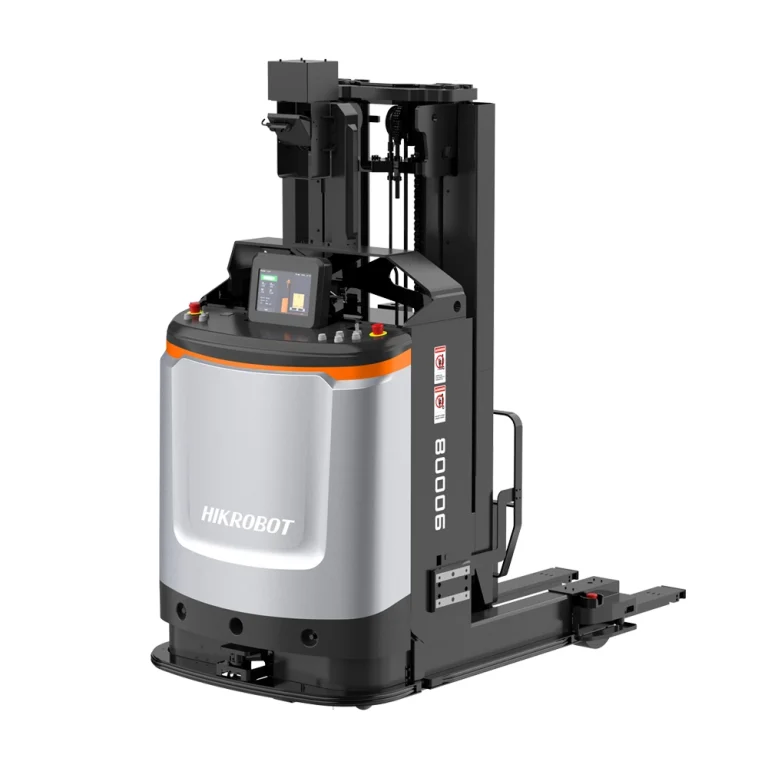
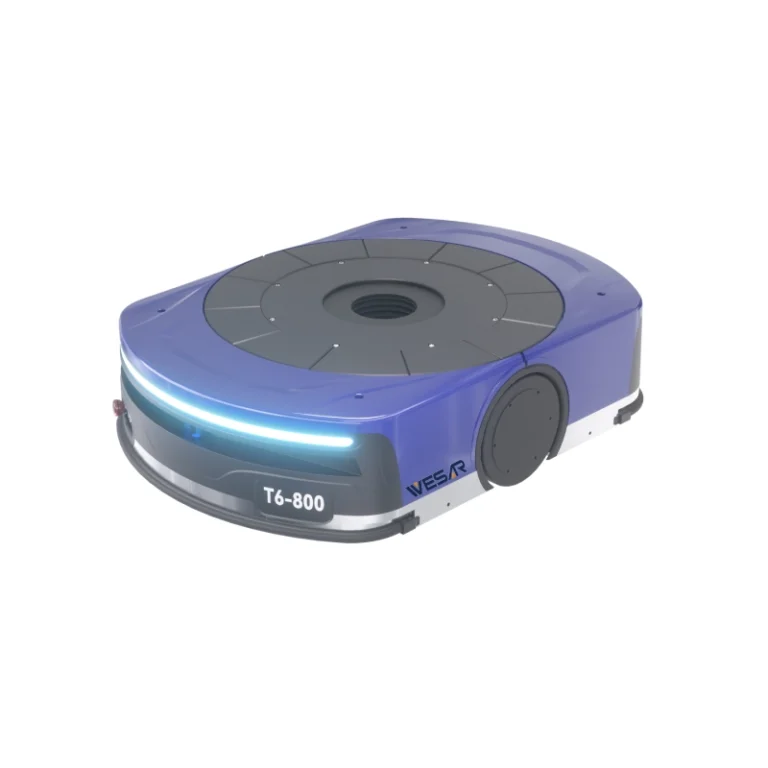
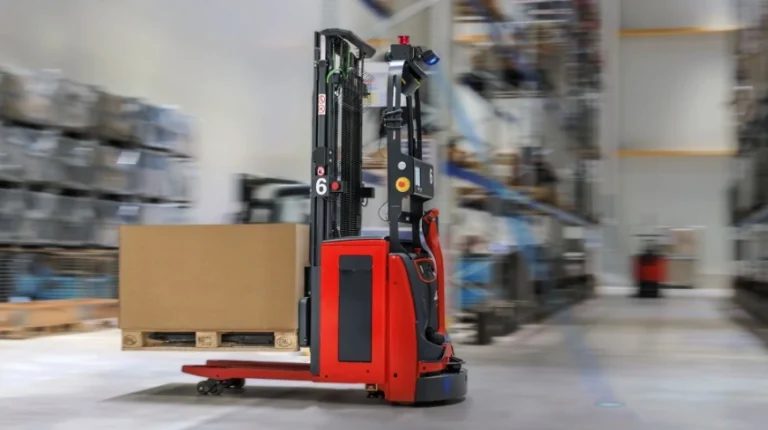
Solid transport foundation comes first. Latent mobile robots handle pallet lifting, forklift mobile robots manage direct carry, conveyor mobile robots link line-side, and heavy-duty mobile robots tackle oversized items—establishing dependable navigation, charging routines, and ties to warehouse or material systems. Initial returns in labor savings, accuracy, and flow clarity generate momentum.
Transport proven, manipulation adds where justified—starting in lower-stakes areas like secondary packaging or peak overflow. Pre-existing fleet trims added hardware spend and speeds integration.
Priorities in selection cover payload fit to real loads, navigation tolerance for floor realities, safety-rated modes near personnel, and open software for future growth.
About Wesar Intelligence Co., Ltd.
Wesar Intelligence Co., Ltd., located in Suzhou, Jiangsu, China, operates a 5,000-square-meter manufacturing site dedicated to intelligent logistics and smart warehousing equipment. Full-cycle capabilities span application consulting, software platform creation, hardware fabrication, deployment execution, and ongoing technical service. More than 100 specialists—including production and engineering teams with nearly two decades of accumulated experience—support precision sectors such as electronics, automotive components, and new energy.
Main offerings feature autonomous mobile robots: latent mobile robots (LMR) for pallet jacking and lifting, forklift mobile robots (FMR), conveyor mobile robots (CMR) for production interfacing, heavy-duty mobile robots (HMR), carton transfer units (CTU), and mobile collaborative robots (MCR). Associated software comprises the iWMS-1000 intelligent warehouse management system, RCS-2000 robot control system, and material control platforms that enable Industry 4.0 connectivity. Focus stays on customized, responsive solutions that lift efficiency, minimize handling mistakes, and reduce sustained operating costs in intricate production and logistics setups.
Заключение
AGV with robotic arm composite robot palletizing and depalletizing configurations advance flexible, data-linked end-of-line handling in current manufacturing. Mobility and adaptability match shifting demands effectively, but throughput limits, motion-related precision hurdles, and ownership expenses demand clear-eyed evaluation. Sites secure lasting value by first anchoring autonomous material transport, then adding arm functions where economics confirm the addition. With ongoing progress in sensing, control, and fleet management through 2026 and further, incremental patterns should persist as the most dependable route to operational advancement.
Часто задаваемые вопросы
Is AGV with robotic arm composite robot palletizing worth pursuing for mid-sized plants in 2026?
Facilities dealing with escalating labor expenses and growing product diversity frequently find justification, especially post-establishment of stable transport operations. Payback commonly lands between 18 and 36 months replacing multi-shift manual palletizing, though pilot confirmation of takt and integration demands stays critical prior to scale-up.
What are the main obstacles when implementing AGV + robotic arm systems for palletizing and depalletizing?
Position drift following movement, synchronization between mobile and arm controls, battery sustainment during intensive cycles, and multi-unit path conflicts head the concerns. Solutions start with combined control architectures, quality 3D sensing, and anticipatory fleet logic.
How do AGV + robotic arm composite palletizing systems stack up against fixed palletizing robots in smart factory transitions?
Mobile composites provide stronger layout adaptability and multi-function performance for mixed-product or inter-line settings, while fixed systems deliver elevated continuous speeds and straightforward maintenance in focused, high-output stations. Hybrid deployments—fixed on primary lines, mobile on adaptive or support tasks—often strike optimal performance-to-cost balance.
Can current AGV or AMR fleets add robotic arm palletizing functionality at a later stage?
In numerous instances, yes—particularly modular bases supporting payload increases, power scaling, and standard mounting. Launching with primary transport types (latent, forklift, or conveyor) safeguards early returns and opens straightforward evolution to composite capability.
How critical is software integration for effective AGV composite robot palletizing performance?
Software forms the core—managing navigation, arm paths, task allocation, and data interchange with WMS, MES, or ERP systems. Solutions with live diagnostics, conflict anticipation, and adaptable interfaces materially affect uptime, output steadiness, and scalability over time.





 Russian
  English
  Chinese