
A heavy-duty AGV is selected differently from a standard warehouse vehicle. The question is not simply how many kilograms an AGV can carry. Buyers must connect payload, load geometry, transfer height, aisle width, navigation, traffic, safety, and software integration to the real production process. This matters in automotive manufacturing, steel processing, metal fabrication, heavy machinery, chemical production, and building materials, where one poorly defined interface can stop an entire material flow. A structured selection process also helps teams decide whether an AGV, an AMR, or a mixed fleet is the right foundation for material handling automation.
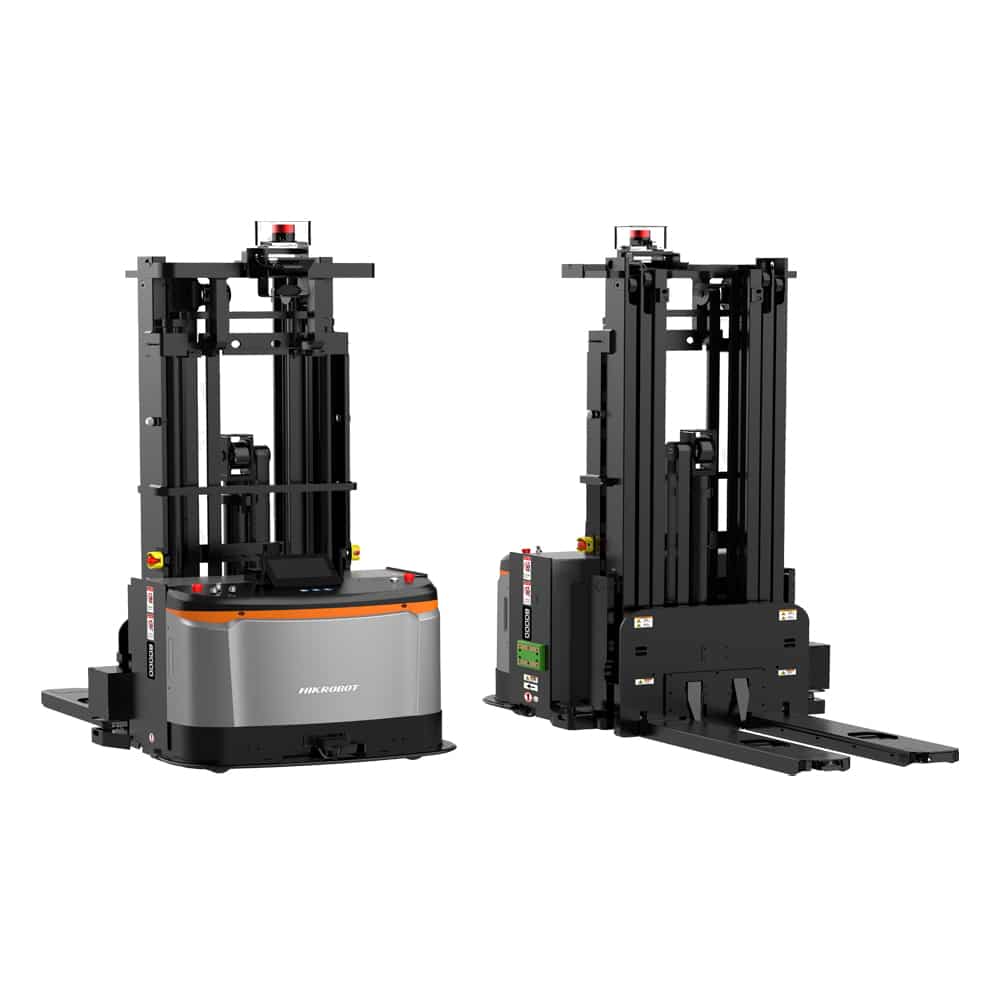
What Makes a Heavy Duty AGV Different
Heavy-load transport changes the engineering priorities. A heavy-duty mobile robot needs sufficient structural capacity, stable motion, dependable stopping behavior, and a load interface that matches the carrier. The vehicle must also fit the operating space and communicate with the wider automation system.
Payload is only the first filter
Rated load is essential, but the center of gravity, pallet or fixture dimensions, overhang, surface stability, and load distribution are equally important. A 3,000 kg compact load behaves differently from a long steel frame of the same weight. Buyers should provide drawings, maximum dimensions, actual weight ranges, pickup orientation, and any risk of shifting during acceleration, turning, or braking.
Horizontal transport and stacking require different vehicles
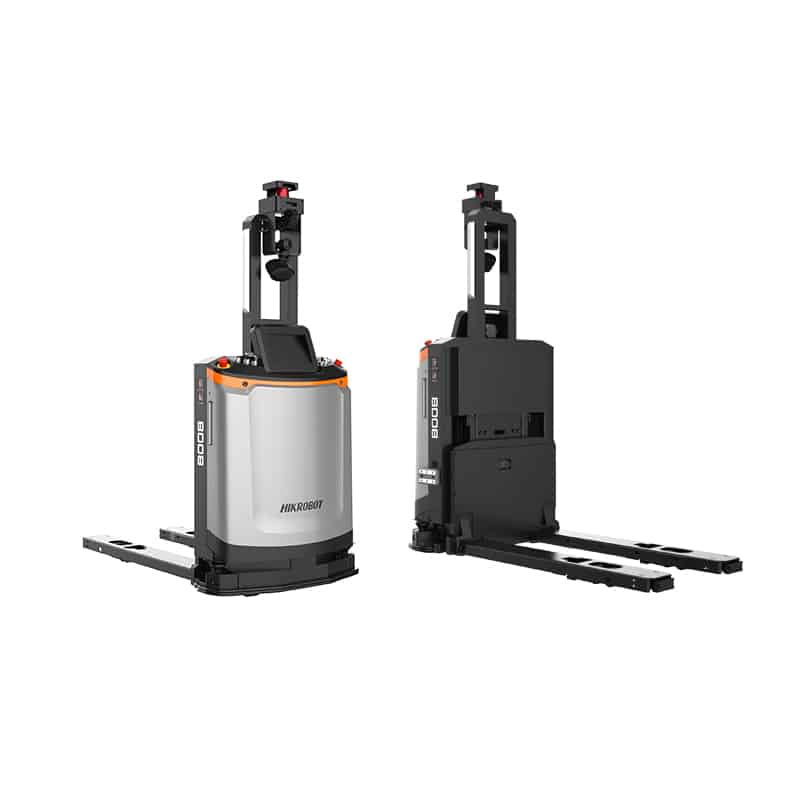
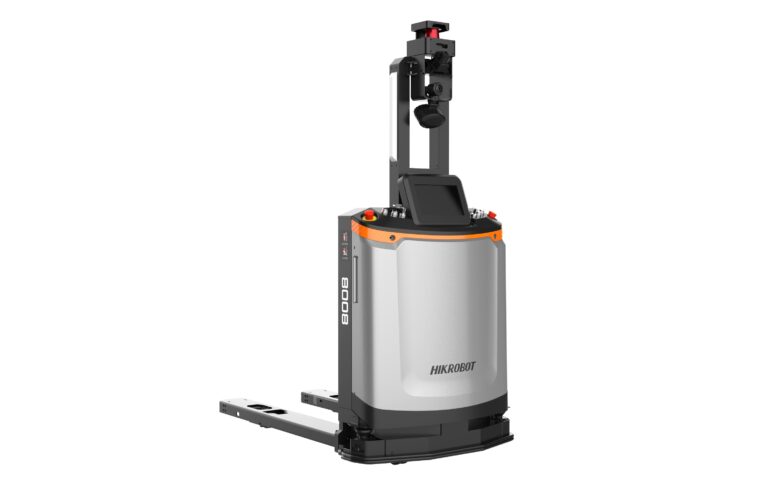
Low-lift models suit floor-level transfer and repeated point-to-point movement. Stacking models add lift height, mast clearance, rack tolerances, and load stability to the selection. Wesar’s F3-3000 Forklift Mobile Robot is listed for a 3,000 kg rated load and 200 mm fork lifting height, making it a relevant reference for heavy horizontal pallet movement. By contrast, the F4 series addresses elevated handling.
How Should Industry Requirements Shape the Specification
Industry names are useful SEO keywords, but the engineering value comes from translating each environment into measurable requirements. Automotive manufacturing and heavy machinery plants often prioritize line-side timing and fixture repeatability. Steel and metal processing may involve long, dense, or irregular carriers. Chemical and building-material operations may add dust, floor, packaging, or environmental constraints that require project-specific confirmation.
Automotive manufacturing and auto parts
An automotive AGV may move engines, chassis components, molds, battery packs, racks, or sequenced parts between storage, machining, assembly, and inspection. The selection team should map takt-related delivery windows, buffer rules, carrier identification, and docking accuracy. Where manual forklifts and pedestrians share routes, traffic zoning and safe handover points must be designed before fleet sizing.
Steel metal fabrication and heavy machinery
A heavy load AGV for steel coils, plates, welded structures, or machine components needs an interface designed around the actual load. Rollers, lifting modules, forks, or customized fixtures may be appropriate, but the choice should follow a transfer study rather than a generic label. Floor flatness, gradients, turning envelopes, overhead clearance, and emergency access can determine whether the proposed industrial AGV works reliably.
Chemical and building materials
These sectors can benefit from automated material transport, yet they should not be treated as identical applications. Packaging integrity, contamination control, dust, temperature, restricted zones, and material-specific safety obligations need separate evaluation. Any explosion-protection or environmental rating must be confirmed for the exact project and vehicle; it should never be assumed from the term heavy-duty AGV alone.
Which Vehicle Parameters Should Buyers Compare
A useful comparison sheet should connect every specification to a process constraint. It should cover rated load, load center, lifting height, fork size, minimum aisle width, turning radius, travel speed, positioning accuracy, navigation mode, runtime, charging time, and safety devices. It should also state which values are standard and which require customization.
Match lift height and aisle width to the layout
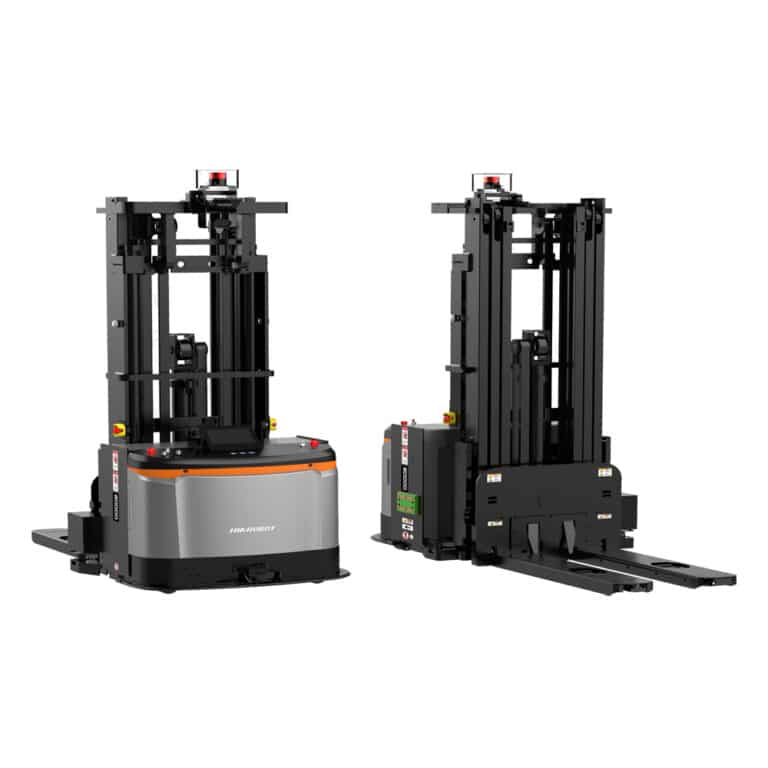
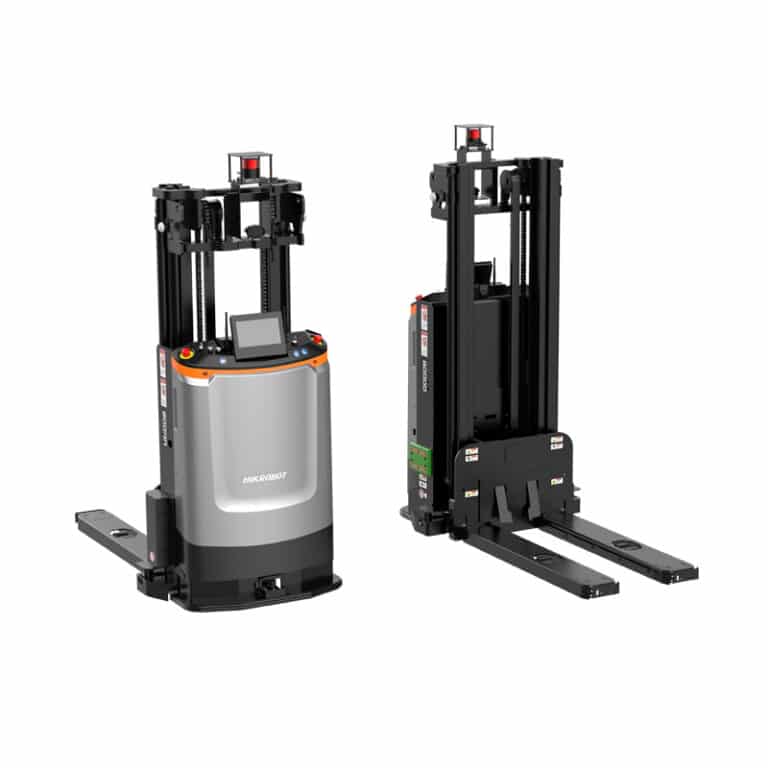
For stacking applications, rack geometry and approach direction must be checked together. The Robot mobile per carrelli elevatori F4-3000 page lists a 3,000 kg rated load, 5,500 mm fork lifting height, and 2,864 mm minimum aisle width. Those figures provide a useful starting point, but final fit still depends on pallet dimensions, load center, rack tolerances, floor conditions, and the planned safety clearance.
Plan navigation safety and charging as one system
Navigation performance cannot be evaluated separately from the site. Reflective surfaces, moving obstacles, dense traffic, dust, and narrow intersections influence route design and sensor visibility. Charging strategy must match duty cycle and peak demand. Simulation or a pilot route can reveal congestion, blocked charging access, and unrealistic assumptions before a full fleet is deployed.
How Do MES ERP and Fleet Control Affect the Project
A heavy-duty AGV creates value when transport requests, vehicle dispatch, equipment handshakes, and production priorities are coordinated. MES or ERP may release tasks, while WMS or material-control software manages inventory and movement rules. A robot control system can allocate routes, manage traffic, monitor vehicle states, and connect multiple AGV and AMR workflows.
Define interfaces before final fleet sizing
Document task triggers, status messages, exception handling, manual recovery, cybersecurity boundaries, and ownership of every signal. Confirm how conveyors, automatic doors, lifts, machining cells, racks, and charging stations communicate. This integration map prevents a common mistake: buying enough load capacity but overlooking the software and equipment interfaces needed for continuous operation.
Why Consider Wesar for Heavy Load Automation
Wesar Intelligence Co., Ltd. provides intelligent factory and logistics solutions that include AGV robots, warehouse systems, software development, equipment implementation, and support. Its current product portfolio includes forklift mobile robots, heavy-duty mobile robots, AMRs, and control software. For a heavy-load inquiry, the practical next step is to share load drawings, required transfer points, route conditions, target throughput, and system interfaces so the proposed configuration can be checked against the real process.
Conclusione
The best heavy-duty AGV is not the vehicle with the largest number on a data sheet. It is the AGV or AMR configuration that safely handles the real load, fits the aisle and transfer geometry, supports the required throughput, and integrates with production and warehouse systems. Automotive, steel, metal fabrication, heavy machinery, chemical, and building-material projects each create different constraints. A disciplined requirement study turns those constraints into a reliable heavy-load automation specification and a clearer basis for supplier comparison.
FAQ
What information should I send with a heavy duty AGV inquiry
Send the minimum and maximum load weight, drawings and dimensions, center-of-gravity information, pallet or fixture details, pickup and drop-off heights, route and aisle dimensions, floor conditions, required cycles per hour, charging expectations, and MES, ERP, WMS, or equipment interfaces.
Is a forklift AGV suitable for every heavy load
No. Forklift AGVs are strong candidates for compatible pallets and carriers, but long, unstable, irregular, or special loads may require a customized fixture, lifting platform, conveyor, or another heavy-duty mobile robot design. The transfer interface should be engineered around the load.
Can heavy duty AGVs work with AMRs in one facility
Yes, if fleet control, traffic rules, safety zones, task priorities, and equipment interfaces are designed for mixed operation. The integration plan should define how different robot types share routes, intersections, elevators, charging areas, and production requests.






 Italian
  English
  Russian
  Chinese
  Japanese
  Korean
  Spanish
  Arabic
  French
  German